

BangDB Overview
IQLECT offers real-time predictive analytics for smarter product and website decisions. Free trials allow users to monitor and predict behaviors using ML and AI tools.
Use Cases
Customers recommend Engagement Management, Forecasting, Measuring Customer Satisfaction, as the business use cases that they have been most satisfied with while using BangDB.
Business Priorities
Enhance Customer Relationships and Acquire Customers are the most popular business priorities that customers and associates have achieved using BangDB.
BangDB Use-Cases and Business Priorities: Customer Satisfaction Data
BangDB's features include Predictive Analytics, Micro Customer Segmenting, Personalization, etc. and BangDB support capabilities include AI Powered, 24/7 Support, Chat Support, etc. also BangDB analytics capabilities include Analytics, and Custom Reports.
Peer review evidence (same sources as the product rating summary)
"...Follow customer journeys and the actions that visitors are taking on your website to follow-up with offers and recommendations. ..." Usecase Landing Page IQLECT
"...Companies that added Machine learning to their existing systems report an increase of 5 to 95 % in forecast reliability. ..." Usecase Landing Page IQLECT
"...Faster deliveries are directly proportional to customer satisfaction...." Usecase Landing Page IQLECT
BangDB, Digital Pigeon, eLogger, Cerberus FTP Server, Google Drive, etc., all belong to a category of solutions that help Data Management Platform. Each of them excels in different abilities. Therefore, determining the best platform for your business will depend on your specific needs and requirements.
Popular Business Setting
for BangDB
Top Industries
- Computer & Network Security
Popular in
- Large Enterprise
BangDB is popular in Computer & Network Security, and is widely used by Large Enterprise,
BangDB Customer wins, Customer success stories, Case studies
What Are the key features of BangDB for Engagement Management?
How does BangDB facilitate Forecasting?
How can BangDB optimize your Measuring Customer Satisfaction Workflow?
What Are the key features of BangDB for Lifetime Value Management?
Why is BangDB the best choice for Identify Target Customers?
Frequently Asked Questions (FAQ)
What buyers ask before choosing BangDB
Integrations What CRM integrations are available with BangDB?
BangDB offers several CRM integrations that enhance its lead management capabilities, making it a versatile choice for businesses looking to streamline their processes. Notably, BangDB integrates seamlessly with various CRM platforms, allowing for efficient lead tracking and management. Specific integrations include CRM data integration, which facilitates the direct transfer of lead information into existing CRM systems, ensuring that premium leads are captured and nurtured effectively. Additionally, BangDB supports integration with SAP, enhancing its functionality for enterprises that rely on SAP for their operations. By leveraging these integrations, businesses can automate lead collection, improve conversion strategies, and ultimately drive revenue growth through data-driven insights.
Integrations How does BangDB connect to Salesforce and HubSpot?
BangDB connects to Salesforce and HubSpot through its robust API integrations, allowing seamless data exchange between these platforms. For Salesforce, BangDB can automate lead management by syncing customer data, tracking interactions, and updating records in real time, which enhances the sales process and improves customer relationship management. Similarly, with HubSpot, BangDB facilitates lead generation and nurturing by capturing visitor data and converting it into actionable insights, which can be directly utilized in marketing campaigns. This integration not only streamlines workflows but also leverages analytics and AI capabilities within BangDB to optimize lead conversion strategies, ultimately driving better business outcomes. By utilizing these integrations, businesses can ensure a cohesive approach to managing customer relationships across multiple platforms.
Integrations What are the setup steps for integrating BangDB with Marketo?
To integrate BangDB with Marketo, start by ensuring you have access to both platforms and the necessary API keys for authentication. First, log into your BangDB account and navigate to the integration settings to generate an API key. Next, in your Marketo account, go to the Admin section and select "LaunchPoint" to create a new service, where you will input the BangDB API details. After setting up the service, configure the webhook in Marketo to send data to BangDB by specifying the endpoint URL provided by BangDB. Finally, test the integration by sending sample data from Marketo to BangDB to ensure that leads and analytics are being captured correctly. This setup allows for seamless data flow between the two platforms, enhancing your lead management and marketing automation efforts.
Integrations Is there API access for BangDB, and how does it work?
Yes, BangDB offers robust API access that allows users to interact with the database efficiently. The APIs are designed to facilitate various operations such as data retrieval, insertion, and management, making it easier for developers to integrate BangDB into their applications. The API supports both RESTful and CLI (Command Line Interface) interactions, providing flexibility depending on user preferences. With powerful APIs, users can leverage BangDB's capabilities for real-time analytics, graph processing, and time-series data management. This integration enables businesses to automate processes, enhance data workflows, and gain insights quickly, ultimately driving better decision-making and operational efficiency.
Integrations What is the data flow between BangDB and other CRM systems?
The data flow between BangDB and other CRM systems involves seamless integration that enhances lead management and analytics. BangDB automates lead collection by tracking user sessions, IP data, and form analytics in real-time, identifying premium leads that are then sent directly to the connected CRM. This integration allows businesses to nurture and convert leads efficiently, as data-driven reports generated by BangDB provide insights for better decision-making. Additionally, users can resell leads through various channels like email and WhatsApp, further leveraging the data captured. The integration ensures that all relevant lead information is synchronized, enabling a streamlined process for managing customer relationships and improving conversion strategies. This capability positions BangDB as a valuable tool for businesses looking to optimize their CRM functionalities.
Integrations Are there any limitations to the integrations offered by BangDB?
While BangDB offers a robust set of integrations, including support for data lake integration, SAP data integration, and CRM data integration, there may be some limitations depending on the specific use case and deployment scenario. For instance, while BangDB is designed for high availability and scalability, certain integrations might not support all features available in the core database, particularly when dealing with hybrid cloud solutions or on-premises deployments. Additionally, users should be aware that major version updates may introduce changes that affect compatibility with existing integrations. Therefore, it's essential for businesses to evaluate their specific requirements and test integrations thoroughly to ensure they meet their operational needs. Overall, BangDB provides a flexible integration framework, but careful consideration is necessary to navigate potential limitations.
Features What does the automated bug tracking feature in BangDB do?
The automated bug tracking feature in BangDB is designed to streamline the process of identifying, managing, and resolving software bugs, ultimately enhancing product quality and delivery timelines. This feature allows teams to automatically import bugs, categorize them, and assign them to the appropriate team members based on customizable workflow policies. Users can define rules and filters for bug flow, set quotas for team members, and add custom fields or tags to tailor the tracking process to their specific needs. By automating these tasks, BangDB helps teams focus on critical project aspects, reduces manual errors, and ensures that issues are addressed promptly, leading to the release of high-quality software products on time.
Features How do I configure the leads management feature in BangDB?
To configure the leads management feature in BangDB, start by accessing the Leads Management app through your BangDB account. Once logged in, navigate to the settings section where you can customize lead capture forms, set up visitor tracking parameters, and define lead qualification criteria. Utilize the analytics tools to monitor user sessions and IP data, which will help in identifying premium leads. You can also integrate the app with your existing CRM to streamline lead management processes. For detailed guidance, refer to the comprehensive documentation provided by BangDB, which includes step-by-step instructions for installation and configuration. This setup will enable you to effectively generate, nurture, convert, and manage leads, ultimately enhancing your sales strategy.
Features What functionalities does the real-time monitoring tool in BangDB provide?
The real-time monitoring tool in BangDB, known as AppMon, offers comprehensive functionalities for monitoring IT infrastructure, applications, logs, websites, and devices. It features a user-friendly interface that allows users to easily add clusters, hosts, or any services for continuous 24/7 monitoring and analysis. This tool provides real-time insights into system performance, enabling businesses to quickly identify and address issues as they arise. Additionally, AppMon supports deployment in various environments, including on-premises, cloud, or hybrid setups, ensuring flexibility to meet diverse business needs. By leveraging these capabilities, organizations can enhance operational efficiency, improve uptime, and ultimately deliver better services to their customers.
Features How can I use the AI integration within BangDB for data processing?
To utilize the AI integration within BangDB for data processing, you can leverage its AutoML capabilities, which automate the training, testing, versioning, and deployment of machine learning models. Start by defining your data processing needs and then use BangDB's built-in AI tools to enrich your data in real-time through stream processing. You can write Cypher queries that incorporate AI for tasks such as clustering and similarity analysis, enhancing the efficiency of your data queries. Additionally, BangDB's resource server (BRS) allows you to manage large binary files seamlessly, reducing operational overhead. By automating these processes, you can significantly lower costs and improve the performance of your data-driven applications.
Features What does the graph processing capability in BangDB enable for my applications?
The graph processing capability in BangDB enables applications to leverage complex relationships and connections within data, enhancing the context and intelligence of data analysis. By integrating graph processing with AI and stream processing, BangDB allows for real-time analytics and predictive insights, making it ideal for modern applications that require high performance and scalability. This capability supports advanced querying through Cypher, facilitating the extraction of meaningful patterns and relationships from data. As a result, businesses can accelerate feature implementation, respond swiftly to client requests, and achieve significant cost reductions by optimizing resource usage. Overall, BangDB's graph processing empowers organizations to build intelligent applications that can adapt to dynamic data environments and drive informed decision-making.
Features How do I set up and utilize the AppMon feature for monitoring my IT infrastructure?
To set up and utilize the AppMon feature for monitoring your IT infrastructure, start by signing up for a 7-day free trial of BangDB AppMon, which requires no credit card. Once registered, you can easily deploy the application either on-premises or in the cloud, depending on your business needs. Use the simple user interface to add clusters, hosts, or services that you want to monitor in real-time. Configure the monitoring settings to track various components such as servers, logs, networks, and applications. You can also set up alerts for performance issues and analyze data continuously to ensure uptime and health. For comprehensive insights, leverage the built-in analytics tools to assess system performance and make informed decisions to enhance your IT infrastructure's efficiency.
ROI & pricing What measurable business outcomes can I expect from using BangDB?
Using BangDB can lead to significant measurable business outcomes, particularly in terms of performance, efficiency, and data management. For instance, businesses have reported that queries which previously took hours can now be executed in sub-second times, drastically improving operational efficiency. Companies like Fintch have leveraged BangDB to build flexible data models that support dynamic queries, enabling them to quickly adapt to changing business needs. Additionally, the integration of AI and real-time data processing allows for advanced analytics, leading to better decision-making and increased conversion rates, as seen with IQLECT's marketing automation app that doubled conversion rates. Overall, BangDB's capabilities can enhance productivity, reduce time-to-insight, and ultimately drive revenue growth through improved data handling and analytics.
ROI & pricing How does BangDB contribute to cost savings and increased revenue for businesses?
BangDB contributes to cost savings and increased revenue for businesses through its advanced features that streamline data management and enhance operational efficiency. By enabling real-time data processing and analytics, BangDB allows companies to make informed decisions quickly, reducing the time and resources spent on data handling. Its integrated CRM capabilities in the BangDB Leads Management app automate lead collection and tracking, which improves conversion rates and identifies premium leads, ultimately driving sales. Additionally, the platform's ability to handle complex queries at high speeds means businesses can optimize their data strategies without incurring high infrastructure costs. Overall, BangDB's performance and scalability help organizations reduce operational expenses while maximizing revenue opportunities through better data utilization and customer engagement.
ROI & pricing What are the different pricing plans available for BangDB, and what do they include?
BangDB offers a variety of pricing plans to cater to different user needs, including both free and paid options. Users can choose between an open-source license for basic functionalities and a commercial license for advanced features. The paid plans start with the Base plan at $74 per month, which includes access to BangDB Core, stream processing, graph processing, and AI capabilities. Additionally, users can opt for a non-cluster mode starting as low as $0.10 per GB per day. For enterprise-level needs, BangDB provides an Enterprise plan that supports unlimited usage, large-scale computing, custom support, high availability, disaster recovery, and business continuity. Each plan is designed to empower AI-driven applications, ensuring users have the necessary tools for data management and analysis.
ROI & pricing What is the total cost of ownership for implementing BangDB in my organization?
The total cost of ownership (TCO) for implementing BangDB in your organization includes several components such as licensing fees, infrastructure costs, and ongoing operational expenses. BangDB offers both free and paid plans, with the paid options starting at approximately $74 per month for the core features, while non-cluster mode can be as low as $0.10 per GB per day. Additional costs may arise from custom support, high availability, disaster recovery, and backup solutions, especially for enterprise-grade deployments. It's also important to consider costs related to training, integration with existing systems, and potential upgrades. By evaluating these factors, you can gain a comprehensive understanding of the TCO for BangDB tailored to your specific organizational needs.
ROI & pricing How quickly can I expect to see value from BangDB after implementation?
After implementing BangDB, users can expect to see significant value almost immediately, particularly in terms of performance and data processing capabilities. Many clients report that queries that previously took hours or even a day to execute can now be completed in sub-second times, enabling real-time data handling and analysis. The platform's powerful APIs and ease of integration allow businesses to quickly adapt and optimize their data workflows, leading to faster decision-making and improved operational efficiency. Additionally, the support and documentation provided by the BangDB team facilitate a smoother onboarding process, ensuring that organizations can leverage the database's features effectively from the outset. Overall, businesses can anticipate a rapid return on investment through enhanced data insights and operational agility.
ROI & pricing What factors should I consider when evaluating the ROI of BangDB for my business?
When evaluating the ROI of BangDB for your business, consider several key factors. First, assess the performance improvements, such as faster query execution times and real-time data handling, which can significantly enhance operational efficiency. Next, evaluate scalability and reliability, as BangDB's distributed architecture allows for seamless growth and high availability, ensuring your database can handle increasing data loads without compromising performance. Additionally, consider the integration capabilities with existing tools and platforms, such as CRM systems, which can streamline workflows and improve data management. The level of support and documentation provided by the BangDB team is also crucial, as it can reduce the learning curve and implementation time. Lastly, analyze the cost-effectiveness of BangDB's pricing plans, including free and paid options, to determine how they align with your budget and expected business outcomes.
Capabilities What enterprise-grade security features does BangDB offer?
BangDB offers robust enterprise-grade security features designed to protect data at every level. Security is a core focus of BangDB, with continuous and native implementation within the database. It utilizes SSL/TLS for secure data transport and communication, ensuring that data remains encrypted during transmission. Additionally, data is stored in a binary format, making it unreadable without proper access, and users can obfuscate specific fields based on their input maps for added security. BangDB also supports multi-tenancy, allowing for secure data segregation among different users or applications. With features like audit logging and compliance with SOC 2 standards, BangDB ensures that organizations can maintain high security and regulatory compliance while managing their data effectively.
Capabilities Can BangDB handle real-time data processing and analytics?
Yes, BangDB is specifically designed to handle real-time data processing and analytics effectively. It integrates AI with a query language that automates data handling, enabling users to train, test, and deploy models seamlessly within the database. This allows for real-time enrichment of data and supports advanced functionalities such as pattern analysis and deep learning activities. Users have reported significant performance improvements, with queries that previously took hours now executing in sub-second times. BangDB's stream processing capabilities ensure that businesses can analyze data from multiple sources in real time, facilitating quick decision-making and actions. Overall, BangDB stands out as a powerful solution for organizations needing robust real-time analytics.
Capabilities Does BangDB support multi-tenancy for different user groups?
Yes, BangDB does support multi-tenancy, allowing different user groups to operate within the same database environment while maintaining data isolation and security. This feature is particularly beneficial for organizations that need to manage multiple clients or departments without compromising on data integrity. With BangDB's multi-tenancy capabilities, users can create separate environments for each tenant, ensuring that data access and management are tailored to specific user groups. This not only enhances security but also optimizes resource utilization, as the database can efficiently handle various workloads simultaneously. Overall, BangDB's multi-tenancy support is designed to facilitate scalable and secure operations for businesses with diverse user requirements.
Capabilities Can I create multiple indexes on both structured and unstructured data in BangDB?
Yes, you can create multiple indexes on both structured and unstructured data in BangDB. This feature allows users to configure as many indexes as needed, enhancing the efficiency and speed of data access. By leveraging these indexes, BangDB enables powerful and high-performance queries that are significantly faster than many other leading databases in the market. This capability is particularly valuable for businesses that require quick and efficient data retrieval across diverse data types, facilitating better decision-making and operational efficiency. The flexibility to create tailored indexes ensures that BangDB can meet various business requirements, making it a robust choice for modern data management needs.
Capabilities Does BangDB provide compliance with GDPR and SOC 2 standards?
Yes, BangDB is designed with compliance in mind, including adherence to GDPR and SOC 2 standards. The platform emphasizes data protection and privacy, ensuring that user data is handled in accordance with GDPR regulations, which govern the collection and processing of personal information within the European Union. Additionally, BangDB incorporates enterprise-grade security measures, such as SSL/TLS encryption for data transport and storage, which are essential for meeting SOC 2 compliance requirements. This commitment to security and compliance not only protects user data but also builds trust with clients, making BangDB a reliable choice for businesses that prioritize regulatory adherence in their data management solutions.
Capabilities Can BangDB scale horizontally by adding more machines or virtual machines?
Yes, BangDB can scale horizontally by adding more machines or virtual machines, which is a key feature of its architecture. This capability allows organizations to enhance their database performance and capacity seamlessly as their data needs grow. By adding additional nodes to a BangDB cluster, users can distribute the workload and improve resource utilization without significant management overhead. This horizontal scaling approach not only reduces costs but also enables teams to focus on client requests and feature development rather than managing scattered resources. Additionally, BangDB's design supports replication across data centers or clouds, ensuring high availability and reliability as the system scales.
Use cases How can SDRs use BangDB to automate lead collection and improve conversion rates?
Sales Development Representatives (SDRs) can leverage BangDB to automate lead collection and enhance conversion rates through its integrated CRM and real-time analytics capabilities. By utilizing the BangDB Lead Sell App, SDRs can track user sessions, IP data, and form analytics, allowing them to identify premium leads efficiently. The app automates the lead qualification process, sending high-quality leads directly to the CRM for immediate follow-up. Additionally, BangDB's data-driven reports provide insights into visitor behavior, enabling SDRs to refine their outreach strategies and improve engagement. With the ability to resell leads via email, WhatsApp, or custom platforms, SDRs can create new revenue streams while optimizing their conversion strategies, ultimately leading to increased sales performance.
Use cases What are the best practices for marketers to leverage BangDB's analytics for nurturing leads?
To effectively leverage BangDB's analytics for nurturing leads, marketers should focus on real-time visitor analysis and data-driven decision-making. First, utilize BangDB's clickstream analysis to track user behavior and identify patterns that indicate interest, allowing for targeted engagement. Next, segment leads based on their interactions and demographics to tailor communication strategies, ensuring that content resonates with their specific needs. Implement automated workflows to nurture leads through personalized email campaigns or messages via WhatsApp, enhancing the likelihood of conversion. Additionally, regularly analyze the performance of these nurturing efforts using BangDB's comprehensive reporting tools to refine strategies and optimize conversion rates. By integrating these best practices, marketers can create a more effective lead nurturing process that drives higher engagement and revenue.
Use cases In what scenarios should RevOps teams implement BangDB for real-time data processing?
RevOps teams should consider implementing BangDB for real-time data processing in scenarios where rapid decision-making and data analysis are critical. For instance, when organizations need to analyze customer interactions across multiple channels in real time to optimize marketing strategies or improve customer service, BangDB's capabilities can significantly enhance performance. Its integration of AI and streaming allows for hyper-real-time data handling, enabling teams to run complex queries that previously took hours in mere seconds. Additionally, if a business requires dynamic data modeling, such as in fintech applications for mapping customer relationships or transactions, BangDB's flexible architecture supports these needs efficiently. Overall, BangDB is ideal for environments demanding high scalability, reliability, and the ability to process multimodal data seamlessly.
Use cases How can sales leaders utilize BangDB to enhance their lead management workflows?
Sales leaders can enhance their lead management workflows using BangDB by leveraging its integrated CRM capabilities to generate, nurture, convert, and manage leads efficiently. The platform automates lead collection by tracking user sessions, IP data, and form analytics in real time, allowing sales teams to identify premium leads quickly. By integrating analytics and AI, BangDB provides data-driven insights that help refine conversion strategies and optimize lead nurturing processes. Additionally, the ability to resell leads through various channels like email and WhatsApp creates new revenue streams. With comprehensive reporting features, sales leaders can make informed decisions, ultimately improving their lead management effectiveness and driving higher conversion rates.
Use cases What specific use cases demonstrate BangDB's effectiveness in handling time series data for financial services?
BangDB effectively handles time series data in financial services through various use cases that showcase its capabilities. For instance, Fintch utilized BangDB to build a flexible graph data model that maps customer relationships and transactions, enabling real-time analytics on time-sensitive data such as loan applications and insurance purchases. The platform supports dynamic queries, allowing financial institutions to analyze customer behavior and trends quickly. Additionally, BangDB's integration of AI-driven predictive analytics enhances the ability to forecast market movements and customer needs, providing actionable insights. Its real-time stream processing capabilities further allow for continuous monitoring of financial transactions, ensuring timely responses to market changes and improving overall decision-making processes in the financial sector.
Use cases How can teams adopt BangDB for graph processing to better understand customer relationships?
To adopt BangDB for graph processing and enhance understanding of customer relationships, teams should start by leveraging its powerful graph database capabilities, which allow for the mapping of complex relationships among customers, transactions, and profiles. Begin by integrating BangDB into your existing systems using its REST APIs, which facilitate fast queries on large datasets, such as 300,000 records. Utilize the dynamic querying features to analyze customer clusters and interactions effectively. Teams can also take advantage of BangDB's AI integration for predictive analytics, enabling deeper insights into customer behavior and preferences. Additionally, consider training your staff on the platform's documentation and support resources to maximize its potential in driving data-driven decisions and improving customer engagement strategies.
Alternatives What are the key differences between BangDB and Amazon Kinesis?
BangDB and Amazon Kinesis serve different purposes in the realm of data processing and analytics. BangDB is a NoSQL database that integrates AI, graph processing, and real-time streaming capabilities, making it suitable for applications requiring complex data relationships and predictive analytics. It excels in scenarios where fast queries and dynamic data models are essential, such as in fintech applications. In contrast, Amazon Kinesis is primarily a platform for real-time data streaming, allowing users to collect, process, and analyze streaming data at scale. While Kinesis is ideal for handling large volumes of streaming data from various sources, BangDB offers a more comprehensive solution for applications that require both data storage and advanced analytics. Ultimately, the choice between them depends on whether your focus is on real-time data ingestion and processing (Kinesis) or a converged database solution with integrated analytics (BangDB).
Alternatives How does BangDB compare to Google Bigtable in terms of performance?
BangDB and Google Bigtable are both powerful database solutions, but they differ significantly in performance characteristics. BangDB is designed for high performance and real-time data handling, boasting query speeds that can execute in sub-second intervals, which is particularly beneficial for applications requiring immediate data insights. In contrast, Google Bigtable excels in scalability and is optimized for large analytical workloads, but may not match BangDB's speed for real-time processing tasks. Additionally, BangDB's multi-model capabilities and integrated AI features allow for complex data analysis and processing within the database itself, potentially offering a more streamlined experience for users needing rapid data correlation and action. Ultimately, the choice between BangDB and Google Bigtable will depend on specific use cases, such as the need for real-time performance versus large-scale data management.
Alternatives What are the advantages of using BangDB over Azure Cosmos DB?
BangDB offers several advantages over Azure Cosmos DB, particularly in performance and feature integration. BangDB is recognized as the world's fastest database, boasting over 2X performance compared to traditional databases, which can significantly enhance real-time data processing capabilities. It uniquely combines AI, graph processing, and streaming within a single platform, allowing for more complex data analysis and quicker decision-making. Additionally, BangDB's ability to handle multimodal data and provide powerful indexing options enables faster and richer queries, making it suitable for modern data challenges. Users have reported that BangDB simplifies complex tasks, such as real-time data correlation and analysis, which can lead to improved business outcomes. In contrast, while Azure Cosmos DB offers global distribution and scalability, it may not match BangDB's performance and integrated features for specific use cases.
Alternatives Is Confluent a better choice than BangDB for real-time data processing?
When comparing Confluent and BangDB for real-time data processing, both platforms offer unique strengths. Confluent, built on Apache Kafka, excels in stream processing and is widely recognized for its robust event streaming capabilities, making it ideal for applications that require high-throughput data pipelines. On the other hand, BangDB is a converged NoSQL database that integrates AI, graph processing, and streaming within a single platform, enabling hyper real-time analytics and faster query performance, often running in sub-second times. Users have reported significant improvements in data handling and analysis with BangDB, particularly in scenarios requiring complex data correlations. Ultimately, the choice between Confluent and BangDB will depend on specific business needs, such as the complexity of data relationships and the required speed of data processing.
Alternatives What are the best alternatives to BangDB for NoSQL database solutions?
When considering alternatives to BangDB for NoSQL database solutions, several notable options stand out. MongoDB is a widely used NoSQL database known for its flexibility and scalability, making it suitable for various applications. Redis, on the other hand, excels in performance and is often used for caching and real-time analytics. Couchbase combines the capabilities of a document store with key-value access, offering high availability and scalability. Neo4j is a leading graph database that specializes in handling complex relationships within data, making it ideal for applications requiring graph processing. Each of these alternatives has its strengths, so the best choice will depend on your specific use case, performance requirements, and the complexity of your data relationships.
Alternatives How does BangDB stack up against traditional databases like SQL Server and Neo4j?
BangDB significantly outperforms traditional databases like SQL Server and Neo4j in several key areas, particularly in real-time data processing and performance. Users have reported that queries that previously took a day to run on SQL Server can now be executed in sub-second times with BangDB, showcasing its superior speed and efficiency. Additionally, BangDB's multi-model capabilities allow it to handle various data formats and types simultaneously, which is a challenge for traditional databases. While SQL Server excels in structured data management and Neo4j is strong in graph processing, BangDB integrates both graph processing and AI within its architecture, providing a more versatile solution for modern data needs. This convergence of features enables businesses to analyze data from multiple sources in real time, leading to quicker decision-making and enhanced operational efficiency.
BangDB Competitors


BangDB Features
- Low
- Medium
- High
| FEATURE | RATINGS AND REVIEWS |
|---|---|
| AI Powered | Read Reviews (52) |
| Analytics | Read Reviews (170) |
| Custom Reports | Read Reviews (110) |
| CAPABILITIES | RATINGS AND REVIEWS |
|---|---|
| AI Powered | Read Reviews (52) |
| Analytics | Read Reviews (170) |
| Custom Reports | Read Reviews (110) |
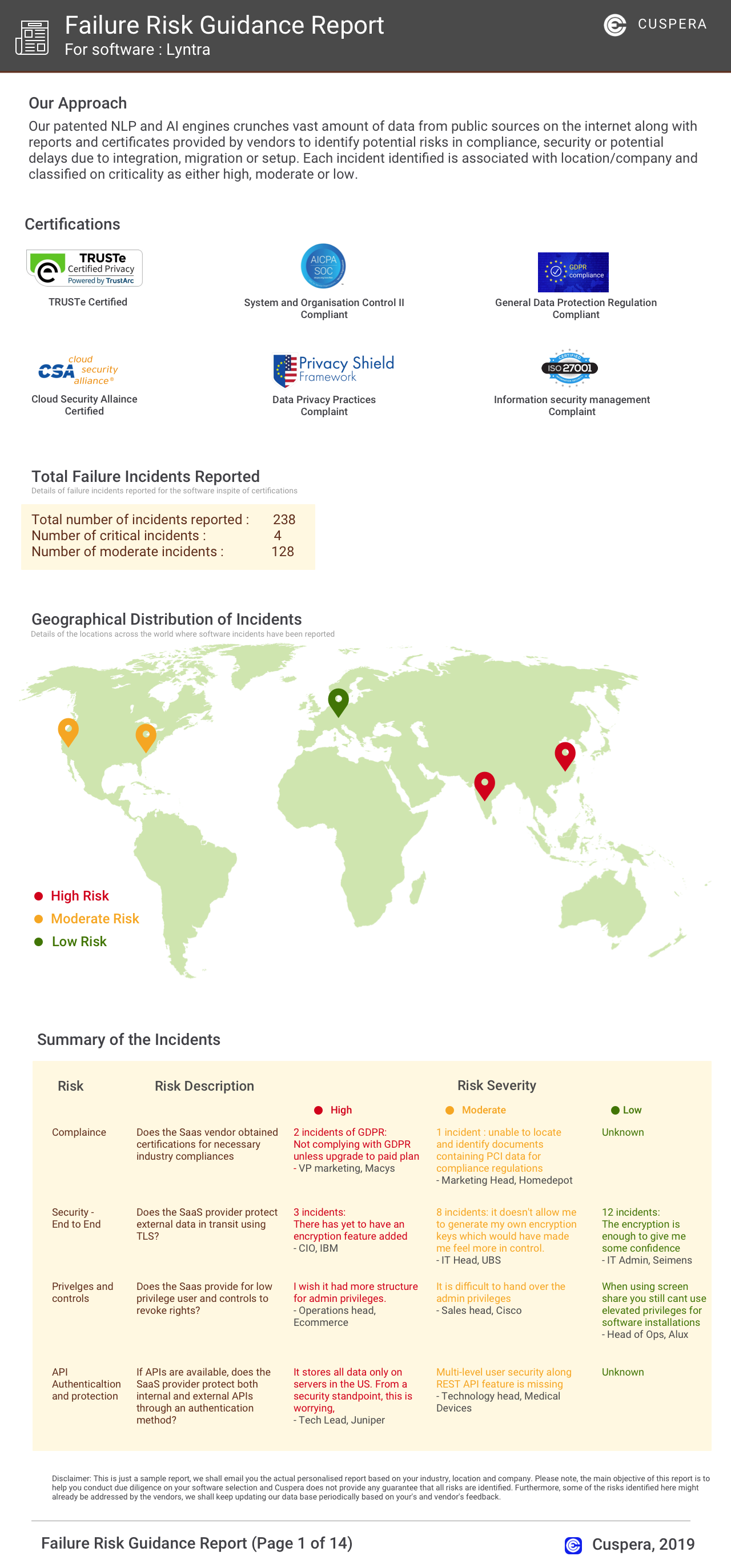
Software Failure Risk Guidance
?for BangDB
Overall Risk Meter
Top Failure Risks for BangDB
BangDB Profile
Company Name
BangDB
Company Website
https://bangdb.com/HQ Location
#887, 5A Cross, 18th Main,, Koramangala 6th Block, Bangalore, Karnataka 560034, IN
Employees
11-50
Social


Financials
SEED