

Docparser Overview
Docparser is a data capture solution that fetches documents from various sources and extracts needed data. It automates workflows by moving data to its designated location in real-time.
Use Cases
Customers recommend Workflow Management, Helpdesk Management, Contract Management, as the business use cases that they have been most satisfied with while using Docparser.
Docparser Use-Cases and Business Priorities: Customer Satisfaction Data
Docparser works with different mediums / channels such as E-Mail.
Docparser's features include Capture Information, Templates, Recording, etc. and Docparser support capabilities include Chat Support, Phone Support, 24/7 Support, etc. also Docparser analytics capabilities include Analytics, and Custom Reports.
Reviews
"...Docparser then works their magic and sends it back to Zapier that takes the accurate information and uploads it to my Salesforce and starts the lead followup campaign and notifies me that there is a new lead to contact...." Peer review by Scott K, Branch Manager, Banking
Peer review evidence (same sources as the product rating summary)
"...Docparser is a non-disruptive solution to automate document based workflows...." Peer review
"...With a help from support, I have been able to extract data from very unstructured documents...." Peer review by Verified Reviewer
"...It allows me to automatically pull needed content from pdf contracts that are emailed to me as a sales rep, and let's me input that into my crm...." Peer review by Ryan K, Designer, Founder, Owner, Marketing and Advertising
Docparser, eSign PDF, Tubular, Pixifi, Digital Pigeon, etc., all belong to a category of solutions that help Data Management Platform. Each of them excels in different abilities. Therefore, determining the best platform for your business will depend on your specific needs and requirements.
Popular Business Setting
for Docparser
Top Industries
- Banking
- Accounting
- Transportation/Trucking/Railroad
Popular in
- Small Business
- Mid Market
- Enterprise
Docparser is popular in Banking, Accounting, and Transportation/Trucking/Railroad and is widely used by Small Business, Mid Market, and Enterprise.
Docparser Customer wins, Customer success stories, Case studies
What Are the key features of Docparser for Workflow Management?
How does Docparser address your Helpdesk Management Challenges?
What Are the key features of Docparser for Contract Management?
Frequently Asked Questions (FAQ)
What buyers ask before choosing Docparser
Integrations What CRM integrations are available with Docparser?
Docparser offers several CRM integrations to enhance your data management and workflow automation. Specifically, you can integrate Docparser with popular platforms such as FreshBooks, QuickBooks, and Xero, allowing you to streamline your invoicing and financial processes. These integrations enable you to send parsed data directly to your chosen CRM, eliminating manual data entry and reducing the risk of errors. Additionally, Docparser can connect with Claris Connect, which further expands your integration capabilities with various applications. By leveraging these CRM integrations, businesses can improve data accuracy, save time on administrative tasks, and focus on higher-value activities, ultimately enhancing productivity and operational efficiency.
Integrations How does Docparser connect to Salesforce for data extraction?
Docparser connects to Salesforce for data extraction through a seamless integration that automates the transfer of parsed data directly into your Salesforce CRM. To set up this integration, you can utilize the Salesforce API to send documents to Docparser, where the data is extracted and structured. Additionally, you can post documents from Salesforce using Apex, allowing for a fully automated data entry process that eliminates manual tasks. This integration not only boosts productivity by saving time and reducing errors but also enhances data accuracy, enabling your team to focus on high-value activities such as personalized marketing and customer relationship management. By leveraging Docparser's capabilities alongside Salesforce, businesses can streamline their workflows and improve overall efficiency.
Integrations What are the setup steps for integrating Docparser with HubSpot?
To integrate Docparser with HubSpot, start by creating a Docparser account if you haven't already. Next, navigate to the 'Integrations' section within your Docparser dashboard and select HubSpot from the list of available integrations. You will need to authenticate your HubSpot account by following the secure OAuth2 authentication process, which ensures your credentials are kept safe. After connecting, you can set up parsing rules to extract the specific data you want from your documents. Finally, configure how you want the extracted data to be sent to HubSpot, such as creating new contacts or updating existing records. This integration streamlines your data entry process, allowing for more efficient management of customer information within HubSpot.
Integrations Can I use Docparser with Microsoft Power Automate for document workflows?
Yes, you can use Docparser with Microsoft Power Automate to streamline your document workflows effectively. This integration allows you to automate the extraction of raw data from various document types, including PDFs and Microsoft Word files, and send that data to other Microsoft applications like SharePoint, Dynamics 365, and Power BI. By setting up automated workflows in Power Automate, you can send documents directly to Docparser for processing and then route the extracted data back into your Microsoft ecosystem, significantly reducing manual data entry and improving accuracy. This seamless connection not only saves time but also enhances productivity by allowing your team to focus on higher-value tasks rather than repetitive data handling.
Integrations What limitations should I be aware of when integrating Docparser with third-party applications?
When integrating Docparser with third-party applications like FreshBooks, QuickBooks, or Xero, there are a few limitations to consider. First, while Docparser allows for the automation of data extraction and can send multiple invoices to these platforms, the setup process may require specific configurations that could vary by application. Additionally, some integrations may necessitate the use of Zapier to facilitate connections, which could introduce an extra layer of complexity. It's also important to note that while Docparser can handle various document formats, the processing speed and accuracy can be influenced by the quality of the documents being parsed. Lastly, users should be aware of any potential data security concerns, as sensitive information is being transferred between systems. Understanding these limitations can help ensure a smoother integration experience.
Integrations How does data flow between Docparser and Google Sheets during integration?
Data flows between Docparser and Google Sheets through a seamless integration that automates the transfer of parsed data from documents. Once you set up the integration by navigating to the ‘Integrations’ section in Docparser and selecting Google Sheets, you can choose the specific spreadsheet where you want the data to be sent. As documents are processed, Docparser extracts the relevant data and automatically adds new rows to the designated Google Sheets in real time. This eliminates the need for manual data entry, ensuring that your spreadsheets are updated instantly with accurate information. The integration not only saves time but also enhances data accuracy, allowing businesses to focus on more strategic tasks rather than repetitive data management.
Features What does the data extraction feature in Docparser do?
The data extraction feature in Docparser automates the process of capturing information from various types of documents, significantly reducing the need for manual data entry. By utilizing advanced AI technology, Docparser allows users to create customized parsing rules tailored to their specific needs, enabling the extraction of data from both digital and scanned documents. This feature supports bulk processing, even accommodating layout variations, which enhances efficiency and accuracy. Once set up, Docparser can automatically extract relevant data whenever new documents are imported, streamlining workflows and allowing teams to focus on higher-value tasks. Overall, this feature not only saves time and lowers costs associated with data entry but also improves data quality, making it an invaluable tool for businesses looking to optimize their document management processes.
Features How do I set up document parsing rules in Docparser?
To set up document parsing rules in Docparser, start by creating a Docparser account and then create a new parser. Next, upload a sample document that you want to extract data from. Once your document is uploaded, you can begin creating parsing rules by selecting the data fields you wish to extract. Docparser allows you to customize these rules to fit your specific needs, ensuring that you capture the right information. After setting up your parsing rules, you can test them to ensure accuracy. Additionally, you can integrate Docparser with platforms like Xero or QuickBooks to streamline your data flow further. This process enables you to automate data extraction, significantly reducing manual entry errors and saving time for more valuable tasks.
Features What formats can I download parsed data from Docparser?
You can download parsed data from Docparser in several versatile formats to suit your business needs. Specifically, the platform allows you to export your extracted data in Excel, CSV, JSON, or XML formats. This flexibility ensures that you can easily integrate the parsed data into various applications or systems, whether for reporting, data analysis, or further processing. The download options are accessible through the 'Downloads' section of your Docparser dashboard, making it straightforward to retrieve your data in the format that best fits your workflow. This capability enhances productivity by allowing seamless data transfer to other tools or platforms, streamlining your data management processes.
Features How do I automate workflows using Docparser's features?
To automate workflows using Docparser's features, start by signing up for a free trial and accessing your dashboard, where you can choose from a library of pre-set templates tailored for various document types. Select a template that matches your document or create a 'Custom Template' if needed. Next, upload your documents and utilize Docparser AI to automatically generate parsing rules, which you can further customize to fit your specific data extraction needs. Once your parser is set up, it will automatically extract data from new documents as they are imported, allowing you to streamline your operations. This automation not only saves time but also enhances data accuracy and reduces the costs associated with manual data entry, ultimately enabling your team to focus on more critical tasks.
Features What is the process for converting PDFs to data in Docparser?
The process for converting PDFs to data in Docparser is straightforward and user-friendly, requiring no coding knowledge. First, you start by uploading your PDF document, which can be either native or scanned. Once uploaded, you can select a pre-existing template or create a new Parser tailored to your specific data extraction needs by adding Parsing Rules. After setting up your Parser, Docparser will automatically extract the relevant data from the PDF, processing it in less than a minute, depending on file size and internet speed. The extracted data can then be downloaded in various formats, such as Excel, CSV, JSON, or XML, allowing for easy integration into your workflows. This efficient process helps improve data accuracy and significantly reduces the time spent on manual data entry.
Features How do I use the Docparser API for document automation?
To use the Docparser API for document automation, start by signing up for a Docparser account and accessing the API documentation for detailed guidance. First, authenticate your application using OAuth2 to ensure secure access. Next, programmatically import documents by sending requests to the API endpoints designed for document uploads. Once your documents are uploaded, you can utilize the API to trigger your customized Parsers, which will automatically extract data based on the parsing rules you've set up. The parsed data can then be retrieved through the API for integration into your workflows, such as sending it to spreadsheets, cloud applications, or other systems. This seamless integration allows you to automate data extraction efficiently, saving time and reducing manual errors in your processes.
ROI & pricing What measurable business value can Docparser provide for my organization?
Docparser provides significant measurable business value by automating data extraction from various document formats, which leads to substantial time savings and improved accuracy. By eliminating manual data entry, organizations can redirect resources towards high-value tasks such as personalized marketing campaigns and analytics, ultimately enhancing productivity. Users have reported saving hundreds of hours, which translates into lower operational costs and increased efficiency. Additionally, Docparser's ability to create customized Parsers tailored to specific use cases ensures that businesses can adapt to changing data formats without incurring extra time or costs for verification and cleanup. This flexibility not only boosts data quality but also supports better decision-making and fosters growth opportunities within the organization.
ROI & pricing How does Docparser contribute to cost savings and increased revenue for businesses?
Docparser contributes to cost savings and increased revenue for businesses by automating the data extraction process from various document types, such as PDFs and images, which significantly reduces the time and resources spent on manual data entry. By eliminating human error and enhancing data accuracy, companies can avoid costly mistakes that often arise from manual processes. This automation allows teams to focus on high-value tasks, such as personalized marketing campaigns and analytics, ultimately driving better business outcomes. Additionally, the flexibility of Docparser enables organizations to create customized Parsers tailored to their specific needs, further optimizing workflows and improving productivity. As a result, businesses can lower operational costs while maximizing efficiency, leading to increased revenue potential.
ROI & pricing What are the different pricing plans available for Docparser and what do they include?
Docparser offers a variety of flexible pricing plans designed to accommodate businesses of all sizes. The plans start with a free 14-day trial that allows users to parse documents of up to 5 pages without requiring a credit card. Following the trial, the Starter plan is priced at $32.50 per month, which includes essential features like pre-set templates and text extraction. For more advanced needs, the Multi-Layout Parsers add-on is available for $29.95 per month, allowing users to handle complex documents. Additionally, users can opt for the ‘we do it for you’ service for customized parser setups. Docparser also provides options for extended document retention at $19.95 per month, ensuring that businesses can choose a plan that best fits their specific document parsing requirements.
ROI & pricing What is the total cost of ownership for using Docparser over time?
The total cost of ownership for using Docparser over time includes several factors such as subscription fees, add-ons, and potential savings from increased efficiency. Docparser offers flexible pricing plans starting at $32.50 per month for the Starter plan, with additional costs for features like Extended Document Retention at $19.95/month and Multi-Layout Parsers at $29.95/month. Businesses can also benefit from the Parsing Assistant service, which provides customized parser setups. Over time, the investment in Docparser can lead to significant savings by reducing manual data entry costs, improving data accuracy, and enhancing productivity. By automating document processing, organizations can allocate resources to higher-value tasks, ultimately justifying the ongoing costs associated with the service.
ROI & pricing How quickly can I expect to see a return on investment after implementing Docparser?
The return on investment (ROI) after implementing Docparser can be seen quite rapidly, often within a few weeks, depending on your specific use case and volume of documents processed. By automating data extraction from various document types, such as PDFs and images, Docparser significantly reduces the time spent on manual data entry, allowing your team to focus on higher-value tasks like analytics and customer relationship management. Many users report saving hundreds of hours monthly, which translates directly into cost savings and increased productivity. Additionally, the improved data accuracy minimizes costly errors, further enhancing your ROI. With Docparser's user-friendly interface requiring no coding knowledge, your team can quickly set up and start benefiting from the tool, making it a valuable investment for any organization looking to streamline their data processing workflows.
ROI & pricing What are the implementation costs associated with adopting Docparser in my business?
The implementation costs associated with adopting Docparser in your business primarily depend on the specific features and add-ons you choose. Docparser offers a range of subscription plans, starting with basic features and scaling up to more advanced options like Multi-Layout Parsers for $29.95/month and Extended Document Retention for $19.95/month. Additionally, if you require assistance in setting up your Parsers, you can opt for the Parsing Assistant service, which provides a customized setup for recurring documents. While there are no coding requirements, you may also consider potential costs related to training your team to effectively use the platform. Overall, the investment in Docparser can lead to significant savings in time and reduced data entry costs, making it a valuable addition to your business operations.
Capabilities Can Docparser perform predictive analytics on extracted data?
Docparser itself does not perform predictive analytics directly on the extracted data; its primary function is to automate the data extraction process from various document formats like PDFs, Word documents, and images. However, the data extracted by Docparser can be exported in formats such as Excel, CSV, JSON, or XML, allowing users to easily integrate this data into analytics tools or platforms that specialize in predictive analytics, such as Tableau, Microsoft Power BI, or custom-built solutions. By leveraging the clean and structured data provided by Docparser, businesses can enhance their analytics capabilities, enabling them to derive insights and make data-driven decisions based on historical trends and patterns.
Capabilities Does Docparser support role-based access control for user management?
Docparser does not explicitly mention support for role-based access control (RBAC) in its user management features. However, it emphasizes data security as a core priority, ensuring that only a limited number of staff members can access customer data, which suggests a level of access management is in place. While the platform allows users to build customized Parsers without coding knowledge, it does not detail specific functionalities related to RBAC, such as assigning different permissions based on user roles. For organizations requiring strict access controls, it may be beneficial to reach out to Docparser's support team for clarification on user management capabilities and to discuss any specific needs regarding access control.
Capabilities Can Docparser automate document indexing for improved searchability?
Yes, Docparser can automate document indexing, significantly enhancing searchability within your organization. By utilizing its AI-powered document parsing capabilities, Docparser extracts relevant data from various document formats, including PDFs, Word files, and scanned images. Once the data is extracted, it can be indexed and organized according to your specific needs, making it easier to search and retrieve information quickly. This automation not only saves time by eliminating manual data entry but also improves data accuracy and accessibility. As a result, your team can efficiently locate documents and relevant information, facilitating better decision-making and collaboration. Overall, Docparser streamlines document management processes, making it a valuable tool for improving searchability in your business operations.
Capabilities Does Docparser provide data integrity checks to ensure accuracy?
Docparser does not explicitly mention built-in data integrity checks; however, it significantly enhances data accuracy by automating the data extraction process, which reduces the likelihood of human error associated with manual data entry. Once you set up a Parser, it captures data according to the customized rules you create, ensuring that the extracted information aligns with your specific requirements. This automation minimizes the need for time-consuming verification and rectification of data, which are common pitfalls in manual processes. Additionally, users can adjust formatting rules for data fields, further enhancing the accuracy of the extracted data. By streamlining workflows and improving data quality, Docparser helps organizations maintain reliable data integrity throughout their operations.
Capabilities Can Docparser handle large-scale document processing for enterprise needs?
Yes, Docparser can handle large-scale document processing for enterprise needs, as it allows users to build and customize multiple parsers tailored to various data capture requirements, including complex documents. While Docparser can process documents up to 30 pages by default, it offers the flexibility to increase this limit on a case-by-case basis, accommodating larger documents as necessary. Additionally, the platform supports a wide range of document formats, such as PDF, Word, and scanned images, ensuring versatility in handling diverse data sources. By automating data extraction, Docparser helps enterprises reduce human error, improve data quality, and significantly boost productivity, making it an effective solution for organizations looking to streamline their document processing workflows.
Capabilities Does Docparser comply with data security standards to protect sensitive information?
Yes, Docparser complies with data security standards to protect sensitive information. We prioritize data security by implementing bank-level encryption and maintaining a robust infrastructure within Amazon Web Services (AWS) cloud, which is spread across multiple data centers to ensure reliability and security. Our team members undergo extensive background checks and comprehensive training on data security protocols, ensuring that only a limited number of authorized staff can access customer data. Additionally, we regularly update our servers with the latest security patches to mitigate vulnerabilities. While we take data security very seriously, it's important to note that Docparser is not HIPAA certified and does not support health data-related use cases. For more detailed information, you can refer to our data security statement and privacy policy.
Use cases How can SDRs use Docparser to automate data extraction from lead documents?
Sales Development Representatives (SDRs) can leverage Docparser to automate data extraction from lead documents by following a straightforward process. First, they should sign up for a free trial and access the dashboard, where they can choose from pre-set templates tailored for various document types, such as lead forms or proposals. If a suitable template isn't available, SDRs can create a custom template. Once a document parser is set up, Docparser's AI can automatically generate parsing rules to extract relevant data, such as contact information and lead details, whenever new documents are uploaded. This automation significantly reduces manual data entry time, enhances data accuracy, and allows SDRs to focus on high-value tasks like nurturing leads and personalizing outreach, ultimately improving their productivity and effectiveness in converting leads into customers.
Use cases What are the best practices for marketing teams to implement Docparser in their document workflows?
To effectively implement Docparser in document workflows, marketing teams should start by identifying the specific types of documents they frequently process, such as PDFs, Word files, or images. Next, they should create customized Parsers tailored to each document type, utilizing Docparser's no-code platform to set up parsing rules that capture essential data accurately. It's also beneficial to integrate Docparser with existing tools like CRM systems or marketing platforms to streamline data flow and enhance productivity. Regularly reviewing and refining the Parsers based on team feedback will help maintain data accuracy and efficiency. Finally, training team members on how to use Docparser effectively will ensure everyone can leverage its capabilities, ultimately saving time and reducing manual data entry errors.
Use cases In what scenarios should RevOps teams consider using Docparser for data management?
RevOps teams should consider using Docparser for data management in scenarios where they need to streamline document processing and reduce manual data entry. For instance, when handling large volumes of invoices, contracts, or customer data, Docparser can automate data extraction from these documents, significantly improving accuracy and saving time. Its no-code platform allows team members without technical expertise to create customized Parsers tailored to specific data capture needs, making it ideal for diverse use cases across various industries. Additionally, by integrating Docparser with existing CRM systems, such as Salesforce or HubSpot, RevOps teams can enhance their data workflows, ensuring that critical information is readily available for analytics and decision-making, ultimately driving productivity and operational efficiency.
Use cases How can sales leaders leverage Docparser to streamline their document processing and improve sales efficiency?
Sales leaders can leverage Docparser to streamline their document processing by automating the extraction of data from various document types, such as PDFs, Word files, and images. By implementing Docparser, sales teams can eliminate the time-consuming manual data entry that often leads to errors and delays in workflows. This automation allows sales leaders to focus on high-value tasks, such as nurturing customer relationships and developing personalized marketing campaigns, ultimately improving sales efficiency. Additionally, Docparser's customizable Parsers enable teams to tailor data extraction to their specific needs, ensuring accurate and organized data that facilitates better decision-making and faster response times. By integrating Docparser into their operations, sales leaders can significantly lower data entry costs and enhance overall productivity.
Use cases What specific document types can marketing agencies process with Docparser to enhance their workflows?
Marketing agencies can enhance their workflows with Docparser by processing a variety of document types, including PDFs (both native and scanned), Word documents, Excel files, CSVs, and image formats such as PNG, JPEG, and TIFF. This versatility allows agencies to extract critical data from invoices, purchase orders, sales orders, shipping documents, and form-based contracts, streamlining their data entry processes. By automating the extraction of information from these documents, agencies can significantly reduce manual work, minimize data entry errors, and save valuable time, enabling their teams to focus on high-value tasks like personalized marketing campaigns and analytics. Overall, Docparser empowers marketing agencies to improve efficiency and accuracy in their document handling, ultimately enhancing their operational workflows.
Use cases How does Docparser help teams reduce data entry errors during the document handling process?
Docparser helps teams reduce data entry errors during the document handling process by automating data extraction from various document types, which eliminates the need for manual data entry that is prone to human mistakes. Users can create customized Parsers tailored to their specific needs without any coding knowledge, allowing for precise parsing rules that ensure data accuracy and proper formatting. Once a Parser is set up, it automatically extracts data from incoming documents, significantly lowering the risk of errors associated with manual input. This streamlined approach not only enhances data quality but also saves valuable time, enabling teams to focus on higher-value tasks and improve overall productivity. By preventing data entry errors, Docparser ultimately contributes to more reliable data management and better decision-making within organizations.
Alternatives What are the key differences between Docparser and Docsumo?
The key differences between Docparser and Docsumo primarily revolve around pricing, features, and usability. Docparser offers a free version and a starting plan at $32.5/month, while Docsumo does not provide a free version and has custom pricing for its plans. Both platforms feature pre-set templates, text extraction, and table extraction capabilities, but Docparser emphasizes its no-code approach, allowing users to build and customize multiple parsers easily. Additionally, Docparser integrates with various cloud applications through partners like Zapier, enhancing its versatility in data management. In contrast, Docsumo may have different integration capabilities and user experiences. Ultimately, the choice between the two will depend on specific business needs, budget constraints, and desired features.
Alternatives How does Docparser compare to Hypatos in terms of features and usability?
Docparser and Hypatos both serve the purpose of document data extraction, but they differ significantly in features and usability. Docparser offers pre-set templates, text and table extraction capabilities, and allows users to create customized parsing rules, making it versatile for various document types. It supports a wide range of file formats, including PDFs, Word documents, and images, and integrates seamlessly with platforms like Google Sheets and Salesforce. In contrast, Hypatos lacks pre-set templates and has limited customization options, which may hinder usability for complex documents. Additionally, Docparser requires no coding knowledge, making it accessible for users of all skill levels, while Hypatos may present a steeper learning curve. Overall, Docparser is often seen as a more user-friendly and flexible alternative for businesses looking to streamline their document processing workflows.
Alternatives What are the best alternatives to Docparser for document parsing?
When considering alternatives to Docparser for document parsing, two notable options are Parsio and Hypatos. Parsio offers a user-friendly interface for data extraction from various document formats, similar to Docparser, but may require more technical knowledge for customization. On the other hand, Hypatos focuses on automating document processing with advanced AI capabilities, which can be beneficial for businesses with complex parsing needs. While both alternatives provide effective solutions for extracting data from documents, Docparser stands out with its no-code approach, allowing users to create customized parsers without any technical expertise. Ultimately, the best choice will depend on your specific requirements, such as ease of use, customization capabilities, and the types of documents you need to parse.
Alternatives Is Docparser a better choice than Altair Monarch for data extraction?
Docparser can be considered a better choice than Altair Monarch for data extraction, particularly for businesses seeking flexibility and ease of use. While both tools offer robust data extraction capabilities, Docparser stands out with its ability to process both digital and scanned documents, thanks to its OCR feature, which Altair Monarch lacks. Additionally, Docparser provides a free version with no time limit and more affordable pricing plans starting at $32.5 per month, compared to Altair Monarch's custom pricing that is only available upon request. Docparser also allows users to create custom parsing rules and integrates seamlessly with various cloud applications through platforms like Zapier, enhancing workflow automation. Ultimately, the choice depends on specific business needs, but for those prioritizing flexibility and cost-effectiveness, Docparser is a compelling alternative.
Alternatives What makes Docparser stand out compared to Kofax?
Docparser stands out compared to Kofax primarily due to its user-friendly, no-coding-required interface, allowing anyone in an organization to create customized document Parsers without technical expertise. While Kofax offers robust features for enterprise-level document processing, it often requires more technical knowledge and setup time. Docparser excels in flexibility, enabling users to build multiple Parsers tailored to various document types and use cases, which is particularly beneficial for businesses with diverse data capture needs. Additionally, Docparser emphasizes speed and accuracy, automating data extraction from both digital and scanned documents, thus significantly reducing human error and manual data entry costs. This focus on ease of use and customization makes Docparser an attractive option for organizations looking to streamline their data processing workflows efficiently.
Alternatives How does Docparser perform against Parseur in document processing?
Docparser and Parseur are both effective document processing solutions, but they cater to different user needs. Docparser is a no-code, AI-powered document parser that allows users to build and customize multiple parsers for various data capture requirements, making it highly flexible and user-friendly. It supports a wide range of document formats, including PDFs, Word, and Excel, and typically processes documents in under a minute. In contrast, Parseur also offers document parsing capabilities but may have different customization options and integrations. Businesses looking for a solution that minimizes manual data entry and enhances data accuracy may find Docparser particularly beneficial due to its advanced parsing rules and automation features. Ultimately, the choice between Docparser and Parseur will depend on specific business needs and preferences.
Docparser Competitors




Docparser Features
- Low
- Medium
- High
| FEATURE | RATINGS AND REVIEWS |
|---|---|
| AI Powered | Read Reviews (2) |
| Analytics | Read Reviews (11) |
| Custom Reports | Read Reviews (59) |
| CAPABILITIES | RATINGS AND REVIEWS |
|---|---|
| AI Powered | Read Reviews (2) |
| Analytics | Read Reviews (11) |
| Custom Reports | Read Reviews (59) |
Docparser Integrations
Docparser integrates with a wide range of software applications through its robust data import and export capabilities.


Few API Integrations for Docparser


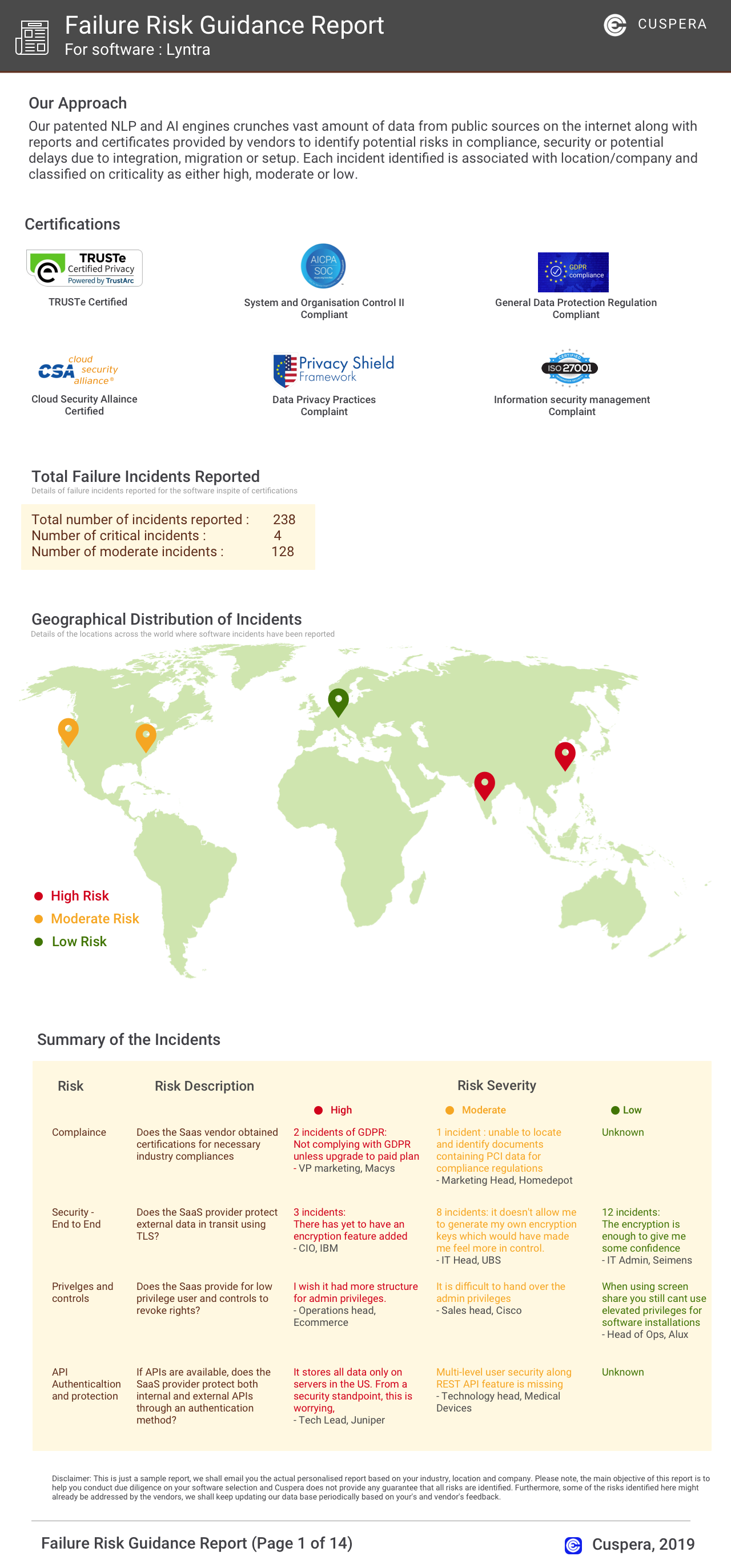
Software Failure Risk Guidance
?for Docparser
Overall Risk Meter
Top Failure Risks for Docparser
Docparser, Inc. Profile
Company Name
Docparser, Inc.
Company Website
https://docparser.com/HQ Location
326, rue de Vaugirard, Paris, State 75015, FR
Social