

FormAssembly Overview
FormAssembly offers a no-code form builder with enterprise-level security, compliance, and customization. Users can easily create forms and collect data efficiently.
Use Cases
Customers recommend Sales Document Management, Onboarding, Workflow Management, as the business use cases that they have been most satisfied with while using FormAssembly.
Business Priorities
Acquire Customers and Scale Best Practices are the most popular business priorities that customers and associates have achieved using FormAssembly.
FormAssembly Use-Cases and Business Priorities: Customer Satisfaction Data
FormAssembly works with different mediums / channels such as Support Groups. and Mobile.
FormAssembly's features include Feedback Surveys, Recording, Personalization, etc. and FormAssembly support capabilities include Email Support, Phone Support, Chat Support, etc. also FormAssembly analytics capabilities include Analytics, and Custom Reports.
Reviews
"...Enable customers to review reservation data and complete the contract process including receiving deposit payments prior to concluding the deal...." Peer review by Mike M, Managing Partner, Information Technology and Services
Peer review evidence (same sources as the product rating summary)
"...Also for healthcare, education and nonprofit organizations, having HIPAA compliance and eSign capabilities can be a massive time saver...." Peer review by Medhanie H., Non-Profit Organization Management
"...Personalized Onboarding Includes onboarding call..." Secure Online Forms For Business
"...FormAssembly has allowed me to automate so many processes in my team's workflow - the Salesforce connector is super powerful, and the support team is very available for troubleshooting...." Peer review by Sarah L., Legal Services
FormAssembly, Rippling, NinjaOne (formerly NinjaRMM), ProveSource, Ignition, etc., all belong to a category of solutions that help Lead Generation. Each of them excels in different abilities. Therefore, determining the best platform for your business will depend on your specific needs and requirements.
Popular Business Setting
for FormAssembly
Top Industries
- Non-Profit Organization Management
- Education
- Information Technology and Services
Popular in
- Small Business
- Mid Market
- Enterprise
FormAssembly is popular in Non-Profit Organization Management, Education, and Information Technology And Services and is widely used by Small Business, Mid Market, and Enterprise.
FormAssembly Customer wins, Customer success stories, Case studies
How efficiently Does FormAssembly manage your Sales Document Management?
Why is FormAssembly the best choice for Onboarding?
How can FormAssembly enhance your Workflow Management process?
How can FormAssembly optimize your Helpdesk Management Workflow?
What solutions does FormAssembly provide for Engagement Management?
How to Build a Salesforce Web-to-Lead Form with FormAssembly

Frequently Asked Questions (FAQ)
What buyers ask before choosing FormAssembly
Integrations What CRM integrations are available with FormAssembly?
FormAssembly offers robust integrations with several CRM systems, most notably Salesforce, which allows for seamless data flow between forms and your CRM. This integration enables operational data from forms, such as payment information, to automatically populate Salesforce without exposing sensitive cardholder data. Additionally, FormAssembly can sync with other platforms like Google Sheets for data analysis and Microsoft Excel for reporting purposes. These integrations help streamline workflows, reduce manual data entry, and enhance overall efficiency in managing customer relationships. By leveraging these CRM integrations, businesses can ensure that their data collection processes are not only efficient but also compliant with industry standards such as HIPAA and GDPR.
Integrations How does FormAssembly connect to Salesforce and what are the setup steps?
FormAssembly connects to Salesforce through a native Salesforce connector that allows users to map form fields directly to Salesforce objects, facilitating automated record creation and updates. To set up this integration, administrators should first log into their FormAssembly account and navigate to the Salesforce connector settings. From there, they can authenticate their Salesforce account, select the desired Salesforce objects, and configure the field mappings between the form and Salesforce. It's essential to define validation rules to ensure data quality and prevent duplicate records. Once the setup is complete, users can embed forms on their websites or share them directly, enabling seamless data collection that flows directly into Salesforce, enhancing workflow efficiency and data management.
Integrations Can I integrate FormAssembly with HubSpot and what features does the connector offer?
Yes, you can integrate FormAssembly with HubSpot, and the connector offers a range of powerful features designed to enhance your data collection and workflow automation. This integration allows you to build secure, dynamic web forms that can seamlessly route data directly into HubSpot’s CRM, improving lead capture and data accuracy without requiring any coding. With FormAssembly, you can create complex forms that support conditional logic and multi-step workflows, enabling you to collect cleaner data and streamline processes. Additionally, the integration facilitates automated data entry, eliminating manual work and ensuring that your marketing and sales teams have access to up-to-date information. This combination empowers businesses to optimize their data management and enhance overall campaign efficiency.
Integrations What is the data flow between FormAssembly and Salesforce during integration?
The data flow between FormAssembly and Salesforce during integration is designed to streamline data collection and management. When a user submits a form created in FormAssembly, the data captured can be automatically sent to Salesforce, where it can create or update records in both standard and custom objects. This integration allows administrators to map form fields directly to Salesforce fields, ensuring that the data is structured and validated before it enters the CRM. Additionally, FormAssembly supports features like dynamic picklists, which pull live data from Salesforce, ensuring users see the most current options. This seamless flow not only reduces manual data entry but also enhances data quality, preventing issues like duplicate records and inconsistencies, ultimately supporting more efficient workflows and automation within Salesforce.
Integrations Are there any limitations when using FormAssembly's API for integrations?
FormAssembly's API for integrations is robust, allowing seamless connections with various platforms, including Salesforce, but it does come with certain limitations. For instance, while you can create and update records in connected systems, the API may have rate limits that restrict the number of requests you can make within a specific timeframe. Additionally, certain advanced features or complex workflows may require more intricate setup or additional permissions. It's also important to note that while FormAssembly supports a wide range of integrations, not all third-party applications may be fully compatible, so it's advisable to review the specific API documentation for any constraints related to your intended use case. Overall, understanding these limitations can help you effectively plan your integration strategy with FormAssembly.
Integrations How does the bidirectional sync work between FormAssembly and Salesforce?
The bidirectional sync between FormAssembly and Salesforce allows for seamless data flow between the two platforms, ensuring that information collected through forms is automatically updated in Salesforce and vice versa. This integration enables administrators to map form fields directly to Salesforce objects, facilitating real-time updates without the need for coding or middleware. When a form is submitted, the data can create or update records in Salesforce, while any changes made in Salesforce can prefill form fields for users. This two-way synchronization helps maintain data accuracy, reduces manual entry, and enhances overall workflow efficiency, making it an invaluable tool for organizations looking to streamline their data management processes.
Features What does the customizable form builder in FormAssembly do?
The customizable form builder in FormAssembly empowers users to create a wide variety of web forms tailored to their specific needs without requiring technical expertise. With its intuitive drag-and-drop interface, users can design forms for applications, surveys, registrations, and more, utilizing features like conditional logic, branching, and multi-step workflows to enhance user experience. This flexibility allows teams to streamline complex data collection processes while ensuring compliance with standards such as HIPAA and GDPR. Additionally, the forms can seamlessly integrate with systems like Salesforce and Google Sheets, enabling efficient data management and reducing manual entry. Overall, FormAssembly's customizable form builder enhances data collection efficiency and improves user engagement, making it a valuable tool for businesses of all sizes.
Features How do I set up automated email notifications in FormAssembly?
To set up automated email notifications in FormAssembly, first log into your FormAssembly account and select the form you want to configure. Navigate to the "Notifications" section within the form settings. Here, you can create a new notification by specifying the recipient's email address, subject line, and message content. Utilize dynamic messaging to personalize your notifications with relevant details from the form submissions. You can also set conditions for when notifications should be sent, such as after a form submission or based on specific responses. Once you’ve configured the settings to your satisfaction, save your changes. This no-code setup allows you to automate communication efficiently, ensuring that stakeholders are promptly informed and enhancing overall workflow management.
Features What features does the dynamic layout offer for document mapping in FormAssembly?
The dynamic layout feature in FormAssembly offers a powerful solution for mapping survey responses into clear, structured documents. This functionality allows users to create documents that are not only visually appealing but also organized in a way that enhances readability and comprehension. By utilizing dynamic layouts, businesses can ensure that the information collected through forms is presented in a consistent format that aligns with their branding standards. Additionally, this feature supports workflow integration, enabling automatic routing or archiving of documents based on predefined criteria. This streamlining of document management not only saves time but also reduces the risk of errors associated with manual processing, ultimately enhancing operational efficiency and improving data governance across teams and departments.
Features How can I use the progress bar feature to improve multi-page form completion rates?
To improve multi-page form completion rates using FormAssembly's Progress Bar feature, start by enabling the progress bar on your forms, which provides users with a clear visual indicator of their progress through the form. This feature helps reduce confusion and frustration by showing respondents how many steps are left, making the process feel more manageable. Customize the progress bar to align with your brand and user experience goals, ensuring it is visually appealing and intuitive. Additionally, consider implementing conditional logic to personalize the experience based on user responses, and utilize the Save & Resume feature to allow users to complete the form at their convenience. By combining these elements, you can create a streamlined and engaging form experience that encourages users to complete the entire process.
Features What is the purpose of the audit-ready logging feature in FormAssembly?
The audit-ready logging feature in FormAssembly serves the critical purpose of providing a comprehensive history of form activity, including user logins and changes made to forms. This functionality is essential for organizations that need to maintain compliance with various regulations such as HIPAA, GDPR, and SOC 2, as it supports internal audits and governance reviews by ensuring full visibility into user actions. By tracking these activities, businesses can identify potential security risks, ensure data integrity, and demonstrate compliance during audits. This level of detailed logging not only enhances accountability but also helps organizations optimize their workflows and improve overall data governance, making FormAssembly a robust choice for businesses prioritizing security and compliance.
Features How do I automate workflows using FormAssembly's data collection tools?
To automate workflows using FormAssembly's data collection tools, start by designing structured forms that capture the necessary data for your processes. Utilize FormAssembly’s AI assistant, Fai, to quickly generate forms with built-in validation rules and workflow steps tailored to your needs. Once your forms are created, leverage advanced features like conditional logic and branching to guide users through multi-step processes seamlessly. Integrate your forms with systems like Salesforce to ensure that data flows directly into your existing workflows, eliminating manual data entry. Additionally, set up automated actions based on form submissions, such as routing information to the appropriate teams or triggering follow-up emails. This comprehensive approach allows you to streamline data collection and enhance operational efficiency across your organization.
ROI & pricing What measurable business value can FormAssembly provide for my organization?
FormAssembly provides measurable business value by streamlining data collection processes, enhancing operational efficiency, and ensuring compliance with industry standards such as HIPAA and GDPR. By enabling organizations to create customized forms with features like conditional logic and branching, FormAssembly allows for tailored user experiences that can lead to higher completion rates and better data quality. The platform's seamless integration with systems like Salesforce and Google Sheets ensures that data flows directly into existing workflows, eliminating manual entry and reducing errors. Additionally, built-in reporting tools provide actionable insights that help organizations refine processes and improve decision-making. Overall, FormAssembly empowers teams to capture critical business data effectively, driving informed strategies and enhancing customer service.
ROI & pricing How does FormAssembly impact ROI and cost savings for nonprofits?
FormAssembly significantly impacts ROI and cost savings for nonprofits by streamlining data collection and management processes, which reduces operational costs and enhances efficiency. For instance, organizations like the Center for Action and Contemplation saved $60,000 annually by replacing outdated data platforms with FormAssembly, while Big Brothers Big Sisters of America saved $8,000 per year by digitizing their application processes. The platform's seamless integration with Salesforce allows for automated data entry, minimizing manual work and errors, which translates to time savings—like the 30 minutes saved per application reported by Big Brothers Big Sisters. Additionally, nonprofits can improve their service delivery and focus on their missions rather than paperwork, ultimately leading to better resource allocation and increased funding opportunities. Overall, FormAssembly empowers nonprofits to maximize their impact while minimizing costs.
ROI & pricing What are the different pricing plans available for FormAssembly, and what do they include?
FormAssembly offers several pricing plans designed to cater to organizations of varying sizes and needs, including the Explorer, Atlas Team, Enterprise, and Gov Cloud plans. The Explorer Plan includes unlimited forms, responses, and workflows, along with a custom subdomain and advanced workflows. The Atlas Team Plan builds on this with enhanced security features, including HIPAA compliance, and additional privacy options. The Enterprise Plan provides even more robust features tailored for large organizations, while the Gov Cloud Plan is specifically designed for government entities. Each plan supports unlimited active data collection workflows and customizable document generation, ensuring that users can scale their data collection efforts without constraints. For detailed comparisons of features and pricing, you can explore the full list on the FormAssembly website.
ROI & pricing What is the total cost of ownership for using FormAssembly over time?
The total cost of ownership (TCO) for using FormAssembly over time includes several factors that contribute to its overall value. FormAssembly offers scalable pricing plans that cater to various team sizes and needs, allowing businesses to start simple and scale as required. Costs may include subscription fees based on the number of forms and submissions, as well as potential expenses for advanced features or integrations with systems like Salesforce and Google Sheets. Additionally, the platform's no-code customization and robust security features, including compliance with HIPAA and GDPR, can reduce the need for extensive IT resources and mitigate risks associated with data management. By streamlining workflows and enhancing data collection efficiency, FormAssembly can lead to long-term savings and improved operational effectiveness, making it a cost-effective solution for businesses looking to optimize their data processes.
ROI & pricing How quickly can I expect to see value from implementing FormAssembly in my business?
You can expect to see value from implementing FormAssembly in your business almost immediately, as the platform is designed for rapid deployment and ease of use. With its intuitive no-code builder, teams can create and launch forms quickly, allowing for immediate data collection without extensive technical expertise. Additionally, features like AI-assisted guidance from Fai help streamline the form creation process, enabling users to generate structured forms and workflows efficiently. As responses flow directly into connected systems like Salesforce, you can eliminate manual data entry and enhance operational efficiency right away. This seamless integration and the ability to customize forms for various needs ensure that you can start capturing valuable business data and insights almost as soon as you begin using FormAssembly.
ROI & pricing What are the potential revenue impacts of using FormAssembly for data collection and management?
Using FormAssembly for data collection and management can significantly impact revenue by streamlining processes and enhancing data-driven decision-making. By automating data collection through customizable forms and surveys, businesses can reduce manual entry errors and save time, allowing teams to focus on higher-value tasks. The platform's integration with systems like Salesforce ensures that collected data flows seamlessly into existing workflows, enabling timely follow-ups and improved customer engagement. Additionally, FormAssembly's advanced reporting tools provide actionable insights that can refine marketing strategies and optimize resource allocation, ultimately driving higher conversion rates. By ensuring compliance with regulations like GDPR and HIPAA, businesses can also build trust with customers, which is essential for long-term revenue growth. Overall, FormAssembly empowers organizations to turn data into a strategic asset that supports revenue generation.
Capabilities What can FormAssembly do for secure data collection?
FormAssembly provides a robust platform for secure data collection by implementing advanced security features such as data encryption in transit and at rest, secure authentication, and strict access controls. It ensures compliance with various regulations, including HIPAA, GDPR, and PCI DSS Level 1, which is crucial for organizations handling sensitive information. With FormAssembly, users can create custom web forms that are not only versatile but also embedded securely on their sites or hosted by FormAssembly. The platform allows for data localization, giving organizations control over where their data is stored across multiple AWS regions, which is essential for meeting regional data laws. Additionally, FormAssembly integrates seamlessly with CRM systems like Salesforce, enabling automatic routing of structured data into operational workflows, thereby enhancing both security and efficiency in data management.
Capabilities Does FormAssembly support HIPAA compliance for sensitive data?
Yes, FormAssembly supports HIPAA compliance for sensitive data collection, specifically on its enterprise-level plans. This means that healthcare organizations can securely collect protected health information (PHI) such as patient intake data, medical histories, and referral documentation while adhering to HIPAA regulations. FormAssembly not only provides the necessary security measures, including encryption and access controls, but also offers a Business Associate Agreement (BAA) when required, ensuring that all data handling meets compliance standards. This capability allows healthcare teams to focus on delivering care without compromising patient privacy, making FormAssembly a trusted solution for organizations that need to manage sensitive data responsibly and efficiently.
Capabilities Can FormAssembly handle granular user permissions for data access?
Yes, FormAssembly can effectively handle granular user permissions for data access, allowing organizations to control who sees and interacts with sensitive information. With its customizable user permissions and access control features, administrators can assign specific roles, manage visibility, and limit access based on individual user needs. This no-code solution ensures that sensitive data is protected while facilitating secure collaboration across teams and external partners. As your organization grows or shifts, FormAssembly's central dashboard makes it easy to adjust permissions, ensuring compliance with regulations like HIPAA and GDPR. This level of control not only enhances security but also streamlines workflows, making it an ideal choice for businesses that require both usability and robust data protection.
Capabilities What enterprise readiness features does FormAssembly offer for scalability?
FormAssembly offers a range of enterprise readiness features designed to support scalability for organizations of all sizes. The platform provides a no-code setup that allows users to create forms and workflows easily, while also enabling developers to implement advanced customizations as needed. It ensures compliance with rigorous standards such as HIPAA, GDPR, and SOC 2, which is crucial for enterprises handling sensitive data. Additionally, FormAssembly integrates seamlessly with systems like Salesforce and Google Sheets, facilitating efficient data management and eliminating manual entry. The platform also includes robust security measures, such as role-based access controls and encryption, ensuring that data remains secure as organizations grow. With powerful reporting tools built-in, enterprises can gain actionable insights to refine processes and enhance operational efficiency.
Capabilities Does FormAssembly provide tools for audit-ready tracking and compliance?
Yes, FormAssembly provides robust tools for audit-ready tracking and compliance, ensuring that organizations can maintain transparency and adhere to regulatory standards. The platform features comprehensive audit-ready logging, which allows users to access a complete history of form activity, including user logins and changes, facilitating internal audits and compliance reviews. Additionally, FormAssembly supports various compliance standards such as HIPAA, GDPR, and SOC 2, making it suitable for industries with stringent data protection requirements. With secure data sharing capabilities and role-based access controls, organizations can collaborate effectively while safeguarding sensitive information. This combination of features not only enhances compliance but also streamlines the auditing process, providing peace of mind for businesses managing sensitive data.
Capabilities Can FormAssembly streamline workflows across different teams and data types?
Yes, FormAssembly can effectively streamline workflows across different teams and data types by integrating data collection with daily operations. Its platform allows for the creation of structured forms that automate workflows, ensuring that data flows seamlessly into connected systems like Salesforce. This integration eliminates manual data entry, reduces errors, and supports downstream actions, making data instantly actionable across various departments. Additionally, FormAssembly's features, such as conditional logic and branching, enable teams to personalize workflows based on user input, enhancing collaboration and efficiency. With its no-code customization options, even non-technical users can build sophisticated forms that cater to diverse data needs, making it an ideal solution for organizations looking to optimize their workflows and improve data management.
Use cases How can SDRs use FormAssembly to streamline lead capture and qualification processes?
Sales Development Representatives (SDRs) can leverage FormAssembly to streamline lead capture and qualification processes by utilizing its robust form-building capabilities to create customized lead capture forms that integrate seamlessly with Salesforce and other CRM systems. By designing forms that validate lead data in real-time, SDRs can ensure that only qualified leads are submitted, reducing manual data entry and improving data accuracy. Additionally, FormAssembly's features like conditional logic and branching allow SDRs to tailor the lead qualification process based on user responses, enhancing the overall user experience. With automated workflows triggered by form submissions, SDRs can efficiently route leads to the appropriate team members for follow-up, ultimately accelerating the sales process and improving conversion rates.
Use cases What are the best practices for marketing teams to implement FormAssembly for effective data collection?
To implement FormAssembly effectively for data collection, marketing teams should follow several best practices. First, leverage Fai, the AI assistant, to create optimized forms that align with campaign goals and compliance requirements, ensuring high data quality. Next, utilize conditional logic and multi-step forms to enhance user experience and engagement, making it easier for respondents to provide accurate information. Additionally, ensure that forms are mobile-friendly and branded to maintain consistency with your marketing materials. Integrate FormAssembly with your CRM, such as Salesforce, to streamline data flow and eliminate manual entry, allowing for real-time insights and actions. Finally, regularly review and analyze collected data to refine forms and improve future campaigns, ensuring that your data collection process remains efficient and effective.
Use cases In what scenarios should RevOps teams utilize FormAssembly to enhance data accuracy and reporting?
RevOps teams should utilize FormAssembly in scenarios where accurate data collection and reporting are critical for informed decision-making and operational efficiency. For instance, when launching new marketing campaigns or gathering customer feedback, FormAssembly's dynamic forms with conditional logic can ensure that the right data is captured without manual entry errors. Additionally, its built-in reporting tools provide actionable insights, allowing teams to identify trends and optimize processes effectively. The platform's seamless integration with systems like Salesforce ensures that data flows directly into existing workflows, enhancing data accuracy and reducing discrepancies. Furthermore, FormAssembly's compliance with standards such as HIPAA and GDPR ensures that sensitive data is handled securely, making it an ideal choice for RevOps teams focused on maintaining data integrity while driving business growth.
Use cases How can sales leaders leverage FormAssembly to improve their team's onboarding and training workflows?
Sales leaders can leverage FormAssembly to enhance their team's onboarding and training workflows by creating structured forms that streamline the collection of essential information and automate processes. With FormAssembly's no-code setup, sales leaders can quickly design onboarding forms that capture necessary data, such as training completion and feedback, while integrating seamlessly with systems like Salesforce to ensure real-time updates. The platform supports conditional logic, allowing for personalized training paths based on individual needs, and features like Save & Resume help maintain engagement without overwhelming new hires. By utilizing FormAssembly, sales leaders can ensure a more efficient onboarding experience, reduce manual data entry, and ultimately improve team productivity and retention.
Use cases What specific use cases demonstrate how healthcare organizations can benefit from FormAssembly's data collection capabilities?
Healthcare organizations can leverage FormAssembly's data collection capabilities in various impactful ways. For instance, they can manage healthcare program applications through secure forms that ensure complete and compliant submissions, streamlining the intake process. Additionally, FormAssembly facilitates clinical approval and documentation workflows by automating approvals and document collection while maintaining strict access controls, which is crucial for compliance with regulations like HIPAA. Organizations can also collect protected health information (PHI) such as patient intake data and medical histories efficiently, reducing manual data entry and improving accuracy. A notable example is Alosa Health, which replaced paper forms with digital surveys, allowing field clinicians to collect feedback on iPads and directly send data to Salesforce, enhancing reporting and stakeholder engagement. Overall, FormAssembly transforms data collection into a seamless, secure, and automated process that supports healthcare teams in delivering better patient care.
Use cases How can organizations in the insurance industry optimize their workflows using FormAssembly for client onboarding?
Organizations in the insurance industry can optimize their workflows for client onboarding using FormAssembly by leveraging its powerful form-building capabilities and seamless integrations. With FormAssembly, insurance companies can create dynamic, multi-step onboarding forms that incorporate conditional logic to tailor the experience based on client responses. This ensures that clients only see relevant questions, making the process more efficient and user-friendly. Additionally, FormAssembly allows for direct integration with systems like Salesforce, enabling automatic data flow and reducing manual entry errors. The platform's no-code setup empowers non-technical teams to quickly build and customize forms, while its compliance with HIPAA and GDPR ensures that sensitive client information is handled securely. By streamlining data collection and automating workflows, FormAssembly helps insurance organizations enhance client onboarding efficiency and improve overall service delivery.
Alternatives What are the key differences between FormAssembly and Zoho Forms?
FormAssembly and Zoho Forms both offer form-building solutions, but they cater to different needs and functionalities. FormAssembly excels with its no-code platform that allows users to create complex forms with advanced features like conditional logic, multi-step workflows, and seamless integrations with systems like Salesforce and Google Sheets. It is designed for scalability and compliance, meeting rigorous standards such as HIPAA and GDPR, making it suitable for enterprises that require secure data management. In contrast, Zoho Forms provides a more straightforward form-building experience with basic customization options and integrations within the Zoho ecosystem. While Zoho Forms is user-friendly for small teams, FormAssembly's robust capabilities and enterprise-grade security make it a better choice for organizations needing extensive data collection and management features.
Alternatives How does FormAssembly compare to ProntoForms in terms of features?
FormAssembly and ProntoForms both offer robust solutions for form building, but they cater to different needs and feature sets. FormAssembly excels in its no-code customization, allowing users to create dynamic forms with advanced features like conditional logic, branching, and a seamless integration with systems like Salesforce and Google Sheets. It also emphasizes compliance with standards such as HIPAA and GDPR, making it suitable for industries that require stringent data protection. In contrast, ProntoForms focuses more on mobile form solutions, providing offline capabilities and a strong emphasis on field data collection for on-the-go users. While both platforms support complex workflows, FormAssembly's centralized management and extensive customization options may appeal more to enterprises looking for scalability and integration, whereas ProntoForms is ideal for teams needing mobile-first solutions.
Alternatives What makes FormAssembly a better choice than Kahootz for data collection?
FormAssembly stands out as a superior choice for data collection compared to Kahootz due to its robust integration capabilities and advanced data management features. While Kahootz offers collaboration tools, FormAssembly excels in connecting data collection directly with operational workflows, allowing seamless integration with platforms like Salesforce and Google Sheets. This eliminates manual data entry and enhances data accuracy. Additionally, FormAssembly supports complex survey logic, including conditional logic and branching, which enables more personalized user experiences. Its enterprise-grade security ensures compliance with HIPAA, GDPR, and SOC 2 standards, making it suitable for organizations with stringent data protection needs. Overall, FormAssembly provides a comprehensive, secure, and scalable solution tailored for diverse team sizes and skill levels, making it a more effective choice for businesses focused on efficient data collection and management.
Alternatives What are the advantages of using FormStack over FormAssembly?
FormStack and FormAssembly both offer robust form-building solutions, but they cater to different needs and preferences. FormStack is known for its user-friendly interface and extensive template library, making it ideal for users who prioritize ease of use and quick deployment. It also provides advanced features like A/B testing and analytics, which can be beneficial for marketing teams looking to optimize their forms. On the other hand, FormAssembly excels in its no-code customization capabilities and enterprise-grade security, making it suitable for organizations with stringent compliance requirements, such as HIPAA and GDPR. Additionally, FormAssembly's seamless integration with platforms like Salesforce and Google Sheets allows for efficient data management and workflow automation. Ultimately, the choice between the two depends on your specific needs regarding usability, compliance, and integration capabilities.
Alternatives What are the best alternatives to FormAssembly for enterprise-level data collection?
When considering alternatives to FormAssembly for enterprise-level data collection, several robust options are available. JotForm is known for its user-friendly interface and extensive template library, making it easy to create complex forms quickly. Typeform excels in creating engaging, interactive surveys that enhance user experience, while SurveyMonkey offers powerful analytics and reporting features ideal for in-depth data analysis. Google Forms is a free option that integrates seamlessly with other Google Workspace tools, though it may lack some advanced features. Additionally, Microsoft Forms provides a straightforward solution for organizations already using Microsoft 365. Each of these platforms has unique strengths, so the best choice will depend on your specific needs, such as integration capabilities, user experience, and data security requirements.
Alternatives How does PDFfiller stack up against FormAssembly for form management?
PDFfiller and FormAssembly both offer robust solutions for form management, but they cater to different needs and functionalities. PDFfiller focuses primarily on document editing and e-signature capabilities, allowing users to fill out, edit, and sign PDFs easily. It excels in providing a user-friendly interface for document management. In contrast, FormAssembly is designed for comprehensive data collection and workflow automation, featuring advanced capabilities like conditional logic, integration with systems like Salesforce, and no-code customization for users of all skill levels. FormAssembly also emphasizes security and compliance with standards such as HIPAA and GDPR, making it suitable for organizations that require stringent data protection. Ultimately, the choice between the two depends on whether your priority is document editing or a more integrated data collection and workflow solution.
FormAssembly Competitors


FormAssembly Features
- Low
- Medium
- High
| FEATURE | RATINGS AND REVIEWS |
|---|---|
| AI Powered | Read Reviews (1) |
| Analytics | Read Reviews (53) |
| Custom Reports | Read Reviews (292) |
| CAPABILITIES | RATINGS AND REVIEWS |
|---|---|
| AI Powered | Read Reviews (1) |
| Analytics | Read Reviews (53) |
| Custom Reports | Read Reviews (292) |
FormAssembly Integrations
FormAssembly integrates with a wide range of software applications through its robust data import and export capabilities.
Few API Integrations for FormAssembly


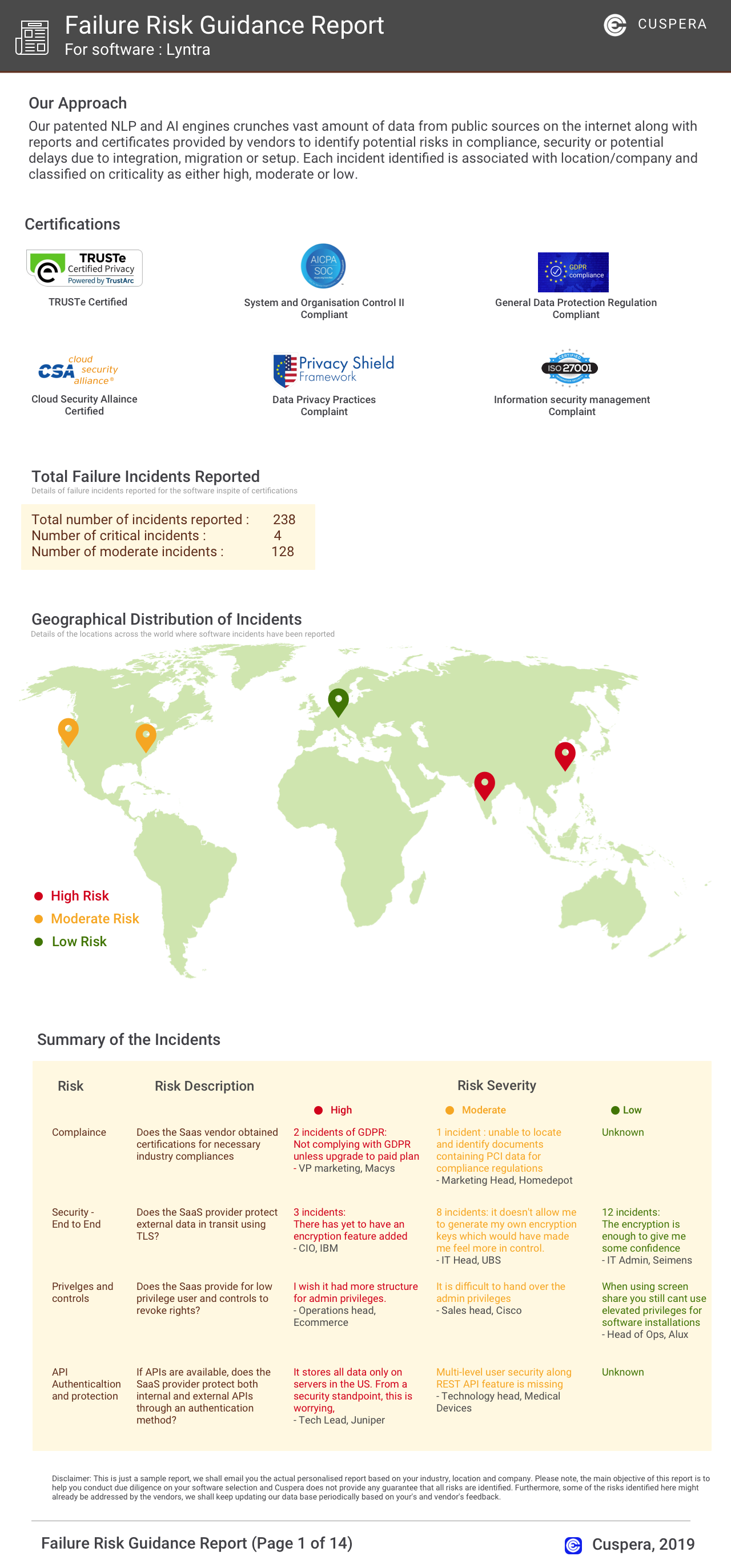
Software Failure Risk Guidance
?for FormAssembly
Overall Risk Meter
Top Failure Risks for FormAssembly
FormAssembly Inc. News
Beyond the Form: August Updates from FormAssembly
FormAssembly has introduced updates to enhance Salesforce connection management and improve the loading speed of embedded workflows. Users can now re-authenticate broken Salesforce connections directly from the External Authorizations page, and embedded workflows load up to 33% faster. These improvements aim to streamline data collection and integration processes for users.
File Uploads in Salesforce: How FormAssembly Automates Every Step
FormAssembly enhances its Salesforce Workflow Connector to automate file uploads, supporting various scenarios like single or multiple file uploads, document generation, and e-signature integration. The connector facilitates seamless mapping to Salesforce records, ensuring efficient document management and reducing errors in file handling.
FormAssembly Achieves DoD IL4 Status in Partnership With FedHIVE
FormAssembly has partnered with FedHIVE to achieve DoD IL4 status, allowing its secure data collection platform to meet stringent Department of Defense requirements. This partnership enables rapid modernization for government agencies by integrating FormAssembly's low-code platform with FedHIVE's compliance expertise, facilitating secure data collection and processing in regulated environments.
FormAssembly Expands Partner Program for Regulated Industries
FormAssembly has launched an enhanced Partner Program aimed at regulated industries, offering compliance-focused tools, tiered incentives, and co-marketing support. The program targets sectors like public services, healthcare, and finance, providing partners with resources to modernize workflows while maintaining compliance. The initiative includes a diverse partner ecosystem, strategic collaboration, and revenue opportunities, aligning with partners' needs for secure, automated data workflows.
FormAssembly Inc. Profile
Company Name
FormAssembly Inc.
Company Website
https://www.formassembly.com/HQ Location
101 W. Kirkwood Ave., Suite 224, Bloomington, IN 47404, US
Employees
1-10
Social


Financials
SERIES A