

CraftCMS Overview
Craft CMS enables teams to build tailor-made digital experiences, offering a flexible and user-friendly platform. Businesses benefit from its adaptability, accommodating unique content strategies and design needs. Craft CMS supports content creation and development, making it suitable for e-commerce and various other applications. The system's open-source foundation allows for extensive customization, supported by an active community. Notable for its reliability, Craft CMS is trusted by top global brands, ensuring robust performance in demanding environments. This platform is ideal for organizations seeking to enhance their digital presence with custom solutions.
Use Cases
Customers recommend Content Management, Social Media Analytics, Products & Pricelist Management, as the business use cases that they have been most satisfied with while using CraftCMS.
Business Priorities
Acquire Customers and Increase Sales & Revenue are the most popular business priorities that customers and associates have achieved using CraftCMS.
CraftCMS Use-Cases and Business Priorities: Customer Satisfaction Data
CraftCMS works with different mediums / channels such as Website. User Generated Content. and Blogs.
CraftCMS's features include Widgets, Templates, Dashboard, etc. and CraftCMS support capabilities include Email Support, 24/7 Support, Chat Support, etc. also CraftCMS analytics capabilities include Custom Reports, and Analytics.
Reviews
"...An all in one product management solution...." Peer review by Alexander H, Product Owner, Information Technology and Services
Peer review evidence (same sources as the product rating summary)
"...Craft CMS is a blogging platform that lets you completely customize your blog, manage your content, and analyze its performance...." The 10 Best Blogging Platforms & How to Pick One
"...To analyze your content s performance, you can integrate Craft CMS dashboard with Google Analytics...." The 10 Best Blogging Platforms & How to Pick One
"...It's a solution which focus is on the Stakeholders' side of the product management...." Peer review by User
CraftCMS, Strapi, DialogsCMS, Butter CMS, AgilityCMS, etc., all belong to a category of solutions that help Content Management Systems. Each of them excels in different abilities. Therefore, determining the best platform for your business will depend on your specific needs and requirements.
Craft CMS offers flexibility and control in content modeling and editing. It provides a user-friendly experience for content creators and developers alike.
Popular Business Setting
for CraftCMS
Top Industries
- Internet
- Marketing and Advertising
- Computer Software
Popular in
- Small Business
- Mid Market
- Large Enterprise
CraftCMS is popular in Internet, Marketing And Advertising, and Computer Software and is widely used by Small Business, Mid Market, and Large Enterprise.
CraftCMS Customer wins, Customer success stories, Case studies
How does CraftCMS facilitate Content Management?
How can CraftCMS enhance your Products & Pricelist Management process?
How can CraftCMS optimize your Workflow Management Workflow?
What Are the key features of CraftCMS for Sending & Publishing Communications?
Frequently Asked Questions (FAQ)
What buyers ask before choosing CraftCMS
Integrations What CRM integrations are available for CraftCMS?
CraftCMS offers several CRM integrations to enhance your website's functionality and streamline your business processes. Notable integrations include Salesforce, HubSpot, Dynamics 365, Marketo, and Pardot, allowing you to connect your CraftCMS site with powerful customer relationship management tools. These integrations enable seamless data transfer, improved customer insights, and enhanced marketing automation capabilities. By leveraging these CRM integrations, businesses can better manage customer interactions, track leads, and optimize marketing efforts, ultimately driving growth and improving customer satisfaction. Whether you're looking to automate workflows or gain deeper insights into customer behavior, these integrations provide valuable tools to enhance your CraftCMS experience.
Integrations How does CraftCMS connect to Salesforce and HubSpot?
CraftCMS can connect to Salesforce and HubSpot through custom API integrations, allowing businesses to synchronize data between their content management system and these powerful CRM platforms. For Salesforce, developers can utilize the Salesforce API to create tailored solutions that facilitate lead management, customer relationship tracking, and data sharing directly within CraftCMS. Similarly, HubSpot integration can be achieved using its API, enabling users to manage marketing campaigns, track user interactions, and automate workflows seamlessly. These integrations enhance the functionality of CraftCMS by providing a unified approach to managing customer data and marketing efforts, ultimately improving operational efficiency and driving better business outcomes. For specific implementation, agencies like SCAYLE and effexx offer expertise in integrating CraftCMS with these platforms.
Integrations What are the setup steps for integrating CraftCMS with Marketo?
To integrate CraftCMS with Marketo, start by ensuring you have both platforms set up and accessible. First, install the necessary CraftCMS plugin that facilitates Marketo integration, which can typically be found in the Craft Plugin Store. Next, configure the plugin settings by entering your Marketo API credentials, including the Client ID and Client Secret, which you can obtain from your Marketo account. After that, set up the webhook in Marketo to receive data from CraftCMS, ensuring that the endpoint URL points to your CraftCMS installation. Finally, test the integration by creating a sample form in CraftCMS and verifying that the data is correctly sent to Marketo. This integration allows for seamless data flow between your content management and marketing automation systems, enhancing your marketing efforts.
Integrations Is there API access for connecting CraftCMS to Dynamics 365?
Yes, Craft CMS does support API access, allowing you to connect it with Dynamics 365. This integration can be achieved through custom development or by utilizing third-party plugins that facilitate the connection between Craft CMS and Dynamics 365. By leveraging Craft's robust API capabilities, you can synchronize data, automate workflows, and enhance your overall business processes. This integration is particularly valuable for businesses looking to streamline their operations, improve data accuracy, and create a seamless flow of information between their content management system and customer relationship management platform. For specific implementation details or assistance, consider reaching out to Pixel&Tonic for consulting services or exploring the Craft Plugin Store for available solutions.
Integrations What is the data flow between CraftCMS and Pardot during integration?
The data flow between Craft CMS and Pardot during integration involves the seamless exchange of information to enhance marketing automation and customer relationship management. When integrated, Craft CMS can send user data, such as form submissions and user interactions, directly to Pardot, allowing for targeted marketing campaigns based on user behavior. Conversely, Pardot can send lead and contact information back to Craft CMS, enabling personalized content delivery and improved user experiences. This integration ensures that both platforms work in tandem, allowing businesses to leverage Craft CMS's content management capabilities alongside Pardot's marketing tools, ultimately driving better engagement and conversion rates. To set up this integration, users typically utilize APIs or third-party connectors that facilitate the data exchange between the two systems.
Integrations Are there any limitations when integrating CraftCMS with third-party data providers?
When integrating Craft CMS with third-party data providers, there are no inherent limitations imposed by Craft itself; however, the effectiveness of these integrations can depend on several factors, including the specific APIs of the third-party services and how well they are designed to work with Craft. Craft CMS supports extending its functionality through custom plugins and third-party integrations, allowing developers to connect with various external APIs seamlessly. The performance and reliability of these integrations can vary based on the hosting environment and the optimization of the Craft site. Therefore, while Craft CMS is flexible and capable of handling numerous integrations, the success of each integration will largely depend on the quality of the external data provider's API and the implementation by the development team.
Features What does the Live Preview feature do in Craft CMS?
The Live Preview feature in Craft CMS allows users to see how their content will appear on the front end of the website in real-time while they are editing it. This functionality enhances the authoring experience by providing immediate visual feedback, ensuring that content creators can make adjustments as needed before publication. Additionally, users can generate private preview URLs to share their work-in-progress with team members or stakeholders, facilitating collaboration and feedback. This feature not only reduces the likelihood of errors and miscommunication but also streamlines the content creation process, making it easier for multiple authors to work together effectively. Overall, Live Preview significantly improves the efficiency and quality of content production in Craft CMS.
Features How do I define custom fields in Craft CMS?
To define custom fields in Craft CMS, start by navigating to the "Settings" section in your control panel and selecting "Fields." Here, you can create a new field by clicking the "New Field" button, where you will choose the field type that best suits your content needs, such as text, number, or date. After defining the field type, you can customize its settings, including the field label, instructions, and any validation rules. Once your custom field is created, you can add it to a field layout by going to "Sections" and selecting the relevant section or entry type. This flexibility allows you to tailor your content structure precisely to your project's requirements, enhancing your content management capabilities in Craft CMS.
Features What is the purpose of the templating system powered by Twig in Craft CMS?
The templating system powered by Twig in Craft CMS serves the purpose of providing developers with a clean, efficient, and flexible way to design and manage the presentation layer of their websites. Twig allows for the creation of custom templates that are free from the bloat often associated with other CMS platforms like WordPress, enabling developers to write and structure their HTML precisely as needed. This results in optimized performance and a more streamlined development process. Additionally, Twig's syntax is user-friendly, making it easier for developers to implement complex logic and dynamic content without compromising code quality. Ultimately, the Twig templating system enhances the overall authoring experience and empowers developers to build bespoke digital experiences tailored to their specific requirements.
Features How do I manage relationships between content types in Craft CMS?
To manage relationships between content types in Craft CMS, you can utilize the built-in relationship fields that allow you to connect different entries seamlessly. Start by defining your content types, such as "Articles" or "Projects," and then create a relationship field within the field layout of one content type. This field can be set to link to another content type, enabling you to establish one-to-one, one-to-many, or many-to-many relationships. Once configured, you can easily select related entries when creating or editing content, ensuring that your content is interconnected. Additionally, Craft's flexible templating system, powered by Twig, allows you to access and display related content dynamically, enhancing the user experience and content organization on your site.
Features What are the steps to configure draft and revision settings in Craft CMS?
To configure draft and revision settings in Craft CMS, start by navigating to the "Settings" section in the control panel. From there, select "Sections" and choose the section you want to modify. Within the section settings, you can enable drafts and revisions by checking the appropriate options. Next, configure the retention policies for each content type by specifying how many revisions to keep and how long to retain drafts. This allows you to roll back to previous versions of content as needed. Finally, ensure that auto-saving is enabled to maintain multiple drafts automatically. By following these steps, you can effectively manage content changes and maintain a secure and organized workflow in Craft CMS.
Features How do I use the image editing and transforms feature in Craft CMS?
To use the image editing and transforms feature in Craft CMS, start by uploading your images through the asset manager. Once uploaded, select the image you want to edit and click on the edit icon. Craft CMS provides a user-friendly interface where you can crop, resize, and apply various filters to your images. After making your adjustments, save the changes to apply them. For transforms, you can define specific image sizes and formats in your settings, allowing Craft to automatically generate different versions of your images based on your specifications. This feature not only enhances your content visually but also optimizes images for faster loading times, improving overall site performance. By leveraging these capabilities, you can ensure that your images are tailored to fit your design needs without the need for additional plugins.
ROI & pricing What measurable business value can CraftCMS provide for my organization?
Craft CMS offers measurable business value by providing a highly customizable and user-friendly platform that enhances digital experiences tailored to your brand. Its robust core minimizes reliance on plugins, reducing potential security vulnerabilities and maintenance costs, which can lead to significant savings over time. With the ability to manage multiple sites and create custom templates, Craft allows organizations to streamline their content management processes, improving efficiency and productivity. Additionally, Craft's built-in SEO features help optimize your site for search engines, driving more traffic and potential conversions. The flexibility to integrate with popular services further extends its capabilities, enabling businesses to adapt quickly to changing market demands and user needs, ultimately leading to increased engagement and revenue growth.
ROI & pricing How does CraftCMS impact ROI and cost savings for businesses?
Craft CMS can significantly impact ROI and cost savings for businesses by providing a stable and secure platform that minimizes reliance on plugins, which often lead to performance issues and increased maintenance costs. With its built-in features, Craft reduces the need for extensive troubleshooting and technical debt, allowing teams to focus on creating bespoke digital experiences rather than managing plugins. Additionally, Craft's user-friendly interface and customizable capabilities enable businesses to tailor their websites to specific needs, enhancing user engagement and conversion rates. By leveraging Craft's optimized hosting options and strong community support, organizations can streamline their development processes and reduce long-term operational costs, ultimately leading to a higher return on investment.
ROI & pricing What are the different pricing plans available for CraftCMS and what do they include?
CraftCMS offers several pricing plans tailored to different user needs, including Craft Solo, Craft Team, Craft Pro, and Craft Enterprise. Craft Solo is designed for individual users and is ideal for personal projects, while Craft Team is suited for small teams collaborating on projects. For professional developers and businesses requiring advanced features and support, Craft Pro provides enhanced capabilities and access to premium support options. The Craft Enterprise plan is tailored for larger organizations with extensive needs, offering custom solutions and dedicated support. Each plan includes various features such as content management tools, user permissions, and access to updates, with the option to upgrade from Craft Solo to Craft Pro or Craft Team directly within the app. For specific pricing details, users can visit the CraftCMS website or contact their support team.
ROI & pricing What is the total cost of ownership for using CraftCMS over time?
The total cost of ownership (TCO) for using Craft CMS over time includes several factors such as licensing fees, hosting costs, and potential development expenses. Craft CMS offers different tiers, including Craft Solo, Craft Pro, and Craft Team, with pricing that varies based on the features and support needed. While Craft Solo is free, upgrading to Craft Pro or Craft Team incurs a cost, which can be initiated directly within the app. Additionally, hosting options like Craft Cloud or general-purpose services such as Digital Ocean will contribute to ongoing expenses. Unlike WordPress, which often requires numerous plugins that can lead to increased maintenance and security costs, Craft's built-in features reduce reliance on third-party solutions, potentially lowering long-term costs. Overall, while initial investments may vary, Craft CMS can offer a more stable and cost-effective solution over time due to its robust core and reduced maintenance needs.
ROI & pricing How quickly can I expect to see value from implementing CraftCMS?
When implementing Craft CMS, the timeline for seeing value can vary based on several factors, including your project's complexity, team expertise, and the specific features you choose to utilize. Generally, users can expect to see initial benefits within a few weeks, especially if they focus on leveraging Craft's built-in capabilities, which minimize reliance on plugins and enhance performance. As you optimize your site and integrate features like Craft Commerce for e-commerce needs, the value can increase significantly over the following months. Craft CMS is designed for scalability, allowing businesses to manage extensive content efficiently, which can lead to improved user engagement and conversion rates as your site matures. Ultimately, the more you invest in optimizing and customizing your Craft CMS setup, the quicker you will realize its full potential.
ROI & pricing What are the potential revenue impacts of using CraftCMS for my business?
Using Craft CMS can significantly impact your business's revenue by enhancing your website's performance, user experience, and SEO capabilities. Craft's flexibility allows for the creation of bespoke digital experiences tailored to your brand, which can lead to higher engagement and conversion rates. Its robust content management features enable you to efficiently manage and optimize your content, ensuring that your site remains relevant and appealing to your target audience. Additionally, Craft's built-in capabilities reduce reliance on plugins, minimizing security vulnerabilities and maintenance costs, which can further protect your revenue stream. By leveraging Craft's powerful tools and a search-first approach, you can effectively reach and convert more customers, ultimately driving increased sales and profitability for your business.
Capabilities What content creation features does Craft CMS offer?
Craft CMS offers a robust suite of content creation features designed to enhance user experience and streamline workflows. Its user-friendly interface allows for easy navigation and content management, while the customizable backend enables developers to tailor the system to specific needs. Key features include the ability to define custom fields for content modeling, Live Preview for real-time editing feedback, and draft saving for content in progress. Additionally, Craft supports mobile editing, ensuring that users can create and manage content on the go. The templating system, powered by Twig, allows for clean and efficient code, facilitating the creation of custom templates. Overall, these features empower users to create high-quality digital experiences quickly and efficiently, making Craft CMS a valuable tool for content creators.
Capabilities Can Craft CMS support a decoupled architecture for front-end development?
Yes, Craft CMS can support a decoupled architecture for front-end development, allowing developers to create flexible and scalable web applications. This approach enables the use of Craft as a content API, which can serve content to various front-end frameworks like Vue.js and Nuxt.js. By leveraging Craft's robust content management capabilities, developers can build custom digital experiences while maintaining complete control over content forms, categories, and relationships. This decoupled setup not only enhances performance but also allows for a more dynamic user experience, as front-end developers can utilize modern JavaScript frameworks to create interactive interfaces. Overall, Craft CMS's adaptability makes it an excellent choice for projects requiring a headless or decoupled architecture.
Capabilities Does Craft CMS provide enterprise-level security and compliance features?
Yes, Craft CMS provides enterprise-level security and compliance features designed to ensure a safe and secure platform for users. The system includes built-in security measures that minimize vulnerabilities, reducing reliance on third-party plugins, which can often introduce security risks. Craft CMS also offers one-click updates, allowing users to easily maintain the latest security enhancements and bug fixes. In the event of a reported security issue, Craft's team quickly validates and implements fixes, ensuring that any vulnerabilities are addressed promptly. Additionally, Craft's commitment to accessibility and its in-house accessibility expert further enhance its compliance capabilities, making it a robust choice for enterprises looking for a secure content management solution.
Capabilities Can Craft CMS handle large-scale projects with multiple environments?
Yes, Craft CMS is well-equipped to handle large-scale projects with multiple environments. Its architecture allows for extensive scalability, enabling developers to manage numerous entries, users, orders, and assets without inherent limitations imposed by the software itself. Craft CMS can efficiently support tens of millions of elements, provided that the site is built and optimized correctly. To ensure optimal performance across multiple environments, it's crucial to have adequate infrastructure, including resources for PHP, databases, and caching strategies. Craft also offers hosting solutions like Craft Cloud, Servd, and Arcustech, which are tailored for high-performance needs. By leveraging these capabilities, businesses can confidently deploy and manage complex projects while maintaining a smooth user experience.
Capabilities What types of data can Craft CMS manage across different teams?
Craft CMS is designed to manage a wide variety of data types across different teams, making it a versatile choice for organizations. It can handle content entries, user data, orders, assets, and other element types without imposing strict limitations on the amount of content. The platform's flexibility allows teams to create custom fields and structures tailored to their specific needs, whether for marketing, development, or e-commerce purposes. Additionally, Craft CMS supports extensive integrations with external APIs, enabling seamless data sharing and collaboration among teams. This adaptability ensures that all departments, from content creators to developers, can efficiently manage and utilize data, enhancing overall productivity and project outcomes.
Capabilities Does Craft CMS support internationalization for global content management?
Yes, Craft CMS supports internationalization, making it an excellent choice for global content management. The platform allows users to create multilingual websites with seamless language switching and localization features, enabling businesses to cater to diverse audiences effectively. With Craft CMS, you can manage content in multiple languages from a single control panel, ensuring that your site remains organized and easy to navigate. This capability not only enhances user experience but also improves search visibility and organic traffic by allowing you to target specific regions and languages. By leveraging Craft CMS's internationalization features, businesses can expand their reach and engage with customers worldwide, ultimately driving growth and conversion.
Use cases How can SDRs leverage CraftCMS to improve their lead generation workflows?
Sales Development Representatives (SDRs) can leverage Craft CMS to enhance their lead generation workflows by utilizing its robust customization capabilities and SEO-focused design. By creating bespoke landing pages tailored to specific campaigns, SDRs can optimize user journeys and improve conversion rates. Craft CMS allows for seamless integration with third-party tools and APIs, enabling SDRs to connect their lead generation forms directly to CRM systems like Salesforce or HubSpot, ensuring that leads are captured and managed efficiently. Additionally, the platform's focus on performance optimization and reduced technical complexity allows SDRs to quickly iterate on content and design based on analytics, ultimately driving more qualified leads into the sales funnel. By employing Craft CMS, SDRs can create a more engaging and effective lead generation strategy that aligns with their overall sales goals.
Use cases What are the best use cases for marketers when implementing CraftCMS for content management?
CraftCMS is an excellent choice for marketers looking to create tailored digital experiences due to its flexibility and user-friendly interface. Marketers can leverage CraftCMS for various use cases, such as building visually appealing landing pages, managing content across multiple sites, and implementing personalized marketing campaigns. The platform's customizable backend allows for easy integration with popular marketing tools and plugins, enhancing capabilities for SEO, analytics, and email marketing. Additionally, features like draft saving, mobile editing, and Live Preview enable marketers to collaborate efficiently and make real-time adjustments to content. By utilizing CraftCMS, marketers can streamline their content management processes, ensuring that their messaging is consistent and engaging across all digital touchpoints, ultimately driving better engagement and conversion rates.
Use cases In what scenarios should RevOps teams consider using CraftCMS for their digital strategy?
RevOps teams should consider using Craft CMS for their digital strategy when they require a highly customizable and user-friendly content management system that can adapt to unique business needs. Craft CMS excels in creating bespoke digital experiences, making it ideal for organizations that prioritize brand identity and user engagement. Its flexible architecture allows for seamless integration with external APIs and popular services, enhancing operational efficiency. Additionally, Craft's robust performance and security features minimize reliance on plugins, reducing potential vulnerabilities and maintenance overhead. This makes it particularly suitable for teams looking to streamline their digital presence while ensuring a high-quality user experience. Furthermore, Craft's strong community support and comprehensive documentation can assist RevOps teams in optimizing their content strategies effectively.
Use cases How can sales leaders utilize CraftCMS to enhance their team's performance and user engagement?
Sales leaders can utilize Craft CMS to enhance their team's performance and user engagement by leveraging its flexible, user-friendly features to create tailored digital experiences that resonate with their target audience. By employing Craft's robust content management capabilities, sales teams can easily manage and update content, ensuring that marketing materials are always current and relevant. The platform's SEO-focused design helps improve visibility, driving more traffic to their sites. Additionally, Craft's ability to integrate with third-party APIs allows for seamless connections with CRM tools like Salesforce or HubSpot, enabling better tracking of user interactions and sales leads. By utilizing Craft CMS's custom templates and performance optimization features, sales leaders can create engaging, high-performing websites that not only attract potential customers but also facilitate smoother user journeys, ultimately leading to increased conversions and sales success.
Use cases What are the key benefits of using CraftCMS for multi-site and multilingual setups in a marketing team?
Craft CMS offers significant advantages for marketing teams managing multi-site and multilingual setups. Its flexible architecture allows for the seamless creation and management of multiple sites from a single Craft installation, enabling teams to maintain brand consistency while catering to diverse audiences. The user-friendly interface simplifies content creation and editing across different languages, ensuring that marketing teams can efficiently produce localized content without technical barriers. Additionally, Craft's robust content modeling capabilities allow for tailored experiences that resonate with specific markets, enhancing user engagement. With built-in features that reduce reliance on plugins, Craft CMS minimizes security vulnerabilities and maintenance efforts, making it an ideal choice for marketing teams focused on scalability and performance in their digital strategies.
Use cases When should a company opt for a headless CraftCMS architecture over a traditional setup for their website?
A company should consider opting for a headless Craft CMS architecture over a traditional setup when it requires greater flexibility and scalability in delivering content across multiple platforms or devices. Headless Craft CMS separates the backend content management from the frontend presentation, allowing developers to use modern frameworks like Vue.js or Nuxt.js to create highly interactive and responsive user experiences. This approach is particularly beneficial for businesses that need to integrate with various applications, utilize APIs for dynamic content delivery, or implement complex user interfaces. Additionally, if a company anticipates rapid growth or frequent changes in its digital strategy, a headless setup can provide the agility needed to adapt without the constraints of a traditional CMS. Ultimately, choosing headless Craft CMS can enhance performance, improve security, and streamline the development process.
Alternatives What are the best alternatives to CraftCMS for custom website development?
When considering alternatives to Craft CMS for custom website development, two prominent options are WordPress and Drupal. WordPress is widely recognized for its user-friendly interface and extensive plugin ecosystem, making it suitable for a variety of projects, from simple blogs to complex e-commerce sites. However, it may require more time for developers to troubleshoot issues due to its community-driven support. On the other hand, Drupal offers robust flexibility and scalability, ideal for large-scale applications and complex content structures, but it has a steeper learning curve. Both platforms provide extensive customization options, but Craft CMS stands out for its clean code, user-friendly design, and strong focus on accessibility, making it a compelling choice for agencies seeking bespoke digital experiences. Ultimately, the best choice depends on your specific project requirements and team expertise.
Alternatives How does CraftCMS compare to WordPress in terms of flexibility and performance?
Craft CMS and WordPress both offer flexibility and performance, but they cater to different needs. Craft CMS is designed to provide a highly customizable experience without the bloat often associated with WordPress's extensive plugin ecosystem. This results in better performance and fewer security vulnerabilities, as Craft minimizes reliance on third-party plugins. In contrast, WordPress excels in its vast library of plugins, making it easier to add features quickly, but this can lead to performance issues and increased maintenance. While WordPress is ideal for straightforward blog setups, Craft allows for tailored solutions that evolve with business needs, making it a better long-term choice for complex projects. Ultimately, the choice between Craft CMS and WordPress depends on the specific requirements of your project and the level of customization needed.
Alternatives What are the key differences between CraftCMS and Drupal for content management?
Craft CMS and Drupal are both powerful content management systems, but they cater to different needs and user experiences. Craft CMS is known for its user-friendly interface and flexibility, allowing developers to create custom digital experiences without the bloat of unnecessary features. It utilizes a modern tech stack with a focus on clean code, leveraging the Twig templating system and a native GraphQL API for efficient content management. In contrast, Drupal offers a more robust framework suitable for complex, large-scale websites, with extensive built-in functionalities and a steep learning curve. While Drupal excels in handling intricate content structures and user permissions, Craft CMS is often preferred for its simplicity and ease of use, making it ideal for bespoke projects where design and user experience are paramount. Ultimately, the choice between Craft CMS and Drupal depends on the specific requirements of the project and the technical expertise of the team.
Alternatives Is CraftCMS a better choice than Joomla for building bespoke websites?
Craft CMS is often considered a better choice than Joomla for building bespoke websites due to its highly customizable nature and modern tech stack. While Joomla offers flexibility and a range of extensions, Craft CMS minimizes reliance on plugins with a more capable core, resulting in enhanced performance and security. Craft's MVC architecture and Twig templating system allow developers to create tailored digital experiences without the bloat that can come with Joomla's default configurations. Additionally, Craft's built-in features reduce maintenance needs, making it a more stable option for long-term projects. Ultimately, if your goal is to create a unique, custom website that evolves with your business needs, Craft CMS may provide a more efficient and effective solution compared to Joomla.
Alternatives What makes CraftCMS stand out compared to Sitecore for enterprise content management?
CraftCMS stands out compared to Sitecore for enterprise content management primarily due to its flexibility and user-friendly interface, which allows for highly customizable digital experiences without the complexity often associated with larger platforms like Sitecore. While Sitecore offers robust features for large-scale enterprises, including advanced marketing automation and personalization capabilities, CraftCMS focuses on providing a streamlined content management experience with a clean codebase and a powerful templating system using Twig. This makes CraftCMS particularly appealing for organizations that prioritize ease of use and quick deployment. Additionally, Craft's built-in features reduce reliance on plugins, minimizing security vulnerabilities and maintenance efforts, which can be a concern with Sitecore's extensive feature set. Ultimately, CraftCMS is ideal for teams looking for a bespoke solution that can adapt to their unique content needs without the overhead of a more complex system.
Alternatives How does CraftCMS stack up against Contentful for headless CMS solutions?
Craft CMS and Contentful both serve as robust headless CMS solutions, but they cater to different needs and preferences. Craft CMS offers a highly customizable and user-friendly interface, allowing developers to create tailored digital experiences with a focus on design and performance. Its built-in features reduce reliance on plugins, minimizing security vulnerabilities and maintenance issues. In contrast, Contentful is known for its API-first approach, making it ideal for teams that prioritize flexibility and scalability across multiple platforms. While Craft excels in providing a seamless content creation experience with features like Live Preview and mobile editing, Contentful shines in its ability to integrate with various tools and services, making it suitable for larger, more complex projects. Ultimately, the choice between Craft CMS and Contentful depends on your specific project requirements and team dynamics.
CraftCMS Competitors


CraftCMS Features
- Low
- Medium
- High
| FEATURE | RATINGS AND REVIEWS |
|---|---|
| Custom Reports | Read Reviews (134) |
| Analytics | Read Reviews (32) |
| CAPABILITIES | RATINGS AND REVIEWS |
|---|---|
| Custom Reports | Read Reviews (134) |
| Analytics | Read Reviews (32) |
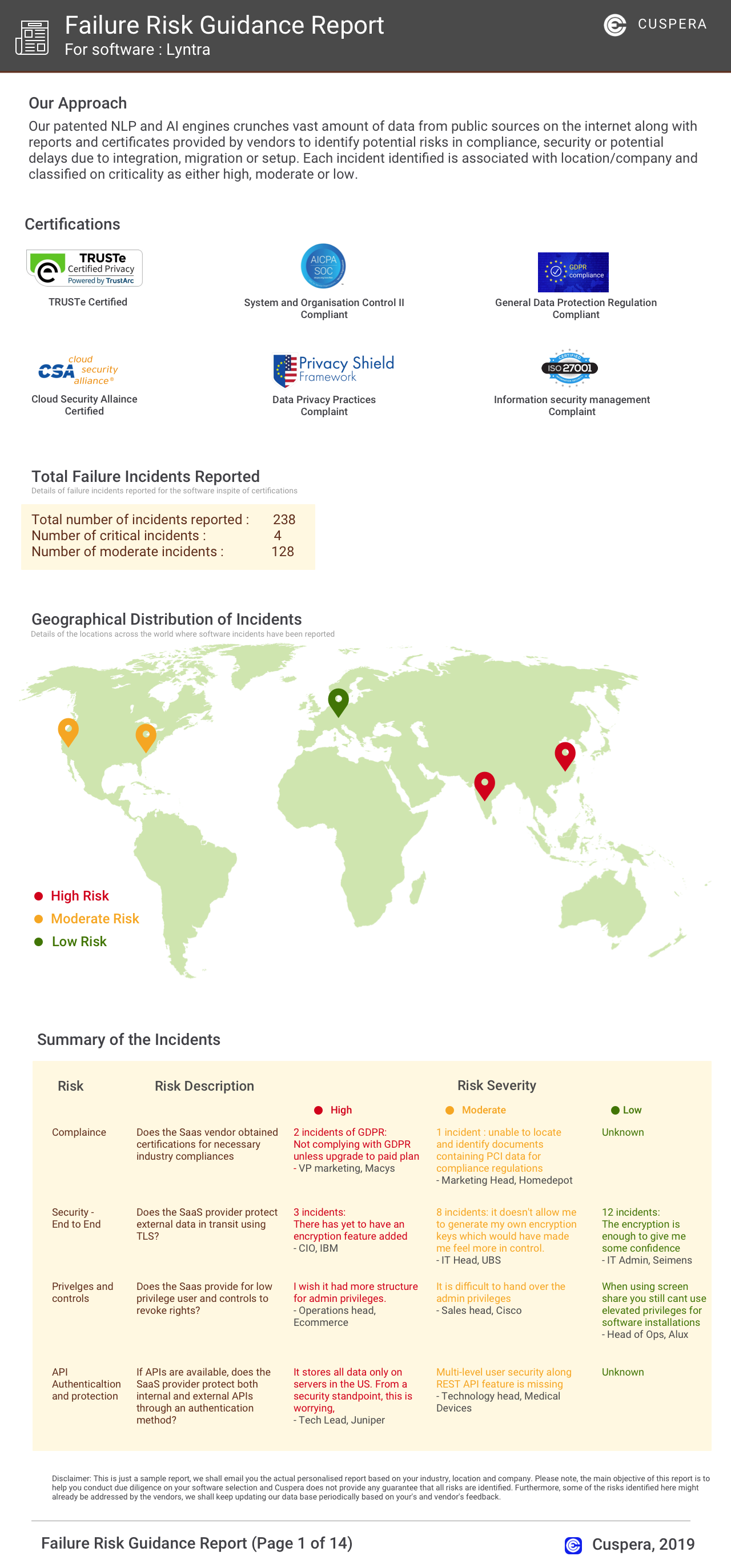
Software Failure Risk Guidance
?for CraftCMS
Overall Risk Meter
Top Failure Risks for CraftCMS
Craft CMS News
Craft 5.9 Released | Craft CMS
Craft CMS has released version 5.9, introducing new features and enhancements for content organization, authoring, accessibility, development, performance, and security. Notable updates include custom entry index pages, grouped "Add" button menus for Matrix fields, bulk actions, inline list view mode for relation fields, and improved Composer support. The release also adds new export options and sandboxed template rendering for enhanced security.
Craft CMS Profile
Company Name
Craft CMS
Company Website
https://craftcms.com/HQ Location
Bend, Oregon US
Employees
NA
Social


Financials
NA