


Dotdigital overview: capabilities, features, use cases, and value by role
Dotdigital is a cross-channel marketing automation platform. It provides all-in-one marketing software designed to support activity across multiple channels from a single system.
Top capabilities of Dotdigital
Dotdigital's email marketing capability lets marketers create, send, and automate personalized campaigns through a drag-and-drop editor, AI-driven segmentation, behavioral triggers, dynamic content, and advanced testing and analytics — backed by deliverability infrastructure including dedicated IPs, SPF/DKIM/DMARC, and integrations with CRMs and ecommerce platforms. Behavioral triggers alone demonstrate measurable impact: Awaze reports "We're seeing a 14% conversion rate for the first cart abandonment email we trigger, and then a 3% conversion rate for the second email that gets triggered 24 hours after abandonment". Beer Cartel says "We have seen higher engagement rates across our email campaigns, resulting in revenue growth." Buyagift has recorded browse abandonment email open rates increased by 53%, click to open rates increased by 66%, click-through rates increased by 154%. Bristol Airport saw emails accounting for 22% of all sales, with a 68% average open rate. Animed Direct achieved a 41% increase in revenue per email.
Powered by: WinstonAI™
Automated Journey Building
Read detailsDotdigital's drag-and-drop journey builder triggers personalized messages across email, SMS, WhatsApp, and ads based on customer behavior, covering everything from cart recovery to SMS offer reminders without requiring technical skills. Automated programs can produce measurable outcomes quickly: as Animed Direct puts it, "In two months, our browse abandonment emails have driven revenue for automated emails up by 32%". At 4cabling, an abandoned cart program now contributes to 54% of email revenue. Cornishware says, "Dotdigital is a very comprehensive platform, with capabilities that run the gamut from creating your own template to automating campaigns."
Powered by: WinstonAI™
Website Personalization
Read detailsDotdigital personalizes banners, copy, products, offers, and imagery across web, email, and mobile — drawing on preference, behavior, events, and demographic and geographic data to deliver consistent, relevant experiences. The results customers report are concrete: Cooksongold says "We've seen a 112% year on year sales uplift thanks to onsite product recommendations", and Dormeo says "Our product bundle sales tripled overnight after we implemented the upsell product recommendations and our AOV has increased by 10% YoY".
Powered by: WinstonAI™
SMS
Read detailsDotdigital's SMS capability covers personalized text message creation, automation, and sending across 220+ countries, with WinstonAI™ enabling one-click conversion of email content to SMS and support for two-way messaging, MMS, behavioral triggers, A/B testing, and GDPR/TCPA compliance built in. Goodwood saw a survey completion rate of nearly 25%, up from 10% the prior year. Ipsos found the platform straightforward to work with, saying "The support we have received from Dotdigital has been fantastic so far and has allowed us to simplify our SMS campaigns with scope for utilizing newer features such as segmentation." Dotdigital consistently achieves a delivery rate of over 99%, keeping time-sensitive messages reliably on target.
Powered by: WinstonAI™
Mobile App
Read detailsDotdigital's Mobile App capability delivers personalized in-app experiences without requiring developer code changes or app store submissions. The engine behind this pulls from AI-predicted intent and 40+ recommendation types, alongside countdown timers, coupons, and social proof. These signals also connect mobile app data with CRM, web, email, and in-store channels, keeping personalization consistent across touchpoints. Dynamic content is central to how this plays out in practice. As HobbyKing puts it, "the personalization has become more streamlined with their dynamic content blocks". Awaze reported close to a 40% increase in conversion rate using dynamic countdown timers.
Ads
Read detailsDotdigital's Ads capability connects paid media to automated marketing in one workflow, spanning TikTok, Google, Facebook, X, and LinkedIn. It uses behavioral and purchase data to target contacts, then builds personalized landing pages matched to each traffic source. Leads captured through paid ads flow automatically into follow-up journeys without manual handoff. The retargeting logic focuses spend on users who have already shown purchase intent rather than broad audiences. That approach produces measurable results: retargeting ads have seen a 3% higher conversion rate than general social ads. Per-source landing page personalization reinforces this, and 94% of companies experienced a rise in conversion rates after personalizing their websites.
Customer Data Collection & Unification
Read detailsDotdigital pulls real-time customer data from orders, CRM, web behavior, and reviews into a single platform. Each contact is visualized in a rich real-time profile. From there, a one-click lookalike segment tool turns any ideal customer into a targetable audience.
Customer Segmentation
Read detailsDotdigital's segmentation capability puts behavioral data, purchase history, and lifecycle stage to work through a drag-and-drop interface that builds customer segments in real time. AI suggestions, lookalike segments, and actionable personas are each available in one click.
Developer APIs
Read detailsDotdigital's Communications API reaches over 180 countries for SMS, WhatsApp, email, and push messaging. On the security and compliance side, it handles OTP verification and real-time phone number validation. Branded sender IDs and inbound opt-out management are built in. Delivery reporting is configurable through enterprise-grade APIs and webhooks. Users on G2 rank it the #1 CPaaS platform in the world.
Customer journey tracking
Read detailsDotdigital tracks the entire customer journey from first website visit to most recent in-app purchase, giving teams unified visibility across all channels and touchpoints.
Ecommerce revenue attribution
Read detailsDotdigital connects email clicks to actual purchases by integrating with leading ecommerce platforms. Advanced revenue attribution reports then surface what is actually driving sales.
Top features of Dotdigital
Generative AI copywriting
Read detailsWinstonAI is Dotdigital's built-in AI writing tool, focused on helping teams produce and adapt copy in a consistent brand voice. It can rewrite content in different tones, rephrase, shorten, or simplify existing text. It also handles emoji insertion and translation for global campaigns.
Powered by: WinstonAI™
Cross-channel data integration
Read detailsDotdigital connects mobile app data with CRM, web, email, and in-store channels to deliver consistent personalization across every customer touchpoint.
Cross-channel content conversion
Read detailsDotdigital enables cross-channel campaign creation in seconds by converting emails to SMS in one click, connecting to preferred LLMs such as Chat-GPT for instant campaign results, and letting WinstonAI handle character count and delivery automatically.
Powered by: WinstonAI™
Behavioral trigger automation
Read detailsDotdigital turns behavioral signals into automated, personalized messages. Abandoned cart alerts, price drop notifications, and back-in-stock messages are all built to convert window shoppers into buyers. Post-purchase triggers and loyalty journeys work to increase average order value.
Personalized landing pages by traffic source
Read detailsDotdigital adjusts landing page content based on where a visitor came from — Instagram, TikTok, PPC, or another channel. The offers, recommendations, and content a visitor sees shift depending on the specific ad that brought them there. Personalized pop-ups then capture contact data from that audience.
Send-time optimization
Read detailsDotdigital's WinstonAI handles send-time optimization by automatically choosing the moment each individual contact is most likely to click. That removes the need to create multiple sends or manually account for location differences.
Transactional Messaging
Read detailsDotdigital delivers transactional email and mobile messages reliably and on time. Email receipts, order confirmations, and shipping updates all reach recipients without a hitch.
Email Campaign Design
Read detailsDotdigital's drag-and-drop email tool lets teams build on-brand campaigns in minutes without writing code. WinstonAI assists with segmentation, templates, copy, and subject lines throughout the process. Campaigns can be previewed across both desktop and mobile before sending.
Top use cases for Dotdigital
Grow and engage audiences with AI-assisted email marketing
Read detailsDotdigital is an email marketing platform that combines campaign design, automation, and AI-driven optimization in one place. Marketers build emails through a drag-and-drop editor that keeps campaigns on-brand and personalized. Automated journeys can be triggered by customer behavior, so the right message reaches the right person at the right moment. Dotdigital also applies AI to segmentation and subject-line optimization, with the goal of lifting engagement, conversions, and list growth. Those capabilities extend beyond email to connected channels as well.
Unify customer data and segment audiences for targeted campaigns
Read detailsDotdigital's customer data platform collects zero-party and first-party data across every channel and unifies it into a real-time Single Customer View. From there, it builds behavioral and predictive segments to power personalized campaigns. Those campaigns can run across email, web, SMS, in-app, and WhatsApp.
Run personalized SMS campaigns across the customer lifecycle
Read detailsDotdigital's SMS platform sends behavior-triggered, personalized text messages at every stage of the customer lifecycle. Welcome messages, abandoned cart reminders, post-purchase follow-ups, and seasonal re-engagement campaigns are all supported. Those messages run alongside email, WhatsApp, and in-app channels. Dotdigital reaches customers across 220+ countries, coordinating SMS with the rest of the channel mix to drive higher engagement, recovered revenue, and long-term loyalty.
Convert website visitors into customers and grow the marketing list
Read detailsDotdigital's website personalization tools do two things at once: present each visitor with tailored content and quietly build the opted-in audience at the same time. On the display side, the tools serve real-time personalized content, branded data-capture popovers, countdown timers, and AI-powered product recommendations. To move browsers closer to purchase, Dotdigital adds social proof and personalized coupons. While all of that is happening, the tools are also capturing email and mobile data to grow the opted-in audience.
Drive ecommerce revenue through cross-channel personalization
Read detailsDotdigital's personalization suite turns browsing behavior into revenue by orchestrating personalized experiences across email, SMS, and web — covering the full customer journey from acquisition through post-purchase loyalty. The suite handles cross-channel marketing and ecommerce teams' core need: coordinating those experiences across channels rather than managing each in isolation. AI-powered product recommendations are built in. Coverage spans the complete customer journey, from acquisition through post-purchase loyalty.
Maximize return on ad spend with retargeting and personalized landing pages
Read detailsDotdigital lets marketers push high-intent contacts from email, web, and app into social platforms — including TikTok, Google, Facebook, and X — for retargeting. That traffic then lands on personalized landing pages tailored to each traffic source, with the goal of higher conversion rates and improved ROAS.
Build and automate cross-channel customer journeys
Read detailsDotdigital's marketing automation platform brings behavioral, purchase, and preference data together into a Single Customer View. Marketers then build drag-and-drop journeys from that unified profile, triggering personalized messages across email, SMS, WhatsApp, and ads. Use cases range from cart recovery to loyalty programs. No developer involvement is required.
Prove marketing impact and optimize campaign performance
Read detailsDotdigital's advanced reporting and analytics connect every conversion across email, mobile, and web back to revenue. From there, marketing teams can identify which programs and segments are performing. AI-assisted A/B testing keeps campaigns continuously optimized, turning the whole picture into a clear proof of marketing ROI.
Personalize the mobile app experience to boost in-app conversions
Read detailsDotdigital handles in-app personalization without any developer involvement, pulling from cross-channel CRM, web, and email data to power the experience. The tools serve AI-predicted product recommendations directly within the app. They also deliver time-sensitive coupons and social proof to users in the moment.
Accelerate campaign creation with AI-powered content tools
Read detailsDotdigital's WinstonAI engine helps marketers overcome writer's block and speed up campaign production. It generates copy, rewrites tone, optimizes subject lines, and converts emails to SMS in one click. AI-driven A/B tests run automatically, while predictive analytics guides audience targeting and send timing. The result is faster campaign delivery, higher conversion rates, and reduced manual effort.
Deliver transactional alerts and notifications at scale via API
Read detailsDotdigital's Communications API gives developers a programmatic path to send and receive SMS, WhatsApp, email, and push notifications at scale. It covers use cases from order confirmations and OTP verification to appointment reminders and multichannel journeys, with real-time webhooks, phone number validation, and built-in compliance for inbound opt-outs, reaching customers across 180+ countries.
Value delivered by role with Dotdigital
CRM Manager
Read detailsDotdigital gives CRM managers a practical engine for turning abandoned browsing and cart behavior into measurable revenue. One brand achieved a 54% sales uplift from a multi-stage browse abandonment program. Another saw a 1010% revenue increase from cart abandonment emails. Integration with personalization tools like Fresh Relevance enables targeted product recommendations. The platform's reliability and collaborative support model give CRM managers confidence in their reporting and a foundation for continuous optimization.
Marketing team
Read detailsDotdigital is a cross-channel marketing platform that syncs customer data across email, SMS, and other channels to drive both in-store and online sales. Automation handles triggered campaigns covering abandonment, loyalty, and reactivation scenarios. Once activated, these campaigns generate additional revenue with minimal ongoing effort, freeing teams to focus on broader strategy. As The Royal Ballet School puts it, "The product recommendation blocks have been invaluable in giving our marketing team greater efficiency and flexibility."
Marketing Manager
Read detailsDotdigital hands Marketing Managers richer customer data and insights, which translates directly into more effective segmentation and targeting. Better data means lower unsubscribe rates and better open rates. Email fatigue drops to zero. An intuitive interface and seamless integrations let managers execute targeted, personalized campaigns. The practical upshot: a focused email to 100 people can outperform a generic send to thousands.
Director of Ecommerce
Read detailsDotdigital functions as a unified data hub for Directors of Ecommerce, pulling in both subscriber and purchaser data. The platform examines that data and surfaces segment and targeting opportunities automatically. Personalized web and email experiences built on this foundation deliver more than 10x ROI by serving each visitor relevant content rather than broadcasting the same message to everyone.
Head of Marketing
Read detailsDotdigital combines omnichannel automation with personalization to help Heads of Marketing grow their audience without losing existing purchasers. Cross-channel platform features and welcome series automations work together to support that goal. Teams can reallocate ad spend across channels while the tooling handles strategic, audience-tailored communications. The result is database growth and higher customer retention.
Digital Marketing Manager
Read detailsDotdigital lets Digital Marketing Managers consolidate multiple platforms into a single operational marketing environment. Segmentation tools sharpen customer understanding, improving deliverability and open rates. One brand attributes almost 13% of total revenue to email through this approach. Customer Success Manager support lets lean teams achieve results that would otherwise require a much larger team or agency.
Senior Marketing Manager
Read detailsDotdigital's personalization capabilities allow small digital marketing teams to run sophisticated, personalized campaigns across hundreds of brands — with personalization blocks capturing clicks that would otherwise be missed and every marginal gain counting at scale.
Head of Customer Retention
Read detailsDotdigital, paired with Fresh Relevance, equips Heads of Customer Retention to run abandonment email programs that convert at rates well above mass campaigns. First cart abandonment triggers reach a 14% conversion rate. Browse abandonment emails perform best when sent 15 minutes after the customer leaves. The platform also lets teams build eCommerce functionality they would otherwise lack the time or resources to develop in-house.
Digital Analyst
Read detailsDotdigital targets cart and browse abandoners through triggered, behavioral campaigns — moving digital analysts away from mass broadcast communications and toward website behavior as the foundation for segmentation around the specific product sections customers engage with.
marketers
Read detailsDotdigital puts advanced automation, personalization, and AI tools into a single platform that marketers can operate without developers, designers, or data teams. Marketers get a single customer view for identifying ideal personas and top spenders, building their own segments, and pushing engaged contacts into social platforms for retargeting. That independence holds up in practice. As Ultima Media puts it, "the complexity of what we're managing across four brands used to mean everything had to come through the data team. Now marketers are building their own segments, handling cross-brand selections, suppressions, all of it, directly in the platform. That's a genuine shift in how we operate."
Ecommerce Manager
Read detailsEcommerce Managers turn to Dotdigital to push personalization and effective communication across every customer touchpoint. Personalization elements deliver marked revenue uplift, with easy revenue attribution tracking by source. The platform also drives cross-sell and upsell opportunities, positioning Ecommerce Managers as key drivers of commercial performance within their organizations.
Chief Digital Officer
Read detailsDotdigital's AI-powered product recommendations bring together non-personalized, personalized, and machine learning approaches in one platform. That combination gives Chief Digital Officers a way to tackle complex matching challenges — for instance, pairing intricate product packages to the right customers. A single customer view spans the entire buyer's journey, connecting these recommendation types into a coherent picture. The result is revenue opportunities that were previously blocked by technical roadblocks.
Co-Founder and CEO
Read detailsDotdigital covers the full customer marketing cycle for co-founders and CEOs, from list building to post-campaign analysis. The platform handles segmenting customer lists, tracking data from direct emails, and scheduling personalized triggered campaigns. It also surfaces key customer data and analyzes customers by their interests. Re-engaging lapsed customers is built into the workflow as well. For high-end brands, Dotdigital supports richer media messaging like MMS, which lifts brand perception beyond basic text.
Head of Digital Marketing
Read detailsDotdigital cuts email build, segmentation, and send time from three days down to a fraction of that. Heads of Digital Marketing can run fast-paced campaign execution as a result, while also supporting content strategy development for customer engagement and loyalty-building across B2C-style communications.
Digital Content and CRM Specialist
Read detailsDigital Content and CRM Specialists use Dotdigital's cross-channel approach and WinstonAI to boost visibility, improve conversion rates, and reduce the pressure of content creation — giving smaller teams the technology to compete against larger brands without requiring a large headcount.
Email, eCRM & Lifecycle Manager
Read detailsDotdigital's WinstonAI moves personalization past the subject line and into individual sentences within the email body itself. Campaign decisions shift from manual, days-ahead planning to real-time responses. The platform also supports highly granular audience profiling, letting Email, eCRM, and Lifecycle Managers segment contacts by detailed attributes such as employment status or client relationship.
Campaign Marketing Manager
Read detailsDotdigital fits the workflow of Campaign Marketing Managers who are running complex, high-value purchase journeys. It gathers behavioral data first, so teams understand customer appetite before they build any automations. That grounding means product recommendations inside campaigns feel cohesive and contextually relevant rather than generic.
ecommerce team
Read detailsDotdigital connects email timing to where each customer actually sits in the buying cycle. Behavioral data powers personalized cart abandonment recommendations and incentives. Reactivation campaigns and promotions then work to retain customers, build loyalty, and grow revenue.
Marketing Executive
Read detailsDotdigital's AI-powered personalization builds browse abandonment campaigns that tailor each email with specific recommendations based on the destination pages a visitor viewed, delivering strong ROI for the effort required to introduce them.
Managing Director
Read detailsDotdigital serves Managing Directors by removing friction from customer-facing processes — streamlining claims handling to keep customers satisfied and reduce costs, while enabling gifting experiences that lower barriers to purchase.
Head of Data
Read detailsDotdigital puts segment-building directly in marketers' hands, removing a standing bottleneck for Heads of Data in marketing organizations. Marketers can create their own segments and manage suppressions without routing requests through a data team. They can also handle cross-brand selections across four or more brands on their own.
sales team
Read detailsDotdigital supports sales teams through automated lead funneling, intelligent upsell capabilities, and SmartBlocks that pre-educate customers on complementary products before direct interactions occur — so reps arrive at conversations with less ground to cover. Automated lead routing delivers qualified prospects to the sales team at the right moment. As Direct Supply puts it, better conversations and more productive use of our sales team follow from using Dotdigital's tools to automate emails and engage customers in new ways.
Online retailers
Read detailsDotdigital's personalization capabilities serve online retailers by automating loyalty messages, flash sales, back-in-stock alerts, and product recommendations across email, SMS, and WhatsApp. Upsell product recommendations have tripled bundle sales overnight and driven 10% YoY AOV growth.
Chief Marketing Officer
Read detailsChief Marketing Officers turn to Dotdigital to maintain a competitive edge through creative, tailormade campaigns that deliver consistent and constant customer engagement across a growing customer base, keeping audiences engaged and brands relevant at scale.
developers
Read detailsDotdigital's communications APIs are built on over 25 years of developer expertise and are designed specifically for developers. They enable tight integration with existing platforms. Teams can also use them to send various types of data into the Dotdigital platform with ease.
Chief Technology Officer
Read detailsChief Technology Officers turn to Dotdigital for its tight integration with platforms like Adobe Commerce. The ease with which various types of data can be sent into the platform adds to that appeal. That technical reliability and integration depth make Dotdigital the preferred choice for organizations with complex eCommerce data requirements.
Head of E-Business
Read detailsDotdigital's single centralized platform, fully integrated with Fresh Relevance, puts personalized, automated content and campaigns under one roof for Heads of E-Business. Managing multiple disconnected tools becomes unnecessary. Sophisticated personalization at scale is handled within the same environment.
Vice President of Operations
Read detailsDotdigital serves Vice Presidents of Operations as a reliable, continuously evolving platform that an expert team backs to keep email campaign execution running efficiently alongside business growth.
Cross-channel marketing teams
Read detailsDotdigital runs web, email, SMS, and mobile marketing from one platform, applying behavioral targeting, dynamic content, and product recommendations consistently across every channel a customer touches.
What customers say about Dotdigital: ratings, outcomes and feedback
Dotdigital's customer experience breaks down into two areas: what customers value in day-to-day use, and where customers see room for improvement. Both areas speak directly to how the platform behaves in practice.
What works well
Customers point to re-engagement and abandonment workflows as the areas where Dotdigital has delivered clearest results. CostumeBox says, "We've had great success with our re-engagement programs resulting in increased customer engagement, especially during Halloween 2021". Dormeo's situation was different — as Dormeo puts it, "we're a considered purchase and we might only see a customer once every 8 years, so optimizing our cart abandonment program was vital". Customers also report gains from combining Dotdigital with Fresh Relevance. One team notes a really great ROI with Fresh Relevance, while another describes the pairing as helping to replicate the personal in-store service their brand had built over more than a century.
Where customers see room for improvement
Dotdigital draws recurring criticism around API constraints, reporting depth, segmentation flexibility, and interface consistency. The API situation is a concrete friction point: as one mid-market customer puts it, API limits: There is a hardcoded limit on how many API calls you can make per hour, and to raise it, you have to pay. Beyond that ceiling, customers flag the API set as limited in general, and out-of-the-box API connections are called out as an area needing improvement. Reporting is another recurring gap — email results reporting and transactional email metrics are both flagged as insufficient, and integration with Google Analytics has caused problems for some users. Segmentation limits come up alongside these reporting concerns. The interface adds its own friction: customers note that sometimes the interface can change and takes us a while to find our feet, and a more intuitive UI is a common request. Learning the system and planning campaigns can take time, particularly for teams getting started. On the support side, the picture is more positive — one SMB customer notes Helpful KAM with troubleshooting issues and setting up program, Responsive customer support on platform — though that support is often needed to work through the platform's steeper learning curve. Auto-save when building a campaign is also flagged as a missing feature.
dotDigital Engagement Cloud Customer wins, Case studies
Frequently Asked Questions (FAQ)
What buyers ask before choosing dotDigital Engagement Cloud
Integrations What CRM integrations are available for dotDigital Engagement Cloud?
The dotDigital Engagement Cloud offers several CRM integrations to enhance your marketing efforts and streamline customer engagement. Notable integrations include Salesforce, HubSpot, Dynamics 365, Marketo, and Pardot, allowing businesses to synchronize their marketing and sales data effectively. These integrations enable users to automate workflows, manage customer relationships more efficiently, and leverage data insights for targeted marketing campaigns. By connecting dotDigital with your preferred CRM, you can ensure a seamless flow of information, which helps in personalizing customer interactions and improving overall engagement. This capability is particularly valuable for businesses looking to enhance their marketing strategies and drive better results through data-driven decision-making.
Integrations How does dotDigital Engagement Cloud connect with Salesforce?
Dotdigital Engagement Cloud connects seamlessly with Salesforce through its marketing automation integration, allowing businesses to leverage both platforms effectively. This integration enables users to synchronize their customer data, manage leads, and automate marketing campaigns directly from Salesforce. By combining Dotdigital's cross-channel communication tools with Salesforce's robust CRM capabilities, businesses can generate, nurture, and convert leads more efficiently. The integration facilitates personalized marketing efforts by utilizing Salesforce data to create targeted email campaigns and customer engagement strategies. Additionally, Dotdigital offers guided onboarding and support through its Client Success Teams, ensuring that users can maximize the benefits of this integration for their marketing goals.
Integrations What are the setup steps for integrating dotDigital Engagement Cloud with HubSpot?
To integrate Dotdigital Engagement Cloud with HubSpot, start by logging into your HubSpot account and navigating to the integrations section. Search for the Dotdigital integration and select it to begin the setup process. You will need to authenticate your Dotdigital account by providing your API key, which can be found in your Dotdigital dashboard under the API settings. Once authenticated, configure the data synchronization settings to determine which contacts and lists you want to sync between the two platforms. After setting your preferences, save the configuration and test the integration to ensure data flows correctly. Finally, monitor the integration regularly to maintain data accuracy and troubleshoot any issues that may arise. This integration allows you to leverage Dotdigital's marketing capabilities alongside HubSpot's CRM features effectively.
Integrations Can I access the API for dotDigital Engagement Cloud integrations?
Yes, you can access the API for Dotdigital Engagement Cloud integrations, which allows you to connect and enhance your marketing efforts across various platforms. The Dotdigital Communications API enables you to send a wide range of messages, including transactional emails, SMS alerts, and WhatsApp communications, all tailored to improve customer engagement. Additionally, Dotdigital offers integrations with popular platforms such as HubSpot, Dynamics 365, Marketo, and Pardot, allowing you to streamline your marketing processes and leverage data effectively. To get started, you can reach out to Dotdigital's sales experts for guidance on accessing the API and implementing it within your existing systems, ensuring a seamless integration that aligns with your business goals.
Integrations What is the data flow between dotDigital Engagement Cloud and Marketo?
The data flow between Dotdigital Engagement Cloud and Marketo involves a two-way synchronization process that enhances marketing efforts by ensuring that both platforms have access to up-to-date information. When integrated, data such as customer interactions, campaign performance, and engagement metrics can be automatically shared between Dotdigital and Marketo. This allows businesses to leverage Dotdigital's advanced reporting and analytics tools alongside Marketo's marketing automation capabilities. For instance, customer data collected through Dotdigital can be used to create targeted campaigns in Marketo, while insights from Marketo can inform strategies within Dotdigital. This seamless integration helps businesses optimize their marketing efforts, personalize customer interactions, and ultimately drive better engagement and conversion rates.
Integrations Are there any limitations to the integrations available with dotDigital Engagement Cloud?
While the Dotdigital Engagement Cloud offers a robust suite of integrations, including popular platforms like HubSpot, Dynamics 365, Marketo, and Pardot, there are some limitations to consider. These may include the specific features available for integration, as not all functionalities from each platform may be supported. Additionally, the ease of integration can vary depending on the complexity of your existing systems and the level of customization required. It's also important to note that while Dotdigital strives to maintain compatibility with various tools, ongoing updates and changes in third-party platforms can occasionally affect integration performance. Therefore, it's advisable to consult with a Dotdigital product specialist to understand the specific capabilities and any potential limitations related to your unique business needs.
Features What does the A/B testing feature in dotDigital Engagement Cloud do?
The A/B testing feature in Dotdigital Engagement Cloud allows marketers to compare two variations of a campaign to determine which one performs better. This feature is essential for optimizing email marketing strategies, as it enables users to test different subject lines, content layouts, images, or call-to-action buttons. By analyzing the performance metrics such as open rates, click-through rates, and conversions, businesses can make data-driven decisions to enhance their marketing effectiveness. The insights gained from A/B testing help refine future campaigns, ultimately leading to improved customer engagement and higher ROI. This capability is particularly valuable for businesses looking to maximize the impact of their marketing efforts and ensure that their messaging resonates with their target audience.
Features How do I set up automated email campaigns in dotDigital Engagement Cloud?
To set up automated email campaigns in Dotdigital Engagement Cloud, start by logging into your account and navigating to the 'Automation' section. Here, you can create a new automation workflow by selecting a trigger, such as a customer action or a specific date. Next, choose the type of email you want to send, and customize your message using the platform's email design tools. You can segment your audience based on various criteria to ensure your emails reach the right recipients. Once your workflow is configured, test it to ensure everything functions as intended. Finally, activate the automation, and Dotdigital will handle the rest, sending emails automatically based on the defined triggers and schedules, allowing you to engage customers effectively without manual intervention.
Features What are the real-time insights capabilities of dotDigital Engagement Cloud?
The dotDigital Engagement Cloud offers robust real-time insights capabilities that empower businesses to make informed marketing decisions. With its advanced reporting and analytics tools, users can track the performance of every campaign and channel, allowing for precise attribution of conversions and identification of new opportunities. The platform features two-way data sync, enabling automatic export of data into your data warehouse for deeper analysis or importing data to enhance personalized campaigns. This functionality helps businesses spot trends and understand customer intent in real-time, ultimately driving more effective engagement strategies. By leveraging these insights, companies can optimize their marketing efforts and improve overall customer engagement.
Features How can I use account-based marketing features in dotDigital Engagement Cloud?
To effectively use account-based marketing (ABM) features in Dotdigital Engagement Cloud, start by identifying your target accounts and segmenting them within the platform. Utilize Dotdigital's advanced data analytics to gather insights on these accounts, allowing you to tailor your marketing strategies accordingly. Leverage personalized content and campaigns, such as targeted emails and landing pages, to engage key stakeholders within those accounts. Additionally, utilize the platform's automation tools to streamline outreach efforts and ensure timely follow-ups. By integrating your ABM strategy with Dotdigital's robust features, including AI-driven recommendations and behavioral targeting, you can enhance engagement and drive conversions effectively. This approach not only aligns your marketing efforts with specific business goals but also fosters stronger relationships with high-value accounts.
Features What functionalities does the dashboard in dotDigital Engagement Cloud provide?
The dashboard in Dotdigital Engagement Cloud offers a comprehensive suite of functionalities designed to enhance your marketing efforts. It provides real-time analytics and reporting, allowing users to track campaign performance, customer engagement metrics, and conversion rates effectively. Users can visualize data through customizable charts and graphs, making it easier to identify trends and insights. Additionally, the dashboard integrates seamlessly with various marketing channels, enabling users to manage email campaigns, social media interactions, and customer journeys from a single interface. This centralized approach not only streamlines marketing operations but also empowers teams to make data-driven decisions that align with their business goals, ultimately improving overall marketing effectiveness.
Features How do I configure workflows in dotDigital Engagement Cloud?
To configure workflows in Dotdigital Engagement Cloud, start by logging into your account and navigating to the "Automation" section. Here, you can create a new workflow by selecting "Create Workflow" and choosing from various templates or starting from scratch. Define the triggers that will initiate the workflow, such as user actions or specific dates, and then add actions like sending emails, updating contact data, or integrating with other tools. You can customize each step by setting conditions and timing to ensure the workflow aligns with your marketing goals. Finally, test the workflow to ensure it operates as intended before activating it. This streamlined process allows you to automate customer interactions effectively, enhancing engagement and improving overall marketing efficiency.
ROI & pricing What are the key benefits of using dotDigital Engagement Cloud for my business?
The key benefits of using Dotdigital Engagement Cloud for your business include enhanced customer engagement, streamlined marketing automation, and improved campaign performance. This platform allows you to create personalized, targeted campaigns across multiple channels, ensuring that your messaging resonates with your audience. With features like advanced analytics and reporting, you can track customer interactions and optimize your strategies in real-time, leading to higher conversion rates. Additionally, Dotdigital's robust email marketing capabilities ensure high deliverability and compliance, which are crucial for maintaining a strong brand reputation. By leveraging these tools, businesses can foster stronger relationships with customers, ultimately driving growth and increasing ROI.
ROI & pricing How can I measure the ROI of implementing dotDigital Engagement Cloud?
To measure the ROI of implementing Dotdigital Engagement Cloud, you should focus on several key performance indicators (KPIs) that reflect the effectiveness of your marketing efforts. Start by tracking metrics such as conversion rates, customer acquisition costs, and overall revenue generated from campaigns run through the platform. Additionally, analyze engagement metrics like click-through rates (CTR) and return on ad spend (ROAS) to assess how well your campaigns are resonating with your audience. By comparing these metrics before and after implementing Dotdigital, you can quantify improvements in customer engagement and sales performance. Regularly reviewing these analytics will help you refine your strategies and demonstrate the tangible value that Dotdigital Engagement Cloud brings to your marketing initiatives.
ROI & pricing What pricing plans are available for dotDigital Engagement Cloud, and what do they include?
Dotdigital Engagement Cloud offers flexible pricing plans tailored to the needs of growing businesses and enterprise teams, ensuring you only pay for what you use with no hidden fees. The plans include options for marketing automation, ecommerce personalization, or all-in-one solutions, allowing you to choose the product that best fits your marketing goals. To determine the most suitable plan, you can request a customized pricing quote by sharing your specific marketing objectives with Dotdigital's team of marketing professionals. This personalized approach ensures that the pricing plan aligns with your requirements, providing the necessary features and support for effective campaign management and customer engagement.
ROI & pricing What is the total cost of ownership for dotDigital Engagement Cloud over a year?
The total cost of ownership for the Dotdigital Engagement Cloud over a year can vary significantly based on the specific products and services you choose, as well as your marketing goals. Dotdigital offers a range of solutions, including marketing automation and ecommerce personalization, and pricing is typically customized to fit your needs. To get an accurate estimate, you would need to request a personalized quote from Dotdigital, which involves discussing your specific requirements with their team of marketing professionals. This tailored approach ensures that you understand not only the upfront costs but also any ongoing expenses associated with using the platform, such as support and additional features, allowing you to budget effectively for your marketing initiatives.
ROI & pricing How quickly can I expect to see value from dotDigital Engagement Cloud after implementation?
After implementing Dotdigital Engagement Cloud, you can typically expect to see value within a few weeks, depending on your specific use case and how quickly you can integrate the platform into your existing workflows. The platform is designed to streamline your marketing efforts, allowing for immediate improvements in customer engagement through personalized campaigns and cross-channel marketing strategies. As you begin to utilize its features, such as automated email marketing and customer segmentation, you should start noticing enhanced engagement metrics and a more efficient marketing process. Additionally, the insights gained from the initial setup and ongoing usage will help you refine your strategies, leading to increased ROI over time. Regularly reviewing performance metrics will further accelerate your understanding of the platform's impact on your marketing goals.
ROI & pricing What cost savings can businesses expect when using dotDigital Engagement Cloud?
Businesses using dotDigital Engagement Cloud can expect significant cost savings through enhanced marketing efficiency and improved customer engagement. By leveraging its integrated marketing automation features, companies can streamline their campaigns, reducing the time and resources spent on manual processes. The platform's predictive scoring and marketing intelligence capabilities allow for more targeted outreach, which can lead to higher conversion rates and reduced customer acquisition costs. Additionally, dotDigital's ability to manage multi-channel marketing from a single platform minimizes the need for multiple tools, further lowering operational expenses. Overall, these efficiencies not only save money but also enhance ROI, making dotDigital a valuable investment for businesses looking to optimize their marketing efforts.
Capabilities Can dotDigital Engagement Cloud support multi-store and multi-currency marketing?
Yes, Dotdigital Engagement Cloud is specifically designed to support multi-store and multi-currency marketing, making it an ideal solution for businesses operating across various markets. With Dotdigital, you can manage multiple storefronts or brands from a single platform, allowing for streamlined operations and centralized insights. The platform enables you to send millions of messages while handling different currencies and languages, ensuring that your marketing campaigns are tailored to each audience. Additionally, Dotdigital's robust infrastructure supports complex team needs with features like multi-account hierarchies and role-based permissions, ensuring that your marketing, IT, and finance teams can collaborate effectively. This capability not only enhances operational efficiency but also helps in personalizing customer interactions across different markets, ultimately driving better engagement and results.
Capabilities Does dotDigital Engagement Cloud provide role-based permissions for team management?
Yes, Dotdigital Engagement Cloud does provide role-based permissions for team management, allowing organizations to effectively manage user access and responsibilities within the platform. This feature enables administrators to assign specific roles to team members, ensuring that individuals have access only to the functionalities necessary for their job functions. By implementing role-based permissions, businesses can enhance security, streamline workflows, and maintain control over sensitive data. This capability is particularly valuable for larger teams, as it fosters collaboration while minimizing the risk of unauthorized access to critical marketing tools and data. Overall, role-based permissions in Dotdigital Engagement Cloud support efficient team management and help align marketing efforts with organizational goals.
Capabilities Can dotDigital Engagement Cloud handle encrypted data transfers for security?
Yes, the Dotdigital Engagement Cloud is designed to handle encrypted data transfers, ensuring the security of your communications and sensitive information. The platform supports encrypted data transfers over TLS (Transport Layer Security), which protects data in transit from unauthorized access. This commitment to security is further reinforced by the platform's use of NIST-approved cryptographic methods for password hashing and the requirement for users to change their passwords every 90 days. Additionally, access to the Engagement Cloud is secured through a web form login with optional two-factor authentication, providing an extra layer of protection. Overall, these features make Dotdigital a reliable choice for businesses looking to safeguard their data while managing customer engagement effectively.
Capabilities Does dotDigital Engagement Cloud offer features for account-based marketing?
Yes, Dotdigital Engagement Cloud offers features that support account-based marketing (ABM), enabling businesses to tailor their marketing efforts to specific accounts. The platform provides tools for segmentation, allowing users to create targeted campaigns based on account characteristics and behaviors. With its robust analytics and reporting capabilities, Dotdigital helps marketers track engagement at the account level, ensuring that strategies are data-driven and effective. Additionally, the integration with CRM systems like Salesforce enhances the ability to align sales and marketing efforts, making it easier to manage relationships with key accounts. By leveraging these features, businesses can enhance their ABM strategies, improve customer engagement, and ultimately drive better results.
Capabilities Can dotDigital Engagement Cloud facilitate omnichannel marketing campaigns?
Yes, the Dotdigital Engagement Cloud is designed to facilitate omnichannel marketing campaigns effectively. It provides an all-in-one marketing solution that allows businesses to engage customers across various channels, including email, social media, and e-commerce platforms. By integrating with popular platforms like Shopify, Adobe Commerce, BigCommerce, and WooCommerce, Dotdigital ensures that product, order, and customer data syncs in real time, enabling marketers to create personalized and automated campaigns tailored to their audience's preferences. This capability not only enhances customer engagement but also streamlines marketing efforts, allowing businesses to deliver a cohesive brand experience across all touchpoints. Overall, Dotdigital empowers marketers to execute successful omnichannel strategies that drive customer loyalty and increase conversions.
Capabilities Does dotDigital Engagement Cloud ensure compliance with security standards like SOC 2?
Yes, the Dotdigital Engagement Cloud ensures compliance with security standards, including SOC 2. Dotdigital has implemented a robust Information Security Management System (ISMS) that is ISO 27001 certified, which helps manage risks related to confidentiality, integrity, and availability of data. This certification demonstrates Dotdigital's commitment to maintaining high security standards and protecting customer data. Additionally, Dotdigital is Cyber Essentials Plus certified, further proving its strong defenses against cyber threats. By adhering to these rigorous security frameworks, Dotdigital not only safeguards your data but also fosters trust and confidence among its users, making it a reliable choice for businesses looking to engage with their customers securely.
Use cases How can SDRs use dotDigital Engagement Cloud for lead nurturing?
Sales Development Representatives (SDRs) can leverage the Dotdigital Engagement Cloud for effective lead nurturing by utilizing its robust marketing automation features. First, SDRs can segment leads based on their behavior and engagement levels, allowing for personalized communication that resonates with each prospect. They can create targeted email campaigns that deliver relevant content, such as case studies or product updates, to keep leads engaged throughout the sales funnel. Additionally, the platform's analytics tools enable SDRs to track engagement metrics, helping them identify which leads are most interested and when to follow up. By integrating Dotdigital with CRM systems like Salesforce, SDRs can streamline their workflows and ensure that all lead interactions are recorded, enhancing their ability to nurture relationships effectively and convert leads into customers.
Use cases What are the best practices for marketers to implement A/B testing with dotDigital Engagement Cloud?
To effectively implement A/B testing with Dotdigital Engagement Cloud, marketers should start by clearly defining their goals, such as increasing open rates or click-through rates. Next, create two variations of your email or landing page, ensuring that only one element is changed at a time, such as subject lines or call-to-action buttons, to accurately measure performance. Utilize Dotdigital's built-in A/B testing tools to segment your audience and randomly assign them to each variation. Monitor the results closely, analyzing metrics like engagement and conversion rates to determine which version performs better. Finally, apply the insights gained from the test to optimize future campaigns, continuously refining your approach to enhance customer engagement and drive better results.
Use cases In what scenarios should sales leaders utilize real-time insights from dotDigital Engagement Cloud?
Sales leaders should utilize real-time insights from the Dotdigital Engagement Cloud in several key scenarios to enhance their decision-making and strategy. For instance, when analyzing customer behavior during a campaign, real-time data can reveal which products are gaining traction, allowing sales teams to adjust their pitches accordingly. Additionally, during high-stakes negotiations, accessing live insights can help identify customer preferences and pain points, enabling personalized engagement that resonates with potential clients. Furthermore, if sales leaders are monitoring the effectiveness of multi-channel marketing efforts, real-time analytics can provide immediate feedback on which channels are driving conversions, allowing for agile adjustments to maximize ROI. By leveraging these insights, sales leaders can make informed decisions that align with customer needs and market trends, ultimately driving sales performance.
Use cases How can RevOps teams leverage predictive scoring in dotDigital Engagement Cloud to improve campaign effectiveness?
RevOps teams can leverage predictive scoring in the dotDigital Engagement Cloud to enhance campaign effectiveness by utilizing machine learning models that analyze historical customer data to identify patterns and predict future behaviors. By implementing predictive scoring, teams can prioritize leads based on their likelihood to convert, allowing for more targeted and personalized marketing efforts. This approach enables RevOps to tailor campaigns to specific audience segments, optimizing resource allocation and improving engagement rates. Additionally, predictive scoring can help forecast customer lifetime value (CLV) and next order dates, facilitating proactive strategies that align with customer needs. Overall, integrating predictive scoring into the dotDigital Engagement Cloud empowers RevOps teams to make data-driven decisions, ultimately driving higher campaign success and revenue growth.
Use cases When is it most effective for marketers to use account-based marketing features in dotDigital Engagement Cloud?
Account-based marketing (ABM) features in Dotdigital Engagement Cloud are most effective when targeting high-value accounts or specific segments that align with your business goals. Marketers should leverage ABM strategies during key phases of the customer journey, such as when launching new products, entering new markets, or during seasonal campaigns. By utilizing Dotdigital's personalized email campaigns and advanced segmentation capabilities, marketers can tailor their messaging to resonate with decision-makers within these accounts. Additionally, integrating ABM with analytics tools available in Dotdigital allows for real-time performance tracking, enabling marketers to adjust their strategies based on engagement metrics. This targeted approach not only enhances customer engagement but also drives higher conversion rates, making it a powerful tactic for businesses looking to maximize their marketing efforts.
Use cases What workflows can benefit from mobile optimization capabilities in dotDigital Engagement Cloud?
Mobile optimization capabilities in the Dotdigital Engagement Cloud can significantly enhance various workflows, particularly those related to customer engagement and marketing automation. For instance, email marketing campaigns can be optimized for mobile devices to ensure that content is easily readable and visually appealing on smaller screens, which is crucial given the increasing number of users accessing emails via mobile. Additionally, workflows that involve SMS marketing can benefit from mobile optimization by allowing for personalized, timely messages that reach customers directly on their devices. Furthermore, integrating mobile-friendly landing pages and forms can streamline the customer journey, improving conversion rates. Overall, leveraging mobile optimization within Dotdigital can lead to more effective communication strategies and a better user experience, ultimately driving higher engagement and sales.
Alternatives Mailchimp vs dotdigital engagement cloud: which is better for small businesses?
When comparing Mailchimp and dotdigital Engagement Cloud for small businesses, both platforms offer unique advantages tailored to different needs. Mailchimp is well-known for its user-friendly interface and affordability, making it an excellent choice for startups and small businesses looking for basic email marketing features without a steep learning curve. It provides essential tools for creating campaigns, managing lists, and analyzing performance. On the other hand, dotdigital Engagement Cloud offers more advanced features, including omnichannel marketing capabilities and robust automation tools, which can be beneficial for businesses aiming to enhance customer engagement and personalize their marketing efforts. Ultimately, the choice between the two depends on the specific requirements of the business; if simplicity and cost are priorities, Mailchimp may be preferable, while dotdigital is better suited for those seeking comprehensive marketing solutions.
Alternatives HubSpot vs dotdigital engagement cloud: what are the key differences?
When comparing HubSpot and Dotdigital Engagement Cloud, the key differences lie in their core functionalities and target audiences. HubSpot is renowned for its comprehensive inbound marketing capabilities, offering a robust CRM, content management, and sales tools, making it ideal for businesses focused on lead generation and nurturing. In contrast, Dotdigital Engagement Cloud specializes in omnichannel marketing automation, emphasizing email marketing and customer engagement strategies tailored for e-commerce and B2B sectors. While HubSpot provides a more integrated approach to marketing and sales, Dotdigital excels in delivering personalized customer experiences through advanced segmentation and automation features. Ultimately, the choice between the two depends on whether a business prioritizes a holistic marketing platform (HubSpot) or a specialized engagement solution (Dotdigital).
Alternatives dotdigital engagement cloud vs Salesforce Marketing Cloud: which offers better features?
When comparing Dotdigital Engagement Cloud and Salesforce Marketing Cloud, both platforms offer robust features tailored for marketing automation, but they cater to different business needs. Dotdigital is known for its user-friendly interface, machine learning capabilities, and strong integration with Salesforce, making it ideal for businesses looking for ease of use and effective cross-channel communication. In contrast, Salesforce Marketing Cloud provides a more comprehensive suite of tools for larger enterprises, including advanced analytics and extensive customization options. While Dotdigital excels in personalized email campaigns and customer engagement, Salesforce offers deeper CRM integration and scalability. Ultimately, the choice between the two depends on your specific requirements, such as the size of your business, budget, and desired level of complexity in marketing strategies.
Alternatives What are the best alternatives to dotdigital engagement cloud?
When considering alternatives to dotdigital Engagement Cloud, several notable options stand out. Mailchimp is a popular choice, known for its user-friendly interface and robust email marketing features, making it ideal for small to medium-sized businesses. HubSpot offers a comprehensive marketing platform that integrates CRM capabilities with email marketing, providing a more holistic approach to customer engagement. Salesforce Marketing Cloud is another strong contender, particularly for larger enterprises seeking advanced analytics and automation tools. Additionally, Oracle Responsys is tailored for businesses that require sophisticated campaign management and personalization features. Each of these alternatives has unique strengths, so the best choice will depend on your specific business needs and marketing goals.
Alternatives Oracle Responsys vs dotdigital engagement cloud: which platform should I choose?
When comparing Oracle Responsys and Dotdigital Engagement Cloud, the choice largely depends on your specific business needs and marketing goals. Oracle Responsys is known for its robust capabilities in enterprise-level marketing automation, offering advanced features for large organizations with complex marketing strategies. It excels in data management and integration with other Oracle products. On the other hand, Dotdigital Engagement Cloud is designed for ease of use and is particularly effective for businesses looking for a user-friendly interface and strong customer engagement tools. It integrates seamlessly with various eCommerce platforms like Shopify and Adobe Commerce, making it ideal for businesses focused on personalized customer experiences. Ultimately, consider factors such as your budget, team size, and the level of automation you require to make the best choice for your organization.
Who uses Dotdigital: customer base, geography, and industries
Among the 99 customers we looked at, EMEA is the top region with 56 customers, followed by APAC with 21 and North America with 11. Where the industry is known, General retail (31) and Retail (13) are the two largest industries, with Hotels, Resorts & Cruise Lines, Sports & leisure, and Consumer Goods & Services also represented. Where the segment is known, SMB accounts for 17 customers, Enterprise for 16, and Mid-Market for 9. Representative customers include 4Cabling, Action for Children, Animed Direct, Arena Racing Company, and Awaze. Dotdigital itself markets to Ecommerce, Finance, Sports, Hospitality, Travel, Education, B2B commerce, Not-for-profit, Media & publishing, Arts & culture.
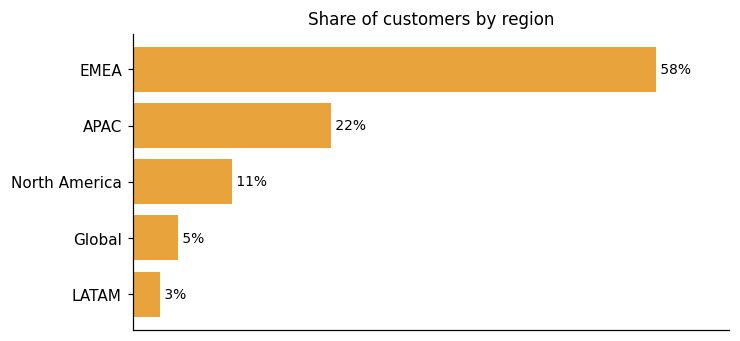
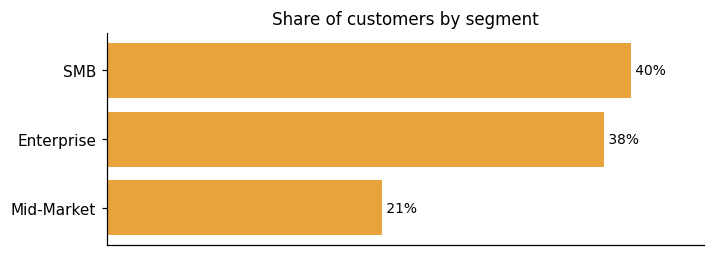
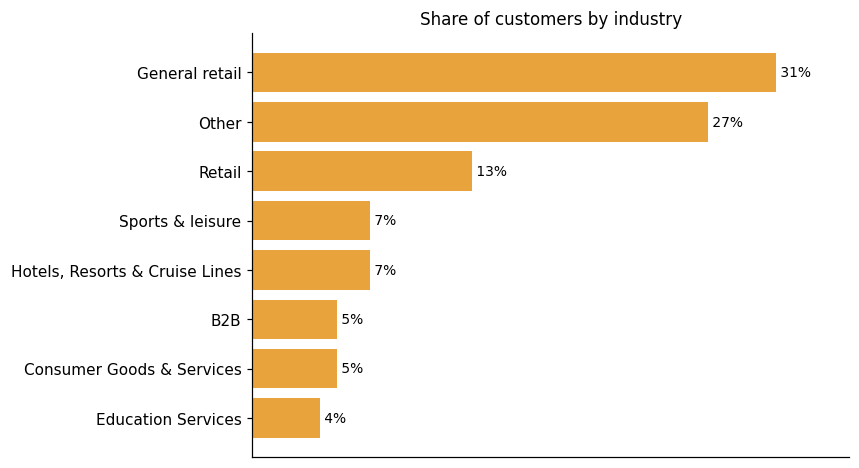
Representative customers: 4Cabling, Action for Children, Animed Direct, Anthem Publishing, Arena Racing Company, Atomic Group, Awaze
How Dotdigital uses AI in practice
Dotdigital brings AI into nearly every part of its marketing automation platform through its WinstonAI™ engine, covering segmentation, send-time optimization, product recommendations, generative copywriting, and predictive analytics. The vendor describes the reach of that integration this way: WinstonAI is baked into our platform every step of the way. On the segmentation side, AI-driven segmentation predicts customer behavior and automatically optimizes A/B tests.
Predictive ML
Read detailsDotdigital's machine learning models analyze past customer behavior to forecast next purchase date, churn risk, and customer lifetime value. They also determine the optimal send time for each individual contact to maximize engagement.
Generative AI
Read detailsWinstonAI gives marketers a single tool for generating and rewriting marketing copy directly in their brand voice. Tone adjustment, text shortening, language simplification, and emoji insertion all happen without leaving the platform. Translation is built in, so adapting content for different markets requires no extra steps. One click converts an email campaign to SMS, keeping the workflow tight across channels.
Recommendation / Matching
Read detailsDotdigital's WinstonAI covers two distinct jobs: surfacing product recommendations and building audience segments. For recommendations, it draws on real-time customer preferences, product catalog data, and browsing and purchase history to identify the most relevant products for email and web channels. On the audience side, it generates lookalike segments and personas from existing customer data.
Dotdigital pricing and value: quote-based costs, ROI and fit
Dotdigital does not publish set prices — the pricing page routes buyers to request a customized plan through a contact form. What the ROI picture shows, across 26 results reported by 22 different customers, is that the platform tends to pay back relative to the effort required. One customer notes that "the return on investment for the amount of work we have needed to do has been fantastic and we are very happy with the results." Another says, "We're seeing a good ROI and are delighted with the support we get in terms of set up, helping us look into other opportunities and A/B testing." A third reports that "since using Fresh Relevance we've switched to a targeted popover on our PDPs, which has led to 79% more sign ups." Customers also flag speed of implementation as part of the value equation — one notes, "We've seen a really great ROI with Fresh Relevance and we've only just scratched the surface of what we can do," suggesting gains come early in the relationship.
ROI evidence from 22 customers
- We've seen a really great ROI with Fresh Relevance and we've only just scratched the surface of what we can do.
- We're seeing a good ROI and are delighted with the support we get in terms of set up, helping us look into other opportunities and A/B testing
- the return on investment for the amount of work we have needed to do has been fantastic and we are very happy with the results
- You should see an almost immediate return on investment. We made enough money in the first month of using Fresh Relevance to cover the cost of the platform.
Time-to-value: what implementations take
- Within the first four months of implementing the campaign, Blue Sea Holidays recorded an impressive 37% open rate and 32% clickthrough rate
- From October 2021 to March 2022, they sent a total of 1.3 million emails — a 48% increase from the previous six months due to efficiencies gained from implementing Dotdigital
- H&T was able to attribute an impressive £151,843 in new sales, within just 10 weeks of implementation.
- In the first six months of implementing the automaton programs around £74,000 in revenue was tracked
- Data capture pop-ups, deployed across all 16 racecourse websites, have brought in 22,000 new contacts in just six months
Who it fits: value by company size
Dotdigital draws customers across a range of company sizes. Small businesses use it for the full sweep of email marketing work — as one customer puts it, the perfect platform to connect with your customers, covering everything from template creation to campaign automation. Scale is not a barrier either: a team of three can use Dotdigital to reach 1.25 million contacts across 30 countries in 17 languages. No affordability or negative fit signals are present in the available evidence.
The pricing page routes visitors to request a customized pricing plan via a contact form; no specific prices are published.
Dotdigital enterprise readiness: security, compliance, migration, and support
Dotdigital handles enterprise readiness across four areas: security, compliance, migration, and customer support.
Security controls and assurance
Dotdigital's security posture covers both technical controls and formal third-party validation. Data in transit is protected with TLS encryption, and data at rest uses AES encryption. Email campaigns travel over opportunistic TLS with DKIM and DMARC authentication. Passwords are one-way hashed, and email addresses are hashed when written to MTA logs. On the network side, firewall rules and Web Application Firewalls control and filter access to infrastructure. Role-based permissions govern staff access to systems and data. Dotdigital holds Cyber Essentials Plus, ISO 14001, ISO 27001, and ISO 27701. The ISO 27001 and 27701 certifications cover information security management and privacy information management respectively. For ongoing assurance, annual penetration testing is carried out by CREST-accredited consultancies. A monthly patching cycle and continuous vulnerability scanning round out the operational security program.
Compliance and data protection
Dotdigital's compliance posture is built around contractual data protection and regional data residency controls. GDPR-specific data processing agreements and EU Model Contract Clauses are in place between Dotdigital and its subsidiaries as well as its third-party service providers. Those EU Standard Contractual Clauses extend to subsidiaries in North America, Australia, and South Africa, not just European entities. For customers operating under Australia's Privacy Principles, Dotdigital complies with a wide range of international, industry, and local standards, and lets customers choose sending instances in regions including Australia, North America, and Europe. On Canadian privacy requirements, Dotdigital has assessed its practices across risk, security, incident management, access control, and data integrity protection relative to recommendations from the Office of the Privacy Commissioner of Canada, concluding that the in-scope services are capable of meeting those recommendations.
Migration from competing platforms
Planning is the core of a successful platform switch — warming up a new sending domain, cleaning contact lists, and migrating sends gradually to protect sender reputation. Dotdigital's onboarding team helps move data, maintain authentication, and keep deliverability intact through the transition. Customers report that getting up and running tends to be fast. One customer found Fresh Relevance only took our dev team a couple of hours to implement. Another describes the experience simply: really simple to set up, no problems at all. Post-migration, customers describe meaningful business gains. In one customer's words: surface key customer data, capitalize on lapsed customers, easily onboard new customers, and analyze and segment customers based on their interests. On the support side, one customer notes they are seeing a good ROI and are delighted with the support we get in terms of set up, helping us look into other opportunities and A/B testing.
Customer support experience
Dotdigital structures its support around several specialized teams, and customers report that the relationship feels more like a consultancy than a vendor arrangement. The Client Success team is described on Dotdigital's site as friendly, fast, and global, and separate Professional and Creative Services teams are available for additional help. Onboarding covers data migration, authentication setup, and sender reputation management. For languages beyond English, multi-lingual support by livechat, email and telephone is available through Partner Hero. A dedicated security team handles security queries directly, with real-time status updates and historical uptime data accessible by region or service function. Customer Success Managers stay involved well past initial setup. As Timpson Group puts it, "with our Customer Success Manager's support, we've been able to achieve things that would normally require a much bigger team or agency support." Timpson Group describes the dynamic as consultant-client rather than vendor-customer. In one customer's words, a complicated price list issue was resolved through Dotdigital's data management model and customer support team.
Dotdigital vs. Zeta Global, Bloomreach, Netcore Cloud and other platforms
Email marketing service providers give B2C marketers the native tools to build, optimize, and extend email programs — spanning personalization, segmentation, deliverability, and coordination with other channels. Dotdigital's position in this category is shaped by a set of capabilities centered on journey automation, segmentation, and cross-channel personalization. The journey builder uses a drag-and-drop interface to trigger personalized messages across email, SMS, WhatsApp, and ads based on customer behavior, including cart recovery. Segmentation follows the same pattern: a drag-and-drop builder draws on real-time behavior, purchase history, lifecycle stage, AI suggestions, and lookalike creation. Website personalization extends across channels too, adapting banners, products, and imagery using preference, behavior, events, and AI-predicted intent. Underlying all of this is a unified rich contact profile that pulls from orders, CRM, web behavior, and reviews to inform decisioning. The comparison table covers the dimensions where Dotdigital and peers like Zeta Global, Bloomreach, Netcore Cloud, and Cordial differ most. It is a differentiation view, not an exhaustive feature-by-feature breakdown, and should be read that way. Where the evidence shows Dotdigital trailing the category on certain dimensions, those gaps appear in the table rather than being glossed over here. The overall picture is evidence-based and directional — not a precise score.
Email Marketing Service Providers
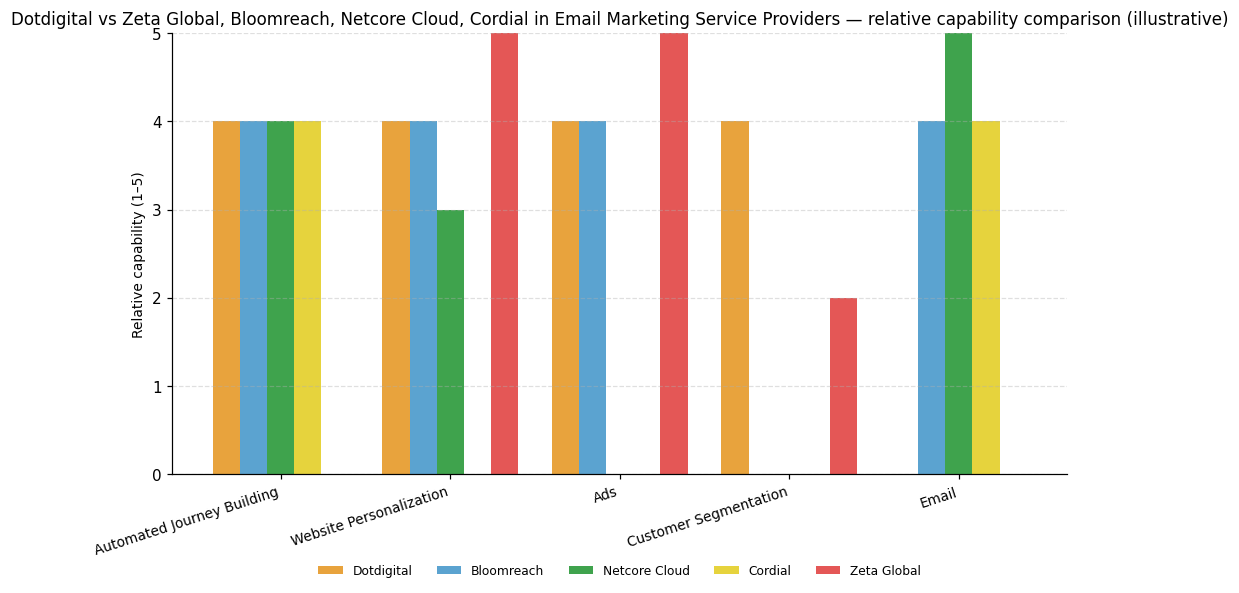
| Capability | Dotdigital | Zeta Global | Bloomreach | Netcore Cloud | Cordial |
|---|---|---|---|---|---|
| Automated Journey Building | 4 | — | 4 | 4 | 4 |
| Website Personalization | 4 | 5 | 4 | 3 | — |
| Ads | 4 | 5 | 4 | — | — |
| Customer Segmentation | 4 | 2 | — | — | — |
| — | — | 4 | 5 | 4 |
Dotdigital
Automated Journey Building: Drag-and-drop journey builder triggers personalized messages across email, SMS, WhatsApp, and ads based on customer behavior including cart recovery.; Website Personalization: Platform personalizes banners, copy, products, offers, and imagery across email, SMS, WhatsApp, and ads using preference, behavior, events, and AI-predicted intent.; Ads: Pulls real-time customer data from orders, CRM, web behavior, and reviews into a unified rich contact profile that informs decisioning and segmentation.; Customer Segmentation: Drag-and-drop segment builder uses real-time behavior, purchase history, lifecycle stage, AI suggestions, and lookalike segment creation.
Zeta Global
Website Personalization: Offering leads the study by personalizing send time, delivery frequency, channels, content, products, offers, and subject lines simultaneously.; Ads: Incremental customer data signals from its media network surface purchase behaviors to identify prospects responsive to specific pricing tiers.
Bloomreach
Automated Journey Building: Platform discovers customers, recognizes context, decides the right experience, designs it, and sends it at the optimal time and place.; Website Personalization: Personalization is grounded in privacy-based approach and uses customer insights to help marketers innovate.; Ads: Uses customer and business data and metadata in decisioning to autotrigger journeys at key moments.; Email: Frameworks autotrigger journeys at key moments, advancing email use cases beyond standard promotional sends.
Netcore Cloud
Automated Journey Building: AMP-based in-email shopping carts shorten the distance between offer and order within the workflow.; Email: Introduced in-email shopping carts via AMP, enabling commerce and data collection directly within the email message itself.
Cordial
Automated Journey Building: AI enhances marketer productivity and email value beyond basic content creation, improving workflow outcomes.; Email: AI enhances email value beyond basic content creation, extending what the email medium can accomplish.


Connect Dotdigital with your stack: integrations and partner ecosystem
Dotdigital connects to a wide range of third-party tools through 6 native integrations and 275 integration partnerships. Those partnerships span 657 partner categories, covering areas as varied as CRM, Data Warehouse, and Marketing Automation.
Dotdigital connects to ecommerce platforms, CRMs, and analytics tools through native integrations and developer-facing APIs. On the ecommerce side, product, order, and customer data syncs in real time across Shopify, Adobe Commerce, BigCommerce, and WooCommerce. CRM coverage spans Salesforce, HubSpot, and Microsoft Dynamics, with data flowing both ways so campaigns reflect current customer information. Beyond those named platforms, Dotdigital can be connected to hundreds of other B2B tools, with real-time data pushes feeding smart segments, personalized pricing, and automated campaigns. For developer-built messaging workflows, Dotdigital's Developer APIs capability offers a dedicated route. With that capability, a few lines of code can send and receive SMS and WhatsApp messages to over 180 countries. For its Developer APIs capability, configurable webhooks let you receive, analyze, and report on message delivery, URL clicks, and inbound SMS and WhatsApp in real time from your own systems. One constraint worth knowing: there is a hardcoded limit on API calls per hour, and raising that ceiling requires an additional payment.
| Partner category | Integration partners | Native count | Flow direction |
|---|---|---|---|
| CRM | Salesforce, HubSpot, 1CRM, 1net CRM, Access Charity CRM, Agile CRM, Anabix CRM, Attio, Axonaut, B2cor CRM, Bigin by Zoho CRM, CDP & CRM CareCloud, CRM Messaging, CRM Whats Pro, Capsule CRM, Close CRM, Cloze, Copper, Crmble, Cubo CRM, Daylite, Donorfy, EngageBay, Enrich CRM, EspoCRM, Flexie CRM, Follow Up Boss, Freshsales, Gist, Highrise, HubSpot CRM, Initiative CRM, Insightly CRM, Keap, Kommo, LeadSquared, Livespace CRM, Maximizer CRM, Microsoft Dynamics 365, Microsoft Dynamics 365 - CRM, MobiCRM, Moskit CRM, NeonCRM, NetHunt, Nimble, Nutshell, Néctar CRM, OnePageCRM, OpenFlex Marketing, Pipedrive CRM, Pipedrive Resellers Portal, Pipeliner CRM, RAYNET CRM v2, RelationCity, Runo Call Management CRM, SalesWizard CRM, Salesflare, Salesmate, Sellsy, SlimCRM, Stood CRM, Streak, SugarCRM (sugarcrm11.com), SugarCRM Inc. (sugarcrm.com), SuiteCRM 7, TeamWave, Teamgate CRM, Teamwork CRM, Uspacy, VERSAT CRM, Vtiger CRM, Wealthbox, Workbooks, Zendesk Sell, Zixflow, Zoho CRM, clieent® CRM, coreBos, eWay-CRM, folk, noCRM.io | 1 | Bidirectional, Unknown |
| Data Warehouse | BigQuery, Snowflake, Amazon Redshift | 0 | Unknown |
| Marketing Automation | Marketo Engage, ActiveCampaign, ActiveDEMAND, Autopilot by Ortto, Maropost, Mautic, Ontraport, Oracle Eloqua, Quentn, RD Station, SALESmanago, Salesforce Marketing Cloud, Salesforce Pardot, SharpSpring, VBOUT | 0 | Unknown |
| Sales Engagement | Outreach, Salesloft, Klenty, PersistIQ, Reachdesk, SalesBlink | 0 | Unknown |
| Team Communication | Slack, Brosix, Chatwork, Discord, Fleep, Flock, Google Chat, HeySpace, Mattermost, Microsoft Teams, Missive, Rocket.Chat, Ryver, Status Hero, Twist, Webex by Cisco, Weekdone, Zoho Cliq, Zulip | 0 | Unknown |
| social media platform | LinkedIn, Facebook, Instagram, TikTok, X | 2 | Downstream |
| A/B Testing | Optimizely Campaign | 0 | Unknown |
| AI API | AI/ML API, Deep Infra, DeepAI, Eden AI, Fal.ai, OpenRouter, PiAPI/DiffRhythm, PiAPI/FaceSwap, PiAPI/Flux.1, PiAPI/Hunyuan, PiAPI/Kling (unofficial), PiAPI/Luma (unofficial), PiAPI/MMAudio, PiAPI/Midjourney (unofficial), PiAPI/NanoBanana, PiAPI/Qwen, PiAPI/Skyreels, PiAPI/Sora, PiAPI/Toolkit, PiAPI/Trellis, PiAPI/Veo, PiAPI/Wanx, Runware.AI, Runway, Segmind, Together AI, jina.ai, llama-api.com | 0 | Unknown |
| AI Agent | Agent.AI, Make AI Agents (ai-agent.com), Make AI Agents (ai-local-agent.com) | 0 | Unknown |
| AI Application Platform | Dify | 0 | Unknown |
| AI Coding | codeGPT | 0 | Unknown |
| AI Copywriting | Phrasee® | 0 | Unknown |
| AI Detection | detecting-ai | 0 | Unknown |
| AI Gateway | Vercel AI Gateway | 0 | Unknown |
| AI Hardware | Cerebras AI, Groq, NVIDIA, SambaNova AI | 0 | Unknown |
| AI Model | Anthropic Claude, Cohere, DeepSeek AI, Doubao AI, Google Gemini AI, Kimi, Mistral AI, OpenAI (ChatGPT, Sora, Whisper), Qwen AI, Stability AI, xAI | 0 | Unknown |
| AI Model Hub | Hugging Face | 0 | Unknown |
| AI Optimization | DataForSEO AI Optimization API | 0 | Unknown |
| AI Personalization | Crossing Minds | 0 | Unknown |
| AI Phone Calling | Autocalls AI Phone Calling, Bland, Bolna, Contactship AI Phone Calling, PreCallAI, Retell AI, Smith.ai, Synthflow AI Phone Calling, Vapi, malma.ai | 0 | Unknown |
| AI Platform | Amazon Bedrock, Azure AI Foundry, Azure OpenAI, Google Vertex AI (Gemini), watsonx.ai | 0 | Unknown |
| AI Sales Assistant | AISA - AI Sales Assistant | 0 | Unknown |
| AI Scheduling | Motion | 0 | Unknown |
| AI Search | Perplexity AI | 0 | Unknown |
| AI Security | DeepKeep | 0 | Unknown |
| AI Software | AI Engine, AI21 Labs, Airiam AI, Base64.ai, Benetics AI, Brain Pod AI, BurstyAI, Deeplogix LLMs, DeutschlandGPT, Digital Influencers, Distil.ai, DumplingAI, Engage AI, Fluents.ai, Frosty AI, GPT Maker, JoggAI, Langdock, Legnext.ai-Midjourney (unofficial), Make AI Content Extractor, Make AI Toolkit, Make AI Web Search, Maybe* Your AI, MindStudio, Natif.ai, Nedzo AI, Nero AI, Norns AI, Prapii, Productify.ai, PromptLayer, Promptitude.io, Purple, Quantum Neuron, Release0 - Smarter Agents, Relevance, Scenarios, Schogini AI Wizard, SectorFlow.AI, ShareAI, SkylerAI, Snack Prompt, StealthGPT, Systemprompt.io, Tess AI, Vaimero Agent V3, Zaia, Zee, anakin, nele.ai | 0 | Unknown |
| AI Training | GPT-trainer | 0 | Unknown |
| AI Voice | thinkrr Voice AI | 0 | Unknown |
| AI Workflow | Dust | 0 | Unknown |
| AI Writing | ChatSonic, Copy AI, Jasper AI, Neuroflash, RoboQuill, TextCortex AI, Yourtext.Guru by Sequance | 0 | Unknown |
| API Client | MCP Client | 0 | Unknown |
| API Management | Apiframe | 0 | Unknown |
| API Services | 1Shot API, API Labz, APIVerve, Avisa API, BlueStone API - Public, Brasil API, Cloudmersive, CometAPI, CraftQL, EleAPIs, FAPI, FAPI Member, Linked API, Megaapi Start, OneSimpleApi, The Good API, Zapster API | 0 | Unknown |
| Access Control | UniFi Access | 0 | Unknown |
| Accessibility Tool | Alt Text Generator, AltTextLab, AltTextify | 0 | Unknown |
| Account Management | MoreLogin | 0 | Unknown |
| Accounting | Love Your Accountants | 0 | Unknown |
| Accounting Software | ABRA FlexiBee, Alegra, Asaas, Dext, E-conomic, Finolog, Fortnox, FreeAgent, FreshBooks, KashFlow, Lexware Office, Moneybird, Pennylane V2, PowerOffice, Procountor, QuickBooks, QuickFile, Quipu, Sage 50 Accounts by Hyperext, Sage Business Cloud Accounting, Sage Intacct, Tripletex, Visma eAccounting, Wave, Xero, Zoho Books, bexio, iCount, iÚčto.cz, sevDesk | 0 | Unknown |
| Activity Booking | FareHarbor | 0 | Unknown |
| Address API | RUIAN API | 0 | Unknown |
| Address Verification | Loqate | 0 | Unknown |
| Advertising | Targetare.ro, adsfox | 0 | Unknown |
| Advertising Management | Admanage.ai, Skai | 0 | Unknown |
| Advertising Platform | Facebook Ads Campaign Management, Facebook Conversions API, Facebook Conversions API for CRM, Facebook Custom Audiences, Facebook Lead Ads, Google Ads Campaign Management, Google Ads Conversions, Google Ads Customer Match, Google Ads Lead Forms, Google Ads Reports, LinkedIn Ads Campaign Management, LinkedIn Ads Reports, LinkedIn Conversions API, LinkedIn Lead Forms, LinkedIn Matched Audiences, Microsoft Advertising Campaign Management, Microsoft Advertising Conversions, Microsoft Advertising Reports, Snapchat Campaign Management, Snapchat Conversions, TikTok Audiences, TikTok Conversions, TikTok Lead Forms, TikTok Reports | 0 | Unknown |
| Advocacy Platform | Action Network | 0 | Unknown |
| Aerospace | SpaceX | 0 | Unknown |
| Affiliate Management | FirstPromoter, FirstPromoter v2, GoAffPro, Partnero, Qapla', Tapfiliate | 0 | Unknown |
| Agency Management | Agencyjoy, LinkMyAgency | 0 | Unknown |
| Agency Marketplace | Sortlist | 0 | Unknown |
| Analytics | Facebook Insights, Glew.io, Google Analytics 4, LivingMetrics, Measured, Sweet Analytics, Webmetic | 0 | Unknown |
| Approval Workflow | Ozy Approvals | 0 | Unknown |
| Attribution Analytics | Hyros | 0 | Unknown |
| Audio Editing | Cleanvoice AI | 0 | Unknown |
| Authentication | Authvia | 0 | Unknown |
| Automation | Pushcut, Shortcuts, TRIGGERcmd | 0 | Unknown |
| Automation Platform | IFTTT, Make, Microsoft Power Automate | 0 | Unknown |
| Avatar Creation | HeyGen, avatartalk-ai | 0 | Unknown |
| Awards Management | Award Force | 0 | Unknown |
| B2B eCommerce | Sana Commerce | 0 | Unknown |
| Backend-as-a-Service | Backendless, Supabase, Supabase Management | 0 | Unknown |
| Background Checks | Checkr | 0 | Unknown |
| Backup Software | ProBackup, SqlBak | 0 | Unknown |
| Badge Management | Issue Badge | 0 | Unknown |
| Banking | California Bank & Trust, Citibank, Fio banka, Komerční banka, UnionBank, Wells Fargo | 0 | Unknown |
| Banner Creation | Bannerbite, GenerateBanners.com | 0 | Unknown |
| Barcode Generation | Barcodes, Mallabe Barcodes | 0 | Unknown |
| Beta Testing | Prefinery | 0 | Unknown |
| Billing Software | ChargeOver | 0 | Unknown |
| Biometric Tracking | HypeRate | 0 | Unknown |
| Blockchain | Flow Blockchain, Overledger, Solana | 0 | Unknown |
| Blogging Platform | Blogger, Ghost, Tumblr | 0 | Unknown |
| Book Marketing | BookFunnel | 0 | Unknown |
| Booking Software | CaptainBook, Planyo, Quill Booking, Reservanto, SimplyBook.me | 0 | Unknown |
| Bookmarking | Diigo, Pinboard, Raindrop.io | 0 | Unknown |
| Brand Management | Brand.dev | 0 | Unknown |
| Browser Automation | Airtop, Anchor Browser Agent, Axiom, BrowserAct, Browserflow for LinkedIn, HARPA AI Web Browser Agent, Keymate AI Web Browser Agent, Skyvern AI, Twin Web Agent | 0 | Unknown |
| Browser Extension | Brave | 0 | Unknown |
| Bug Tracking | MantisBT | 0 | Unknown |
| Business Banking | Qonto | 0 | Unknown |
| Business Credit | Brex | 0 | Unknown |
| Business Dashboard | Cyfe, Databox, Geckoboard, Grow, Looker Studio | 0 | Unknown |
| Business Data | CNPJá, CPF.CNPJ, CompanyHub, Lista Firme, Pappers, ReceitaWS, Rejstříky.info, Société.com, nip24.pl - biała lista VAT, VIES, REGON i KRS | 0 | Unknown |
| Business Data API | DataForSEO Business Data API | 0 | Unknown |
| Business Directory | Yelp | 0 | Unknown |
| Business Intelligence | Metabase, Microsoft Power BI, SeekTable, Tableau | 0 | Unknown |
| Business Management | BizMachine | 0 | Unknown |
| Business Profile | Google Business Profile | 0 | Unknown |
| Business Registration | RapidReg | 0 | Unknown |
| Business Software | Business OS - DATEV, Businesslogic.online, Deskera, Easybizy, HERO Software für Handwerker, Holded, Onoff Business, SUMIT, SuiteDash, Teamleader, Traction Tools | 0 | Unknown |
| Business Suite | Bitrix24, GoHighLevel, Google Workspace Admin | 0 | Unknown |
| Button Creator | Virtual Buttons | 0 | Unknown |
| CDN & Security | Cloudflare | 0 | Unknown |
| CI/CD | Jenkins | 0 | Unknown |
| CMS | 2all CMS, Drupal, Joomla, LEAV Engine | 0 | Unknown |
| CRM Integration | OneClick for Pipedrive | 0 | Unknown |
| Calculator Tool | Stylish Cost Calculator | 0 | Unknown |
| Calendar | Google Calendar, Microsoft 365 Calendar, Zoho Calendar | 0 | Unknown |
| Calendar Alerts | MyCalendarAlerts | 0 | Unknown |
| Calendar Integration | Cal ID | 0 | Unknown |
| Calendar Management | Reclaim.ai | 0 | Unknown |
| Calendar Sharing | Teamup | 0 | Unknown |
| Call Center | Call Assist, Daktela, Diabolocom, Voicenter, Voiso | 0 | Unknown |
| Call Tracking | A&A/FITPASS Calltracking, CallRail, CallTrackingMetrics, WhatConverts | 0 | Unknown |
| Certification | Procertif | 0 | Unknown |
| Certification Platform | Certifier | 0 | Unknown |
| Channel Management | Channex | 0 | Unknown |
| Chart Generation | Chart Image, Image-Charts, QuickChart | 0 | Unknown |
| Chatbot Platform | AI Chatbot Hub, ArtiBot.ai, Borisbot, BotDistrikt, BotPenguin, BotStar, Botcake, Botsheets, Botsify, Chat Breezes, ChatBot, ChatData, ChatGuru, ChatMaven.ai, ChatNode, Chatbase, Chatforma, Chatfuel, Chatmax, Chatsistant, Chatvolt AI, Chatwize Connection, Cloud BOT, Coze, Flow XO, GPT Chatbot, Google Cloud Dialogflow ES, HeroBot, Landbot, LiveChatAI, Manychat, Meya, MightyChat, Omnichat, Roam-bot, Rocketbot, Sendbot, Sensibot.io, SilFer Bots, SnatchBot, Surveybot, Tars, The Bot Platform, Twilio Autopilot, Typebot, Wizup, WizyChat, YourGPT Chatbot, innoChat | 0 | Unknown |
| Check Writing | OnlineCheckWriter | 0 | Unknown |
| Childcare Software | Kinderpedia | 0 | Unknown |
| Cleaning Management | Tidely | 0 | Unknown |
| Client Management | Clientary, Clientjoy, Go4Clients | 0 | Unknown |
| Cloning Tool | CloneByMe | 0 | Unknown |
| Cloud Management | Lighthouse by Cloudify, kloud klickers for Microsoft Azure | 0 | Unknown |
| Cloud Marketplace | AWS Marketplace Entitlements | 0 | Unknown |
| Cloud Metering | AWS Marketplace Metering | 0 | Unknown |
| Cloud Security | AWS KMS/Secrets | 0 | Unknown |
| Cloud Services | Elements.cloud | 0 | Unknown |
| Cloud Storage | AWS S3, Box, DigitalOcean Spaces, Dropbox, Egnyte, Feishu Drive, FileCloud, Google Cloud Storage, Google Drive, Lark Drive, Nextcloud, OneDrive, Put.io, SugarSync, Wasabi, Zoho WorkDrive, pCloud | 0 | Unknown |
| Club Management | ClubPlanner | 0 | Unknown |
| Code Editor | Make Code | 0 | Unknown |
| Code Execution | Custom JS, YepCode Run, e2b.dev | 0 | Unknown |
| Code Quality | Sonar | 0 | Unknown |
| Code Repository | Bitbucket, GitHub, GitLab | 0 | Unknown |
| Code Sharing | Pastebin | 0 | Unknown |
| Collaboration Tool | Miro, Mural | 0 | Unknown |
| Comments Platform | Disqus, Haloscan by Sequance | 0 | Unknown |
| Communication Platform | Agentalk, Allo, Bellbird [UNSUPPORTED], CommPeak, Convo, Enreach DialoX, Matrix, mission‹one› dialog+ | 0 | Unknown |
| Communications Platform | Infobip, Plivo, SignalWire, Sinch Build, Sinch Engage, Telnyx, Telnyx (EU), Twilio, Ublux Communications, Vonage | 0 | Unknown |
| Community Management | Disciple Tools | 0 | Unknown |
| Community Platform | Bettermode, Circle, Discourse, Invision Community, Orbit, PeerBoard, skool | 0 | Unknown |
| Compliance | BSI, IntegrityNext | 0 | Unknown |
| Computer Vision | Amazon Rekognition, Clarifai, Google Cloud Vision | 0 | Unknown |
| Connected Car API | Smartcar | 0 | Unknown |
| Construction Software | Obras Online | 0 | Unknown |
| Consulting | Alpine Consulting, Dunn Solutions Group | 0 | Unknown |
| Contact Finder | BetterContact, Reverse Contact | 0 | Unknown |
| Contact Management | Contacts+, Google Contacts, ManyContacts, Microsoft 365 People, Yeastar Contacts, 리멤버 명함관리 (Remember app, hosted by Magic Meal Kits) | 0 | Unknown |
| Content Aggregation | Feedly, Inoreader | 0 | Unknown |
| Content Analysis API | DataForSEO Content Analysis API | 0 | Unknown |
| Content Collection | Content Snare | 0 | Unknown |
| Content Commerce | Styla | 0 | Unknown |
| Content Creation | Wordbrew | 0 | Unknown |
| Content Curation | Curator | 0 | Unknown |
| Content Distribution | Unifire | 0 | Unknown |
| Content Generation | AX Semantics, AutoContent API | 0 | Unknown |
| Content Management | ContentStudio, GatherContent | 0 | Unknown |
| Content Marketing | Letterdrop | 0 | Unknown |
| Content Platform | Turtl | 0 | Unknown |
| Content Publishing | BulkPublish | 0 | Unknown |
| Content Saving | 0 | Unknown | |
| Contests & Giveaways | ViralSweep, Woobox | 0 | Unknown |
| Contract Management | Contractbook | 0 | Unknown |
| Conversational Marketing | Drift | 0 | Unknown |
| Conversion Optimization | ConvertBox, Converts.online, Justuno, Konverzky.cz, Omniconvert, OptiMonk, Poper, Poptin, Privy, Sleeknote, Sumo, WisePops, Yieldify | 0 | Unknown |
| Course Builder | Mini Course Generator | 0 | Unknown |
| Course Platform | Simplero, Teachable, Teachery, Thinkific, Zenler | 0 | Unknown |
| Creator Platform | Ko-fi, Patreon, Steady | 0 | Unknown |
| Crowdsourcing | CrowdPower | 0 | Unknown |
| Cryptocurrency | Encryptor | 0 | Unknown |
| Cryptocurrency API | Bitcoin API | 0 | Unknown |
| Cryptocurrency Data | CoinMarketCap | 0 | Unknown |
| Cryptocurrency Exchange | Binance | 0 | Unknown |
| Cryptocurrency Payment | OxaPay Crypto Payment Gateway | 0 | Unknown |
| Cryptocurrency Wallet | LOBSTR.IO | 0 | Unknown |
| Currency Exchange | Currency, Global Exchange Rates, Mallabe Currencies, Oanda Exchange Rates, Směnné kurzy ČNB | 0 | Unknown |
| Customer Communication | Intercom | 0 | Unknown |
| Customer Data Platform | Lexer, Lytics, Rudderstack, Segment, Skypoint Cloud, Userlist, Zendesk Sunshine | 0 | Unknown |
| Customer Engagement | Braze, Customer.io, Iterable, Optimove, windsor circle | 0 | Unknown |
| Customer Experience | Human Element | 0 | Unknown |
| Customer Feedback | Delighted, Fairing, Feedier, InMoment, Refiner, Retently, SatisMeter Inc, Simplesat, Zonka Feedback | 0 | Unknown |
| Customer Journey | journy.io | 0 | Unknown |
| Customer Retention | Retention.com | 0 | Unknown |
| Customer Success | Custify, Vitally | 0 | Unknown |
| Customer Support | AssistLoop, Help Scout, Positive User, Simplr, Zendesk, gotoHuman, supi support | 0 | Unknown |
| DNS Tools | ViewDNS | 0 | Unknown |
| Data API | DataForSEO App Data API, Gender API, Genderize, Namsor Onomastics AI, People Data Labs, Plusvibe.ai, REST Countries | 0 | Unknown |
| Data Analytics | Mozart Data Inc | 0 | Unknown |
| Data Capture | QuickCapture | 0 | Unknown |
| Data Conversion | 2ploon.com - JSON to Ploon Converter, EasyCSV | 0 | Unknown |
| Data Enrichment | Clay, Clearbit, FullEnrich, Mesh | 0 | Unknown |
| Data Format | CSV, JSON, XML | 0 | Unknown |
| Data Import | WP All Import | 0 | Unknown |
| Data Integration | Keboola, Peaka, Peliqan, Supadata | 0 | Unknown |
| Data Management | ActiveMerge, DataMerge, Xelians Datahub | 0 | Unknown |
| Data Quality | Amabis data quality | 0 | Unknown |
| Data Retrieval | Remote Retrieval | 0 | Unknown |
| Data Services | AtData, BringData.co, DNCSolution, Data24-7, Datelist, Experian Aperture, Explorium AgentSource, FullContact Inc. | 0 | Unknown |
| Data Storage | Data store | 0 | Unknown |
| Data Synchronization | Syncupp | 0 | Unknown |
| Data Transfer | Google Cloud Storage Transfer Service | 0 | Unknown |
| Data Validation | Byteplant Address Validator, Foxentry, Mallabe Validations | 0 | Unknown |
| Data Verification | AddressVerify | 0 | Unknown |
| Data Visualization | Plotly | 0 | Unknown |
| Database | Amazon DynamoDB, AnyDB, FaunaDB, Google Cloud Firestore, Microsoft SQL Server, MongoDB, MySQL, PostgreSQL, PostgreSQL Global Development Group, Restdb.io, Xata, Zite DB | 0 | Unknown |
| Deck Management | OneDeck | 0 | Unknown |
| Delivery Management | Detrack, LionWheel Delivery, Onfleet, Shipday, Tookan | 0 | Unknown |
| Design Community | Dribbble | 0 | Unknown |
| Design Software | Adobe CC Libraries | 0 | Unknown |
| Design Tool | Canva, Canvasflare, Delesign, Figma, Stencil | 0 | Unknown |
| DevOps Platform | Azure DevOps | 0 | Unknown |
| Device Management | Microsoft Intune | 0 | Unknown |
| Dictionary | Urban Dictionary | 0 | Unknown |
| Digital Agency | Absolute Web, Acidgreen, Agence Dn'D, Alchemy Worx, Appnovation, ArgonDigital, Atwix, BORN, Balance Internet, Baseworks, Beehive, Blayzer Digital, Bounteous, Briteskies, Crimson Agility, DigitalPilot, Echidna, Enchant Agency, Inspiretec Group, InteractOne, Irish Titan, Iteration X, Kensium Solutions, Krish TechnoLabs - A Full Service Digital Commerce Agency, Limesharp, Mindspun, Nordic Web Team AB, Overdose., Quickfire Digital, RMG, Ranosys Technologies, Raptor Services, SQLI Digital Experience, Salmon, Screen Pages LTD, Social Nucleus, Sub2 Technologies, TakeFortyTwo, Two Jay, Valtech, Verz Design, WIRO, We Make Websites, Wireless Social, Zeidman Development, Ziffity Solutions LLC, cti digital | 0 | Unknown |
| Digital Asset Management | DALIM | 0 | Unknown |
| Digital Products | Digistore24, Gumroad, Hotmart, SendOwl, ablefy | 0 | Unknown |
| Digital Wallet | PassKit, Smart Passes | 0 | Unknown |
| Direct Mail | Lettermint, Lob, Merci Facteur, PostGrid, Postalytics, Stannp | 0 | Unknown |
| Document AI | ChatPDF | 0 | Unknown |
| Document Automation | DocsAutomator | 0 | Unknown |
| Document Creation | Storydoc | 0 | Unknown |
| Document Editor | Google Docs, Zoho Writer | 0 | Unknown |
| Document Generation | APITemplate.io, Carbone, DocCrafter, DocsGenFlow, DocuGenerate, DocuPipe, Documint, Docupilot, Formstack Documents, Microsoft Word Templates, Plumsail Documents | 0 | Unknown |
| Document Management | DocsFold, DocuProx, DocuWare, Documentero, EDRMS Docupile, Feishu Document, Folderit DMS, GetAccept, Lark Document, Microsoft SharePoint Online, PandaDoc, Paperless.io, Revv Documents, Revver, eDock, easydoc | 0 | Unknown |
| Document Processing | Aspose, Bitskout, Docparser, DocsParse, Klippa, Klippa DocHorizon, Mindee V2, Nanonets, Rossum | 0 | Unknown |
| Document Scanning | Scan2Scan | 0 | Unknown |
| Document Templates | TemplateDocs | 0 | Unknown |
| Domain & Hosting | GoDaddy, IONOS | 0 | Unknown |
| Domain Analytics API | DataForSEO Domain Analytics API | 0 | Unknown |
| Domain Data API | IP2WHOIS, WhoisFreaks | 0 | Unknown |
| E-Invoicing | PeppoBox PEPPOL connector | 0 | Unknown |
| E-Signature | Adobe Acrobat Sign, Autentique, Click and Sign, Clicksign, D4Sign, DigiSign, Digiclose, DocuSeal, Docusign, Dropbox Sign, Edusign, ForSign, Hi Sign, Scrive eSign, Sign, SignRequest, Signable, Signaturit, Signi, Signority, VeriDoc Sign, Xodo Sign, ZapSign, ZipZign, Zoho Sign, eSignatures, signNow | 0 | Unknown |
| ERP Software | Axelor, Bind ERP, Infor M3, LeonAI Priority ERP, Microsoft Dynamics 365 Business Central, Microsoft Dynamics 365 Finance & Operations, NetSuite, Odoo, Oracle Fusion Cloud ERP, SAP ECC Agent, SAP S/4HANA, Selly Erp, Workday Financial Management | 0 | Unknown |
| Education Software | ČVUT Grades, ČVUT KOS | 0 | Unknown |
| Gmail, Microsoft 365 Email (Outlook), Zoho Mail | 0 | Unknown | |
| Email Cleaning | Campaign Cleaner | 0 | Unknown |
| Email Finder | Anymail Finder, Dropcontact, Emailchaser, Findymail, GetEmail.io, Hunter, List Finder, NeverMiss, Prospeo, Snov.io, Tomba Email Finder | 0 | Unknown |
| Email Forms | Mailmodo | 0 | Unknown |
| Email Management | Front, Gmelius, UseINBOX, Zoho TeamInbox | 0 | Unknown |
| Email Marketing | AWeber, ActiveTrail, AcyMailing, Automizy, BigMailer, BirdSend, Brevo, Campaign Monitor, CleverReach, Constant Contact, Disparo Pro, Drip, E-goi, Ecomail.cz, Elastic Email, EmailOctopus, Emailcampaigns.eu, Emercury, Emma, Encharge, Enginemailer, Flexmail, Flodesk, FluentCRM, Fresh Relevance, Freshmail, GetResponse, Inbox Monster, Kickdynamic Ltd, Kit, Klaviyo, KlickTipp, Loopify, Loops, MIGASENDER-2, Magnetly, Mail Komplet, MailBluster, Mailchimp, Maileon, MailerLite, MailerLite Classic, Mailercloud, Maileroo, Mailkit, Mailrelay, Mailvio, Manyreach, Moosend, Movable Ink, NewsMAN, OkaySend, Omnisend, Paced Email, PostPilot, PostPulse, Rav Messer / Responder, Responder.live, RevReply, RevSend, Robly, SendFox, SendPulse, SendX, Sender, Sendlane, Sendy, SlimEmail, Slybroadcast, Smaily, SmartEmailing, SmartrMail, Smoove, Swift Missive, Thaibulkmail, UNISENDER, UniOne, Vero, Vision6, Wunderkind (formerly BounceX), Zagomail, Zembula, Zoho Campaigns, mail2many, mails.so | 0 | Unknown |
| Email Outreach | Emelia, HeyReach, Instantly, Interseller, Mailshake, ReachInbox, Reply Agent, Reply.io, SmartReach.io, Woodpecker, lemlist | 0 | Unknown |
| Email Parsing | Airparser, Parseur, Parsio, SigParser, mailparser.io | 0 | Unknown |
| Email Productivity | Boomerangme, Mixmax | 0 | Unknown |
| Email Security | attachmentAV | 0 | Unknown |
| Email Service | Amazon SES, Mailchimp Transactional Email, MailerSend, Mailgun, Mailjet, Postmark, Resend, SMTP2GO, SendGrid, SparkPost, Zoho ZeptoMail | 0 | Unknown |
| Email Testing | Mailtrap | 0 | Unknown |
| Email Verification | Bouncer, Byteplant Email Validator, ClearBounce, Clearout, DeBounce, Email List Verify, Emailable, Kickbox, MailboxValidator, Mailcheck, MailerCheck, NeverBounce, QuickEmailVerification, RealMail, Reoon Email Verifier, TrueMail, ValidEmail.co, Verifi.Email, ZeroBounce, emailvalidation | 0 | Unknown |
| Employee Engagement | Pulseem, Yoobic | 0 | Unknown |
| Employee Recognition | Bonusly | 0 | Unknown |
| Employee Support | atSpoke | 0 | Unknown |
| Endorsement Platform | Endorsal | 0 | Unknown |
| Energy Supplier | Octopus Energy | 0 | Unknown |
| Entertainment Tracking | Trakt | 0 | Unknown |
| Error Tracking | Sentry | 0 | Unknown |
| Event Management | Corsizio, EventSquare, Eventable, Eventbrite, Inc., Eventzilla, LinkedIn Events, MEETOVO, Splash, Swoogo, cobra Event | 0 | Unknown |
| Event Networking | Swapcard | 0 | Unknown |
| Event Platform | Meetup Pro | 0 | Unknown |
| Event Registration | RegFox | 0 | Unknown |
| Event Ticketing | Humanitix, SimpleTix, Ticket Tailor | 0 | Unknown |
| Expense Management | Expense Management Fidoo, Expensify | 0 | Unknown |
| Expense Splitting | Splitwise | 0 | Unknown |
| Fax Service | Phaxio | 0 | Unknown |
| Feedback Management | Canny | 0 | Unknown |
| Feedback Tool | BugHerd, Userback | 0 | Unknown |
| Field Service | Minha Visita, Odyssee Field Service, ServiceM8, ServiceTitan, ServiceWorks, Zistemo, mfr field service management | 0 | Unknown |
| File Conversion | CloudConvert, ConvertAPI, Convertio, Zamzar - File Conversion | 0 | Unknown |
| File Management | Filestack, Uploadcare | 0 | Unknown |
| File Processing | Transloadit | 0 | Unknown |
| File Sharing | Citrix ShareFile, SharePass | 0 | Unknown |
| File Transfer | Couchdrop, FTP, Files.com, SFTP, Sendit | 0 | Unknown |
| Financial Data API | IEX Cloud | 0 | Unknown |
| Financial Planning | Pigment | 0 | Unknown |
| Financial Software | FreeFinance, FreeFinance v2, finlight | 0 | Unknown |
| Financing | Wayflyer | 0 | Unknown |
| Fitness Management | Arbox, Vestberry, Virtuagym | 0 | Unknown |
| Fitness Tracking | Runkeeper, Strava | 0 | Unknown |
| Fleet Management | Ecofleet.cz, MyCarTracks | 0 | Unknown |
| Form Automation | FillFaster | 0 | Unknown |
| Form Backend | Basin, Formspree, Getform | 0 | Unknown |
| Form Builder | 123FormBuilder, AidaForm, AirProcess, BoloForms, Cognito Forms, Contact Form 7, DataForms.io, Deftform, Fillout Forms, Form.taxi, FormCan, FormCrafts, Formaloo, Formidable Forms, Formify, Formlets, Formsite, Formstack, Funnelforms, Google Forms, Gravity Forms (gravity-forms.com), Gravity Forms (gravityforms.com), HappyForms, Innform, Jotform, MakeForms, NinjaForms, Paperform, PlatoForms, Plumsail Forms, Quill Forms, Tally, Tripetto, VeriForms, WP Ninja Forms, WPForms, WS Form, Web Data Forms, Wufoo, Yay! Forms, Zoho Forms | 0 | Unknown |
| Fraud Detection | FraudLabs Pro, IPQualityScore | 0 | Unknown |
| Fraud Prevention | Greip - Fraud Prevention | 0 | Unknown |
| Freelance Platform | Amwork, Braintrust, Gigrove | 0 | Unknown |
| Fundraising | Darujme.cz, Donorbox, FundraisingBox, HelloAsso | 0 | Unknown |
| GIF Library | GIPHY | 0 | Unknown |
| GPS Software | GPS Tools | 0 | Unknown |
| Game Development | HacknPlan | 0 | Unknown |
| Gamification | Drimify, Gamfi | 0 | Unknown |
| Gaming | Chess.com | 0 | Unknown |
| Gaming Platform | Steam | 0 | Unknown |
| Geolocation API | IP2Location.io IP Geolocation API, IPGeolocation.io, IPLocate IP Geolocation API | 0 | Unknown |
| Goal Tracking | Beeminder, Focuster | 0 | Unknown |
| Grants Management | Good Grants, Optimy | 0 | Unknown |
| Group Communication | Google Groups | 0 | Unknown |
| Group Messaging | GroupMe | 0 | Unknown |
| Growth Software | Growth-X, Push Lap Growth | 0 | Unknown |
| HR Automation | Automation Toolbox (ADP Workforce Tools) | 0 | Unknown |
| HR Software | ADP Workforce Now, BambooHR, Factorial, HiBob, Oracle Fusion Cloud HCM, People HR, Personio, SAP SuccessFactors, TalentHR, Workday Human Capital Management, Zoho People | 0 | Unknown |
| HTTP Client | HTTP Agent | 0 | Unknown |
| HTTP Tools | HttpStatus | 0 | Unknown |
| Habit Tracking | Habitica | 0 | Unknown |
| Handwritten Notes | Handwrytten | 0 | Unknown |
| Headless CMS | Contentful | 0 | Unknown |
| Help Desk | FreeScout, Freshdesk, Groove, HappyFox Help Desk, Helpwise, IPEX, IPEX Helpdesk, Jitbit, LiveAgent, Reamaze, Snappy, SupportBee, Teamwork Desk, Zammad, Zoho Desk | 0 | Unknown |
| Home Automation | Domotron control, Home Assistant | 0 | Unknown |
| Hospitality Software | Beds24, apaleo | 0 | Unknown |
| Hotel Management | SuperHote, SuperHote (v1) | 0 | Unknown |
| IT Management | ADManager Plus, Atera, SolarWinds Service Desk, Syncro | 0 | Unknown |
| IT Service Management | Freshservice, ServiceNow | 0 | Unknown |
| IVR Software | IVR Solutions | 0 | Unknown |
| Identity Management | Auth0, Microsoft Entra ID, Okta | 0 | Unknown |
| Identity Verification | IdentityCheck | 0 | Unknown |
| Image Conversion | Img2Go | 0 | Unknown |
| Image Editing | Clipdrop, Remove.bg | 0 | Unknown |
| Image Enhancement | Deep-Image.ai | 0 | Unknown |
| Image Generation | 88stacks Image Generator, All-Images.ai, Automate Images - Banner & Ads, Bannerbear, Copicake, HTML to Image, HTML/CSS to Image, Ideogram, Leonardo.Ai, Luma AI, Pixfizz, Placid, RenderForm | 0 | Unknown |
| Image Hosting | ImgBB, Imgur, pixx.io | 0 | Unknown |
| Image Management | Cloudinary | 0 | Unknown |
| Image Optimization | Kraken.io, Tinify | 0 | Unknown |
| Image Protection | PicDefense | 0 | Unknown |
| Image Rendering | Tencent EdgeOne Image Render | 0 | Unknown |
| Image Services | Mallabe Images | 0 | Unknown |
| Image Software | Schogini Image Wizard | 0 | Unknown |
| Image Tagging | Tagbox.io | 0 | Unknown |
| In-App Messaging | Candu | 0 | Unknown |
| Incident Management | Opsgenie, PagerDuty, SIGNL4, ilert | 0 | Unknown |
| Infographic Creator | Easelly | 0 | Unknown |
| Infrastructure as Code | Terraform Cloud | 0 | Unknown |
| Inspection Software | iAuditor | 0 | Unknown |
| Instagram Automation | Inro - Instagram DM Automation, InstantDM - Safest Instagram & Tiktok Automation tool | 0 | Unknown |
| Integration Platform | APIANT, ApiX-Drive, Astara Connect, MuleSoft, OpsHub Inc, Zapier, tray.io | 0 | Unknown |
| Interactive Content | Interact.do, Outgrow, Playable (playable.com), Playable (playable.video), involve.me | 0 | Unknown |
| Inventory Management | Brightpearl, Cin7, Cin7 Core, EZOfficeInventory, Katana Cloud Inventory, RIPEN, SOS Inventory, Shiphero, Storeman, Unleashed Software, Veeqo, Zoho Inventory | 0 | Unknown |
| Invoice Management | GetMyInvoices | 0 | Unknown |
| Invoicing | Billit, EenvoudigFactureren, Fakturoid, Fatture in Cloud, Invoice Ninja, InvoiceBerry, Invoiced, Invoicing.plus, Moon Invoice, Superfaktura, Vyfakturuj.cz, Yesh Invoice, Zoho Invoice, easybill, iDoklad | 0 | Unknown |
| IoT Platform | Arduino, Bolt IoT, smart.click IoT | 0 | Unknown |
| JSON Tools | JsonCut | 0 | Unknown |
| Job Board | JOBka, JOIN | 0 | Unknown |
| Knowledge Base | Aidbase, Boost Note, Document360, Outline, Zendesk Guide | 0 | Unknown |
| Knowledge Graph | InfraNodus AI Knowledge Graph | 0 | Unknown |
| Knowledge Management | Confluence | 0 | Unknown |
| Landing Page Builder | Instapage, Landingi, Unbounce, Wishpond | 0 | Unknown |
| Language API | WordsAPI | 0 | Unknown |
| Lead Generation | 4leads, Digioh, FindThatLead, GetProspect, Happierleads, Lead Agent, Leady, Magileads, NioLeads, Riddlead, Scan2Lead, Smart Lead AI, YouLead | 0 | Unknown |
| Lead Intelligence | Leadinfo | 0 | Unknown |
| Lead Management | LeadTable, LeadsBridge | 0 | Unknown |
| Lead Scoring | LeadMetrics, PredictLeads | 0 | Unknown |
| Learning Management | AcademyOcean, Apolearn LMS, Canvas LMS, Coassemble, LearnDash, LearnHub, LearnWorlds, LearningSuite, TalentLMS, Uteach | 0 | Unknown |
| Legal Management | Brightflag | 0 | Unknown |
| Legal Practice Management | Clio Manage, PracticePanther | 0 | Unknown |
| Legal Software | Termene.RO | 0 | Unknown |
| Legal Tech | Legito | 0 | Unknown |
| Link Management | Fireberry, Linkbreakers, Linkuma by Sequance, Linkup, Post My Link, Wisewand by Sequance | 0 | Unknown |
| Link in Bio | Lnk.Bio | 0 | Unknown |
| LinkedIn API | Linkup API for LinkedIn | 0 | Unknown |
| LinkedIn Automation | Dux-Soup, Waalaxy | 0 | Unknown |
| Live Chat | Chat ON Desk, Chatra, Cliengo, Crisp, Customerly, Freshchat, HappyFox Chat, JivoChat, Olark, Superchat, Text, Umbler Talk, Upgrade.Chat, Zoho SalesIQ, tawk.to | 0 | Unknown |
| Live Shopping | Bambuser | 0 | Unknown |
| Live Streaming | Restream, Twitch | 0 | Unknown |
| Localization Platform | Crowdin, Lokalise | 0 | Unknown |
| Location Services | Bluedot, Foursquare, HERE Tracking, Ubiqod by Taqt, Woosmap, geoCapture | 0 | Unknown |
| Logging Software | Logbookie | 0 | Unknown |
| Logistics | RSS Logistics, Wayfront | 0 | Unknown |
| Loyalty & Rewards Platform | Annex Cloud, Antavo, LoyaltyLion, Smile.io, Uniqodo | 0 | Unknown |
| Loyalty Platform | Convercus Loyalty, Loopy Loyalty, Rewards Sciences, Yotpo - Loyalty | 0 | Unknown |
| Machine Learning | BigML, DataRobot | 0 | Unknown |
| Mail Forwarding | UK Postbox | 0 | Unknown |
| Maintenance Management | LimbleCMMS, MaintainX | 0 | Unknown |
| Mapping Software | ArcGIS Field Maps, Atlas, MapFusion | 0 | Unknown |
| Maps | Google Maps, Mapy.cz | 0 | Unknown |
| Maps Integration | Apple Map Links, Waze Deep Links | 0 | Unknown |
| Markdown Editor | Markdown | 0 | Unknown |
| Marketing Analytics | Bizible, SegMetrics, TapClicks, Tinyclues | 0 | Unknown |
| Marketing Dashboard | Octoboard | 0 | Unknown |
| Marketing Platform | Platformly | 0 | Unknown |
| Marketing Software | Apteco, AudiencePoint, BlueVenn, Zeta Global, theMarketer | 0 | Unknown |
| Marketplace | Etsy | 0 | Unknown |
| Marketplace Management | Amazon Seller Central | 0 | Unknown |
| Marketplace Platform | Dokan, Marketplacer | 0 | Unknown |
| Meal Kit Service | Magic Meal Kits | 0 | Unknown |
| Media Server | Plex | 0 | Unknown |
| Meeting Automation | Meetbot | 0 | Unknown |
| Meeting Management | Fellow | 0 | Unknown |
| Meeting Notes | Circleback | 0 | Unknown |
| Meeting Transcription | Fireflies.ai, MeetGeek AI | 0 | Unknown |
| Membership Platform | Member Kit, MemberPress, MemberVault, Memberful, Memberspot, Memberstack | 0 | Unknown |
| Membership Software | Wild Apricot | 0 | Unknown |
| Memory Management | Mem0, Zep | 0 | Unknown |
| Mentoring Platform | Mentortools | 0 | Unknown |
| Menu Management | Short Menu | 0 | Unknown |
| Merchant Data API | DataForSEO Merchant API | 0 | Unknown |
| Message Queue | Amazon SQS (Simple Queue Service), RabbitMQ | 0 | Unknown |
| Messaging API | Send Telegram Message via Jetapi | 0 | Unknown |
| Messaging Bot | Feishu Group Robot, Lark Group Robot | 0 | Unknown |
| Messaging Platform | 2Chat, Clepher, Facebook Messenger, LINE, MessengerOS, Respond.io, SendApp Cloud, SleekFlow, Telegram Bot, TopMessage, Trengo AI Journeys, WAMM APP, Wappi: Whatsapp and Telegram, WeChat Official Account | 0 | Unknown |
| Messaging Service | Amazon SNS, Google Cloud Pub/Sub | 0 | Unknown |
| Meta Data API | OpenGraph.io | 0 | Unknown |
| Migration Tool | Module Migrator | 0 | Unknown |
| Mind Mapping | MemoMeister | 0 | Unknown |
| Mobile App | Flashyapp | 0 | Unknown |
| Mobile App Builder | CloudApper, GoodBarber, GoodBarber eCommerce | 0 | Unknown |
| Mobile Data Collection | CommCare, Fulcrum | 0 | Unknown |
| Mobile Forms | FastField, GoCanvas, Kizeo Forms, MoreApp Forms | 0 | Unknown |
| Mobile OS | Android, Apple iOS | 0 | Unknown |
| Mobile Services | eSIM, eSIM NEXT | 0 | Unknown |
| Mobile Software | InforUMobile | 0 | Unknown |
| Mockup Generator | Dynamic Mockups, Mockingbyrd | 0 | Unknown |
| Monitoring | Exact Spotter | 0 | Unknown |
| Monitoring & Analytics | Datadog | 0 | Unknown |
| Music Generation | Beatoven AI, MusicGPT, Suno | 0 | Unknown |
| Music Streaming | Deezer, SoundCloud, Spotify | 0 | Unknown |
| NFT Marketplace | Magic Eden | 0 | Unknown |
| NLP API | Google Natural Language | 0 | Unknown |
| Network Management | Meraki | 0 | Unknown |
| News Aggregation | Super News | 0 | Unknown |
| Newsletter Platform | beehiiv | 0 | Unknown |
| No-Code Database | AITable, Airtable, Baserow, Feishu Base, Grist, Infinity, Lark Base, Ninox, NoCodeTable, NocoDB, QuintaDB, Ragic, Retable, SeaTable, Stackby, Tabidoo, Tadabase | 0 | Unknown |
| No-Code Platform | 0CodeKit, Adalo, AppSheet, ApptiveGrid, Betty Blocks, Bubble, Caspio, Creatio, Fusioo, Glide, Jestor, Kintone, Kintone (Legacy), Knack, Noloco, Quickbase, Softr, Ycode, Zoho Creator | 0 | Unknown |
| No-Code Tools | 0CodeUtil | 0 | Unknown |
| Note Taking | Dynalist, Evernote, Google Keep, Mem, OneNote, TimeTonic, Zoho Notebook | 0 | Unknown |
| Notifications | NotiLens, Notiff, Notificações Inteligentes, Notify!, PingBell, Pingmee, Pocket Alert, Pushbullet, Vybit Notifications | 0 | Unknown |
| OCR Software | Koncile OCR, WiseOCR for Invoice/Receipt | 0 | Unknown |
| Office Management | Officely | 0 | Unknown |
| On-Call Management | Pagerly - Rotations , Oncalls and Incidents | 0 | Unknown |
| Onboarding Software | Xama Onboarding, onboard | 0 | Unknown |
| Open Data API | Golemio API | 0 | Unknown |
| Order Management | Base.com, Order Desk, OrderMotion, Orderry, STEL Order, ScanOrders | 0 | Unknown |
| Order Tracking | WeSupply | 0 | Unknown |
| Other | 1001fx, 360&5, 42 Technologies, 5874 Commerce, 7Loc, ALITEO, AYKO, Abby, Abyssale, Aimfox, Alai, Algebras, AlphaInsider, Altoviz, Alvanda, Anchor, Aryza, Askara, Attend, Atwork, Aunoa, Autype, B33, BeLazy, Becon, Bemeir LLC, BippyBox, Bleez, Blooio, Blotato, Blue, BlueLink, Bluebarry, Boldem, Bolesa App, Bolta, BranchIS, BrideScan, Bullet, CLEARgo, CORESense, Caflou, Calashock, Cambrion, Capri, Celestory, Channels, Charlie Lounge, CherryIN, Chiavistello, ChytryStart, Clicfans, Clust, CmonSite, Confection, Confiban, Connverz, Corymbus, Costbucket, DONNAJAMES Easy, DQE, Datagma, Daxium Air, Dettofatto, Digital.com, Discko, DotSimple, Duvo, Dyspatch, E2X, EET, ESPY, Eber, Email, Enflow, Engage, Equator, Evolio, Expanzo, FaceUp, Fastkey, Fingertip, Fiweex, Flaree, Flenski, FoundationX, FreJun, GIRITON, Gammatica, Gifda, Grafea-GO, Gravitec, Grimp, Groner, Guidance, HTTP, Harmoniq, Heyy, Homerunner, Hookr, Hopscotch, Hubhus, ISO, Icypeas, Idiligo, Image, Inistate, Intellivy.net, Jamersan, Jepto, Jodoo, KIS, Kadro Solutions Inc, Keystone Academic Solutions, Knowledge, Kollie, Ksaar, Layerise, Layerre, Levelup Demo, Lightr., MDSpin, MIME, Macanta, Magentrix, Mamo, Math, Melo, Merk, Molku, Moxie, Mumara, Neaktor, Needle, NeoGate, Net0, Netwo, Nexweave, OAD, Odicci, Olostep, Ommni, Omnivery, OnSefy, One Rockwell, Openmic, Orday, Origami, Orsay, Orshot, PAON, Pantastic, Persat, Perspective, Picnie, Pointagram, Poof, Pronnel, Prospero, PurpleTalk, Q7Leader, Qontext, Quanda, Quotient, Raklet, RepliQ, Revox, Rhombus, Roeto, Roezan, Romulus, SEEN, SOAP, Scalelist, Scarf Club, Scopi, Seliom, SetSmart, SimpleCirc, SingleCase, Sorry, Sperse, Squad, Strix (strix.net), Strix (strix.nl), Surense, SwarmNode, Swell, Syda, Taphome, Tareno, Tarvent, Thiio, Tiflux, Tny, Totalum, Trestle, Trust, Underwaterpistol, Unified, Unipiazza, Units, Utilize, Valuecase, Vayne.io, Vervaunt, Visork, Voyp, Vozee, Vxt, Wachete, Weavely, XMP, YourCharlie, Yunique, ZAP~POST, Zyllio, aico, anny, beTool, cituro, e*star, eStar (estar.com), eStar (estaronline.com), easiware, eyos, finaX, freispace, inwink, kemana.com, legacy-use, more2, onsft, oqdo.bos, pimms, preezie, remberg, shopix, telli, uProc, webqem | 0 | Unknown |
| PDF API | DynamicPDF API, PDF API Hub | 0 | Unknown |
| PDF Generation | CraftMyPDF.com, HTML 2 PDF, PDF Export by PDFCrowd, PDF Generator API, PDF Maker - Automate Documents, PDFMonkey, Peedief - Simple, fast, and reliable HTML-to-PDF conversion | 0 | Unknown |
| PDF Software | ComPDF AI, ComPDF SDK PDF Converter, ComPDF SDK PDF Editor, Eledo PDF, Lumin, PDF Munk, PDF Snake, PDF Vector, PDF-app.net, PDF.co, PDF4me, PDF4me Excel, PDF4me Word, Pdfless, pdf noodle, pdfFiller | 0 | Unknown |
| PDF Tools | iLovePDF | 0 | Unknown |
| POS System | Biyo POS, Clover POS, Loyverse, PHP Point of Sale, Vend | 0 | Unknown |
| PPC Management | ppcassist | 0 | Unknown |
| Package Manager | NPM Registry | 0 | Unknown |
| Partner Management | Crossbeam | 0 | Unknown |
| Password Manager | LastPass, The Keys, The Keys Pro, bitwarden | 0 | Unknown |
| Payment API | Finturf Merchant API | 0 | Unknown |
| Payment Notifications | Notifications for Mercado Pago | 0 | Unknown |
| Payment Processing | Billplz, Bolt, Braintree (braintree.com), Braintree (braintreepayments.com), ChargeKeep, Collector, Colligso WalletIn, Easypay, Ecommpay, Global Payments WebPay, GoCardless, GoPay, HitPay, Instamojo, Klarna, MangoPay, Mollie, Omise, Paddle, Pagar.me, PayPal, Payment Rails, Payrexx, Payrexx Platforms, Paystack, Plug&Paid, Razorpay, Revolut Business, Shuttle Payment Links, Square, Stripe, Swipe One, TicketPAY, Tranzila | 0 | Unknown |
| Payroll & HR | Deel | 0 | Unknown |
| Payroll Software | Brain Payroll, Paylocity | 0 | Unknown |
| Personal Finance | YNAB | 0 | Unknown |
| Personalization Engine | Clerk.io, Dynamic Yield, LimeSpot, Nosto, Peerius, Personizely, Segmentify | 0 | Unknown |
| Phone System | 800.com, CallX.io, Callin.io, Callingly, IQDial, Kixie, Myphoner, PhoneBurner, Quo, Ringfree, calley, peoplefone | 0 | Unknown |
| Phone Validation | Byteplant Phone Validator, Numverify, Phone number, WhatsApp Number Validator | 0 | Unknown |
| Phone Verification | Veriphone | 0 | Unknown |
| Photo Editing | PhotoRoom, Picsart | 0 | Unknown |
| Photo Management | PHOTTR | 0 | Unknown |
| Photo Sharing | Flickr | 0 | Unknown |
| Photo Storage | Google Photos | 0 | Unknown |
| Planning Software | Anaplan, vPlan | 0 | Unknown |
| Platform | Moonlit Platform | 0 | Unknown |
| Podcast Hosting | Captivate, Transistor.fm, spectra.fm | 0 | Unknown |
| Post-Purchase Marketing | Rokt | 0 | Unknown |
| Practice Management | Cliniko | 0 | Unknown |
| Preference Management | MyPreferences 3.0 | 0 | Unknown |
| Presentation | Google Slides | 0 | Unknown |
| Presentation Creator | Gamma, Presentations.AI | 0 | Unknown |
| Presentation Software | Shufflrr, SlideSpeak | 0 | Unknown |
| Press Release | Press Advantage | 0 | Unknown |
| Print Management | PrintNode, Printavo, SellIntegro CloudPrint, ezeep Blue Printing | 0 | Unknown |
| Print Service | Print.one | 0 | Unknown |
| Print on Demand | Printful, Printify | 0 | Unknown |
| Process Intelligence | Tonkean | 0 | Unknown |
| Procurement Software | Coupa | 0 | Unknown |
| Product Ads | Google Shopping | 0 | Unknown |
| Product Analytics | Amplitude, Mixpanel | 0 | Unknown |
| Product Catalog | Facebook Catalogs | 0 | Unknown |
| Product Discovery | Product Hunt | 0 | Unknown |
| Product Information Management | Jasper Commerce Inc, Pimberly, Quable PIM | 0 | Unknown |
| Product Management | Aha!, ProdPad, Productboard | 0 | Unknown |
| Product Updates | AnnounceKit, Beamer | 0 | Unknown |
| Productivity | Focus Anchor | 0 | Unknown |
| Productivity Tool | Luxafor | 0 | Unknown |
| Project Management | Accelo, Acuity PPM, Adobe Workfront, AgilePlace, Asana, Assembly, Avaza, Axosoft, Basecamp 2, Basecamp 3, Boond, Breeze, Businessmap, Celoxis, ClickUp, Earned Value, Easy Project, Favro, Flowlu, FogBugz, Freedcamp, Freelo, GanttPRO, Hive, Hubflo, IC Project, Jira Cloud Platform, JobNimbus, Kanban Tool, Kanban Zone, KanbanFlow, Kantata, Kantree, Kroolo, Linear, LiquidPlanner, MOCO, MeisterTask, Microsoft 365 Planner, Nozbe, PLANTA pulse, Paymo, Pivotal Tracker, PlanOK - GCI, Planfix, Plutio, Projectworks, ProofHub, Redmine, Restya Core, Shortcut, SmartTask, Smartsheet, Streamtime, SwiftKanban, Teamwork, Trello, Workstack, Wrike, Xero Projects, Yodiz, Zoho Projects, awork, monday.com | 0 | Unknown |
| Project Planning | Toggl Plan | 0 | Unknown |
| Proofreading | Proofly | 0 | Unknown |
| Proposal Software | Bidsketch, Nusii, Qwilr | 0 | Unknown |
| Proxy Detection | IP2Proxy | 0 | Unknown |
| Publishing Platform | Cloudpress | 0 | Unknown |
| Push Notifications | Apple Push Notifications, Firebase Cloud Messaging, OneSignal, PushEngage, Pushinator, Pushover, Pushwoosh, Techulus Push | 0 | Unknown |
| Q&A Platform | StackExchange | 0 | Unknown |
| QA Testing | Kwala, Qualitest, Testlify | 0 | Unknown |
| QR Code Analytics | CodeQR - Link and QR Analytics | 0 | Unknown |
| QR Code Management | Uniqode | 0 | Unknown |
| QR Code Scanner | codeREADr | 0 | Unknown |
| Quality Management | Qualiobee | 0 | Unknown |
| Quizzes & Surveys | Interact, Jebbit, Inc., QuizCube, Riddle | 0 | Unknown |
| RPA Software | Automation Anywhere (Cloud), Robocorp, Robolytix, UiPath | 0 | Unknown |
| Real Estate CRM | LionDesk, Tightly, iClosed | 0 | Unknown |
| Real Estate Software | Immoflux | 0 | Unknown |
| Receipt OCR | Taggun Receipt OCR | 0 | Unknown |
| Recommendation Engine | Recommand | 0 | Unknown |
| Recruiting | Comeet, Greenhouse Recruiting, HireTrack NX, Hirely, HrFlow.ai, Recruspace, Tellent Recruitee, Toggl Hire, Zoho Recruit | 0 | Unknown |
| Referral Marketing | GrowSurf, Referral Factory, ReferralHero, Yotpo - Referrals | 0 | Unknown |
| Remote Access | TeamViewer | 0 | Unknown |
| Rental Management | Booqable, Rentman, System Obsługi Najmu | 0 | Unknown |
| Repair Management | RO app, RepairShopr | 0 | Unknown |
| Reporting | IQM Reports, Reportei | 0 | Unknown |
| Research Data Management | GakuNin RDM | 0 | Unknown |
| Resource Planning | Float, Ganttic, Resource Guru | 0 | Unknown |
| Restaurant Management | AirMenu | 0 | Unknown |
| Retail Management | Mercaux | 0 | Unknown |
| Review & Approval | Filestage, ReviewStudio, Ziflow | 0 | Unknown |
| Review Scraping | Review Scraper | 0 | Unknown |
| Reviews & Ratings | AddMe Reviews, Blurbs, Feefo, Judge.me, KiyOh, Okendo, Reviewly, Reviews.io, Stamped.io, Yotpo | 0 | Unknown |
| Rewards Platform | Tremendous | 0 | Unknown |
| Risk Management | Risk Cloud | 0 | Unknown |
| Routing Software | Routio | 0 | Unknown |
| SEO Data API | DataForSEO Backlinks API, DataForSEO Keywords Data API, DataForSEO Labs API, DataForSEO OnPage API, DataForSEO SERP API, Keywords Everywhere API | 0 | Unknown |
| SEO Tools | DataForSEO, Google Search Console, RankYak, Rapid Indexer - Link Indexing Service, SE Ranking SEO Data, SE Ranking SEO Project, Semrush, Senuto, Yoast | 0 | Unknown |
| SMS Marketing | 019 sms, ASPSMS, Attentive, Avochato, Bird, BulkGate, Burst SMS, ClickSend SMS, Clickatell, Colligso TextIn, D7SMS, Dynosend, Extra Mobile אקסטרה מובייל, FireText, GatewayAPI SMS, Global SMS, GoSMS, Instasent, InvokeSMS, MessageBird, Mitto SMS, Mobivate SMS, Mocean, NIMBA SMS, Netgsm, ProSMS.se, SMS Alert, SMS Everyone, SMS Masivos, SMS Niaga, SMS Partner, SMS.dk, SMS8.io, SMSAPI, SMSAlert, SMSC, SMSEdge, SMSFactor, SMSGlobal, SMSINDIAHUB, SMSKUB, SMSVio, SMSzasilam, SOLAPI, Salesmsg, Sempico Solutions SMS, SendHub Inc, SendMe, SerwerSMS, SimpleTexting, SlickText, SlickText (legacy), TelTel Calls and SMS text messaging, Termii, TextIt, TextMagic, Textbelt, Texter, Texting Base, Textline, Textlocal, Thaibulksms, Thaibulksms OTP, allmysms, inMobile - SMS Gateway, kwtSMS, sendSMS, sms77.io, smsAdvert.ro | 0 | Unknown |
| SaaS Platform | Outseta | 0 | Unknown |
| Sales Automation | La Growth Machine, SalesTrigger | 0 | Unknown |
| Sales CRM | Agendor | 0 | Unknown |
| Sales Enablement | Demodesk | 0 | Unknown |
| Sales Funnel | ClickFunnels 2.0, ClickFunnels Classic, DropFunnels, FunnelCockpit, JustClick, Kartra, Payfunnels, SamCart, Systeme IO, ThriveCart | 0 | Unknown |
| Sales Intelligence | Apollo, Cognism, Gong, Lusha, RocketReach, Swordfish.ai, ZoomInfo | 0 | Unknown |
| Sales Management | Sage Sales Management | 0 | Unknown |
| Sales Software | Oracle Fusion Cloud Sales, Salesforge, Salesmachine | 0 | Unknown |
| Salon Management | Uzeli Salon Software | 0 | Unknown |
| Scheduling Software | 10to8, Acuity Scheduling, Appointlet, Book Like A Boss, Bookafy, BookingKoala, Cal.com, Calendarlink, Calendly, EasyWeek, MakePlans, Meetime, OnceHub, OnceHub [Classic], Pro Crew Schedule, SimplyMeet.me, Sling, SuperSaaS, Tidycal, Timely, Trafft, Vyte, When I Work, YouCanBook.me, Zencal, bookoly | 0 | Unknown |
| School Management | SchoolMaker | 0 | Unknown |
| Scoring Software | Scorly | 0 | Unknown |
| Screenshot Tool | GetScreenshot, PagePixels Screenshots, SCRNIFY.com, Screenshotbase | 0 | Unknown |
| Search & Discovery | Attraqt, Coveo, Klevu, Slisystems | 0 | Unknown |
| Search API | SerpApi | 0 | Unknown |
| Search Engine | Algolia, Elasticsearch, Exa, Google Programmable Search Engine, Tavily, You | 0 | Unknown |
| Secure Shell | SSH | 0 | Unknown |
| Security Cameras | Arlo, Blink | 0 | Unknown |
| Security Training | KnowBe4 | 0 | Unknown |
| Sensor Software | Sensorpro | 0 | Unknown |
| Sentiment Analysis | Centiment | 0 | Unknown |
| Serverless Computing | Amazon Lambda | 0 | Unknown |
| Session Recording | Smartlook | 0 | Unknown |
| Shipment Tracking | AfterShip, Ship24 - Order Tracking | 0 | Unknown |
| Shipping | Colete Online | 0 | Unknown |
| Shipping & Logistics | DHL, Royal Mail, Starshipit, Temando | 0 | Unknown |
| Shipping API | EasyPost, Shippo | 0 | Unknown |
| Shipping Management | Cargoboard Shipping & Tracking, EasyCargo, Easyship, Sendcloud, Sendle, Seven Senders, ShipStation, Shipcloud, Shippingbo, Yodel.io | 0 | Unknown |
| Shipping Tracking | UPS Quantum View | 0 | Unknown |
| Site Search | Site Search 360 | 0 | Unknown |
| Skills Testing | TestGorilla, YouTestMe | 0 | Unknown |
| Smart Home | SmartThings | 0 | Unknown |
| Smart Lighting | LIFX | 0 | Unknown |
| Social Analytics | Audiense Insights | 0 | Unknown |
| Social Commerce | Curalate Inc | 0 | Unknown |
| Social Media | Bluesky, Facebook Pages, Google+, Instagram for Business (Facebook login), Mastodon, Pinterest, TwitterShots, Unshape, VK.com, reddit | 0 | Unknown |
| Social Media Analytics | Metricool | 0 | Unknown |
| Social Media Management | Buffer, FeedHive, Hootsuite, Nuelink, PostFast - Social Media Scheduling, Postiz, Social by Greenwood Apps, SocialBee, Stob Ayrshare App, Vista Social, dlvr.it | 0 | Unknown |
| Social Proof | Fomo, Trustmary, WiserNotify | 0 | Unknown |
| Software | 29 Next, 602 Sofa, Schogini, The Access Group (theaccessgp.com), The Access Group (theaccessgroup.com), Zernio, iRise, vsa by Veryswing | 0 | Unknown |
| Software Platform | Blackbaud, Inc., Zoho | 0 | Unknown |
| Solar Software | Aurora Solar, SolarMarket | 0 | Unknown |
| Space Agency | NASA | 0 | Unknown |
| Spam Protection | OOPSpam Anti-Spam | 0 | Unknown |
| Speech Recognition | AssemblyAI, Deepgram, Google Cloud Speech, Speechmatics | 0 | Unknown |
| Spell Check | Bing Spell Check | 0 | Unknown |
| Spreadsheet | Google Sheets, Microsoft 365 Excel, Rows, SheetRocks, XLSX (Excel files), Zoho Sheet | 0 | Unknown |
| Status Page | Statuspage | 0 | Unknown |
| Stock Images | Freepik, Unsplash | 0 | Unknown |
| Student Recruitment | Element451 | 0 | Unknown |
| Subscription Analytics | ChartMogul, ProfitWell | 0 | Unknown |
| Subscription Management | Billsby, Chargebee, ProAbono, ReCharge, Rebill, Recurly, Zuora | 0 | Unknown |
| Surveys & Feedback | BlockSurvey, Evalandgo, Formbricks, Pointerpro, Pointerpro (AU), Porsline, Qualtrics, ResponseSuite, Survey Monkey, Survey123, SurveyMonkey, SurveySparrow, SurveyTale, Survicate, TellScale, Zigpoll | 0 | Unknown |
| Surveys & Forms | Typeform | 0 | Unknown |
| Sustainability | Ecologi, SkootEco | 0 | Unknown |
| Tag Management | Tealium | 0 | Unknown |
| Task Assignment | assignX | 0 | Unknown |
| Task Management | Amazing Marvin, Any.do Workspace, Checkvist, Google Tasks, Metatask, Microsoft To Do, TickTick, Todoist, Toodledo, Workast | 0 | Unknown |
| Tax API | Surplus Lines Tax API | 0 | Unknown |
| Tax Software | Avalara AvaTax, Dootax, Quaderno, Vertex | 0 | Unknown |
| Tax Verification | Verificare TVA | 0 | Unknown |
| Tech Tools | Geekflare | 0 | Unknown |
| Technology Detection | Wappalyzer | 0 | Unknown |
| Telecom | Relatel | 0 | Unknown |
| Template Engine | Mustache | 0 | Unknown |
| Template Library | TemplateFox, Templated | 0 | Unknown |
| Text Analysis | Tisane | 0 | Unknown |
| Text Classification | MonkeyLearn, uClassify | 0 | Unknown |
| Text Processing | Skloňování Jmen, Text parser | 0 | Unknown |
| Text-to-Speech | AiVOOV - Text to Speech, ElevenLabs, Google Cloud Text-to-Speech, Murf AI, Typecast | 0 | Unknown |
| Thank You Cards | Thanks.io, Thankster | 0 | Unknown |
| Time Tracking | Clockify, Clockodo, EARLY, Everhour, Harvest, Hubstaff, Jibble, QuickBooks Time, RescueTime, RoundPie, TMetric, Tiime Apps, Tiime Expert, Time Doctor, TimeCamp, Timing, Toggl Track, TrackingTime, WebWork Time Tracker, timeBuzzer | 0 | Unknown |
| Tools | Tools | 0 | Unknown |
| Tour Management | Tour Agency App | 0 | Unknown |
| Tracking & Analytics | The Pixel | 0 | Unknown |
| Tracking Software | Dr.Tracker | 0 | Unknown |
| Trading API | TAAPI.IO | 0 | Unknown |
| Training Software | Trainual | 0 | Unknown |
| Transcription | 3Scribe Transcription, GetTranscribe, Scriberr, Temi, Trint | 0 | Unknown |
| Translation | DeepL, Google Translate, Language Weaver, RWS Language Cloud, Simpleen Translation, Yandex.Translate | 0 | Unknown |
| Translation Management | Smartcat, Trados | 0 | Unknown |
| Travel Booking | Destinia | 0 | Unknown |
| Travel Management | Navan | 0 | Unknown |
| Twitter API | XTweetAPI.com | 0 | Unknown |
| URL Shortener | Bitly, Cuttly, Cuttly Team, Dub, Linkly, Rebrandly, Short.io, ShortPen, T2M URL Shortener, YOURLS, kutt, lc.cx, linkish.io | 0 | Unknown |
| Uptime Monitoring | Freshping, Pingdom, Site24x7 | 0 | Unknown |
| User Verification | UserCheck | 0 | Unknown |
| User-Generated Content | Flowbox | 0 | Unknown |
| VAT Verification | VIES API, VIESAC | 0 | Unknown |
| VIN Decoder | Vincario VIN Decoder | 0 | Unknown |
| Vector Database | Pinecone, Qdrant | 0 | Unknown |
| Vehicle Data API | CarsXE API | 0 | Unknown |
| Verification Service | Twilio Verify, Verify (Tailr Made) | 0 | Unknown |
| Verification Services | SheerID | 0 | Unknown |
| Veterinary Software | Petoffice | 0 | Unknown |
| Video API | Rendi - FFmpeg API, Shotstack | 0 | Unknown |
| Video Analytics | Fathom, Vidalytics | 0 | Unknown |
| Video Collaboration | Frame.io | 0 | Unknown |
| Video Conferencing | GoToMeeting, Google Meet, Meet Hour App, MyMeet.io, Skype, VivoMeetings, Webex Meetings, Zoom, Zoom Administration | 0 | Unknown |
| Video Creation | Motionlab | 0 | Unknown |
| Video Delivery | Gumlet | 0 | Unknown |
| Video Forms | VideoAsk | 0 | Unknown |
| Video Generation | Creatify AI, Creatomate, Fliki - Text to Video, Fliz Video Generator, JSON2Video, Pictory, Shuffll - AI Video Creator, Synthesia | 0 | Unknown |
| Video Hosting | SproutVideo, VdoCipher, Vimeo, Wistia | 0 | Unknown |
| Video Interviewing | Hireflix, Hirevire, Recognito | 0 | Unknown |
| Video Marketing | Bonjoro | 0 | Unknown |
| Video Messaging | Dubb | 0 | Unknown |
| Video Platform | Tolstoy (gotolstoy.com), Tolstoy (tolstoy.com), YouTube | 0 | Unknown |
| Video Player | JW Player | 0 | Unknown |
| Video Transcription | Video To Blog | 0 | Unknown |
| Video Verification | Flixcheck | 0 | Unknown |
| Viral Marketing | UpViral, Viral Loops | 0 | Unknown |
| Virtual Events | Airmeet, HeySummit, rooom eventCloud | 0 | Unknown |
| VoIP | 8x8, Aircall, Apifonica, CallHippo, CloudTalk, Cloudonix, Dialpad, JustCall, Kaleyra, KrispCall, Nvoip, Placetel, RingCentral, Ringover, Toky, Voice Partner, VoiceSpin, Zadarma | 0 | Unknown |
| Voice Broadcasting | VoiceDrop, Voxloud | 0 | Unknown |
| Voice Communication | Mumble | 0 | Unknown |
| Waiver Management | WaiverFile | 0 | Unknown |
| Weather API | OpenWeatherMap | 0 | Unknown |
| Weather Service | Weather, Windy | 0 | Unknown |
| Web Analytics | Alexa Internet | 0 | Unknown |
| Web App Builder | SpreadsheetWeb Hub | 0 | Unknown |
| Web Archive | Archive | 0 | Unknown |
| Web Automation | Browse AI, Hexomatic, PhantomBuster | 0 | Unknown |
| Web Browser | Apple Safari, Google Chrome | 0 | Unknown |
| Web Data | Anysite Web Data, Bright Data | 0 | Unknown |
| Web Data Extraction | Diffbot | 0 | Unknown |
| Web Hosting | Netlify | 0 | Unknown |
| Web Scraping | AI Scraper by Parsera, Apify, Apify Scraper for AI Crawling, Apify Scraper for LLMs, Captain Data, DouYin Scraper, FetchFox, Firecrawl, HasData, Oxylabs, ParseHub, Pickaxe, ScrapFly, ScrapeGraphAI, ScrapeNinja, Scrapeless, Scrapi, ScrapingBee, Scraptio, ShiPinHao Scraper, URLToText, WeChat Scraper, WebcrawlerAPI, XiaoHongShu Scraper, ZenRows | 0 | Unknown |
| Web Services | Web on Demand | 0 | Unknown |
| Webhook Service | Simplified Webhooks, WP Webhooks, Webhooks | 0 | Unknown |
| Webinar Platform | BigMarker, ClickMeeting, Demio, EverWebinar, GoToWebinar, LiveWebinar, Livestorm, StealthSeminar, WebinarJam | 0 | Unknown |
| Website Builder | Crocoblock, Elementor, KeaBuilder, Papyrs, Simvoly, Siteglide, Squarespace, Tilda, TinyPages, Umso, WEBLUCY™, Webflow, Whereby, Wix | 0 | Unknown |
| Website Management | Atarim | 0 | Unknown |
| Website Monitoring | Hexowatch, SiteSeam, Testomato | 0 | Unknown |
| Website Platform | WordPress | 0 | Unknown |
| Website Services | Mallabe Websites | 0 | Unknown |
| Website Widgets | Common Ninja | 0 | Unknown |
| WhatsApp API | 019 whatsapp, 360Messenger for WhatsApp, Botit WhatsApp QR API, D7 WhatsApp, Fowix - Whatsapp File Collector, GREEN-API for WhatsApp, InOut Personal WhatsApp, RapiWha, Send WhatsApp Message via Jetapi, TimelinesAI for WhatsApp, Whapi.Cloud, WhatsAble Message, WhatsApp Business Cloud, WhatsApp Notifications and Alerts by SyncMate, Woztell | Unleash WhatsApp, Z-API | 0 | Unknown |
| WhatsApp Automation | WhatsScale - Whatsapp Automation | 0 | Unknown |
| Wishlist & Personalization | Swym | 0 | Unknown |
| Work Management | Fibery, Podio, SmartSuite, Workiom | 0 | Unknown |
| Workflow Automation | Ainoflow, Boxflow, Cflow, Connery, EnforcedFlow, FLOWii, Flow Control, Flowgraph, Flowtly Connector, Human Approval - HITL Platform, Human in the loop (Enterprise), KissFlow, Levity, MatrixFlows, Pipefy, Pneumatic, Process Street, Tallyfy, Yeeflow, aiKonnector Human Approvals, wflow.com | 0 | Unknown |
| Workforce Management | Deputy, Geswork, mWork365 | 0 | Unknown |
| Workspace Management | Boost.space, OfficeRnD Flex | 0 | Unknown |
| Workspace Platform | Coda, Notion | 0 | Unknown |
| customer review platform | Trustpilot | 0 | Bidirectional |
| digital advertising | 1 | Downstream | |
| eCommerce Agency | Blayzer Commerce, Blue Acorn, Classy Llama, Corra, Creatuity, Inc., DCKAP, Demac Media, Experius, Forix, Fulcrum Commerce, Jumpstart, O2 Commerce, Shero Commerce, Silk Commerce, Space 48, Teamwork Commerce, Trellis Commerce, Tryzens, Vaimo, Wagento Commerce, Williams Commerce, XCM Solutions | 0 | Unknown |
| eCommerce Platform | 121eCommerce, 247 Commerce, 3dcart, Adobe Commerce (adobe-commerce.com), Adobe Commerce (magento2.com), AmeriCommerce, AspDotNetStorefront, Athos Commerce, Big Cartel, CS-Cart, CartMango, CommerceHQ, CommerceV3, Deity, Emporix Commerce Engine, Emporix Orchestration Engine, GoShop, Lightspeed eCom, Linx Commerce, Magento, Maropost Commerce Cloud, Neto, Oro, PlentyMarkets, PrestaShop, SHOPLINE, Salla, Shift4Shop, Simpleshop.cz, Snipcart, Spryker Systems, VTEX, Volusion, WiziShop, atelier commerce | 0 | Unknown |
| eCommerce Software | AddShoppers Inc., ChannelAdvisor Corporation, Elite Seller, Seller Assistant, Sellercloud | 0 | Unknown |
| ecommerce platform | Adobe Commerce (commerce.adobe.com), BigCommerce, Shopify, Shopware, WooCommerce | 1 | Bidirectional |
| large language model | ChatGPT | 1 | Upstream |
| web analytics | Google Analytics | 0 | Upstream |
| workflow automation | Power Automate | 0 | Bidirectional |


Few API Integrations for dotDigital Engagement Cloud


Dotdigital EMEA Limited News
Dotdigital launches loyalty product and AI agents to expand platform ...
Dotdigital has launched two new products: a loyalty program tool for Shopify merchants and a natural-language AI interface. These products enhance AI capabilities, enabling personalized engagement and conversational workflow actions. The loyalty tool integrates with marketing campaigns, offering features like flexible rewards and analytics, while the AI interface reduces execution time, positioning Dotdigital within AI-driven workflows.
New research reveals loyalty crisis as only 15% of consumers say brand marketing feels relevant - Dotdigital launches AI-powered loyalty platform to help marketers fight back
Dotdigital has launched Dotdigital Loyalty, an AI-powered loyalty platform integrated within its marketing automation ecosystem. This new solution enables brands to manage loyalty programs, combining customer behavior data with marketing automation for personalized engagement. Features include points earning, tiered programs, and native integrations with Dotdigital and Shopify, aiming to enhance customer retention and advocacy.
Dotdigital Group (DOTD) Unveils Dotdigital Loyalty, Agents in ...
Dotdigital launched three new products: Dotdigital Loyalty for Shopify merchants, Agents in Dotdigital for natural language campaign creation, and an MCP server connecting to large language models like ChatGPT. These products enhance Dotdigital's AI capabilities and customer lifecycle offerings, aiming to boost revenue and cross-selling opportunities among its 4,000+ brand customers.
Dotdigital EMEA Limited Profile
HQ Location
European Union (EU)
Employees
251-500
Social


Financials
PRIVATE