

AlertOps Overview
AlertOps addresses the challenge of managing IT incidents efficiently, ensuring that no critical alerts are missed. It automates real-time operations, thus preventing gaps in incident response. This product is particularly beneficial for IT operations, DevOps, and managed service providers, providing a streamlined process from alert capture to optimization. Users can integrate AlertOps with existing tools, tailoring it to various industries such as healthcare, retail, and government. The platform offers flexibility, allowing businesses to customize it according to their specific needs, thus simplifying incident management and enhancing operational reliability.
Use Cases
Customers recommend Workflow Management, Collaboration, Communication Management, as the business use cases that they have been most satisfied with while using AlertOps.
Business Priorities
Scale Best Practices and Improve Stakeholder Relations are the most popular business priorities that customers and associates have achieved using AlertOps.
AlertOps Use-Cases and Business Priorities: Customer Satisfaction Data
AlertOps works with different mediums / channels such as Phone Calls. Mobile. and E-Mail.
AlertOps's features include Alerts: Popups & Notifications, Personalization, Ticketing, etc. and AlertOps support capabilities include 24/7 Support, Phone Support, Chat Support, etc. also AlertOps analytics capabilities include Custom Reports, and Analytics.
Reviews
"...Key features of AlertOps include on-call schedules, reporting, live call routing, alert aggregation, team management, real-time collaboration and mobile incident management...." Peer review
Peer review evidence (same sources as the product rating summary)
"...Moogsoft AIOps prevents data disasters and paves the way for smooth workflows, continuous innovation, and optimal profitability. ..." Resolve Major IT Incidents & Automate Real-time Operations
"...Improve Collaboration Between Your Platforms, People, and Processes..." Major Incident Management Solutions for MSPs
"...Send group emails, group texts, and group phone calls to primary phone numbers...." Advanced Features for IT & Ops Teams
AlertOps, NinjaOne (formerly NinjaRMM), Giva, Cayzu Help Desk, Service Creatio, etc., all belong to a category of solutions that help Help Desk. Each of them excels in different abilities. Therefore, determining the best platform for your business will depend on your specific needs and requirements.
AlertOps is focused on being the best incident management platform for ITOps, NOC, and DevOps teams. It offers flexible on-call schedules and tool integrations.
Popular Business Setting
for AlertOps
Top Industries
- Information Technology and Services
- Internet
- Computer Software
Popular in
- Small Business
- Enterprise
- Mid Market
AlertOps is popular in Information Technology And Services, Internet, and Computer Software and is widely used by Small Business, Enterprise, and Mid Market.
AlertOps Customer wins, Customer success stories, Case studies
What benefits does AlertOps offer for Workflow Management?
What solutions does AlertOps provide for Collaboration?
How can AlertOps optimize your Communication Management Workflow?
How efficiently Does AlertOps manage your Helpdesk Management?
How does AlertOps address your Engagement Management Challenges?
AlertOps in Action: A Live Demo of Automated Incident Management Excellence!
Frequently Asked Questions (FAQ)
What buyers ask before choosing AlertOps
Integrations What CRM integrations are available for AlertOps?
AlertOps offers a variety of CRM integrations to enhance incident management and streamline communication. Notable integrations include popular platforms like Salesforce and ServiceNow, which allow for seamless ticket creation and updates based on incident statuses. These integrations enable teams to automatically assign incident owners and keep all stakeholders informed, thereby improving response times and reducing administrative overhead. Additionally, AlertOps supports outbound integrations that facilitate a closed-loop communication system, ensuring that alerts and updates are efficiently communicated across platforms. With its no-code solutions and pre-built integrations, AlertOps makes it easy for users to connect their CRM systems and optimize their incident response workflows.
Integrations How does AlertOps connect to Salesforce and HubSpot?
AlertOps connects to Salesforce and HubSpot through its robust integration capabilities, allowing seamless communication between these platforms and your incident management processes. With AlertOps, you can automatically create incidents in response to alerts generated from Salesforce or HubSpot, ensuring that critical issues are addressed promptly. This integration enables the automatic updating of ticket ownership in your CRM systems, streamlining workflows and reducing manual tasks. Additionally, AlertOps can send notifications and updates to relevant stakeholders in Salesforce and HubSpot, keeping everyone informed about the status of incidents. By leveraging these integrations, organizations can enhance their incident response efficiency and maintain business continuity, ultimately improving service delivery and customer satisfaction.
Integrations What are the setup steps for integrating AlertOps with Pipedrive?
To integrate AlertOps with Pipedrive, start by accessing your AlertOps account and navigating to the integrations section. Here, you can find the pre-built integration for Pipedrive, which simplifies the setup process. Follow the step-by-step instructions provided to connect your Pipedrive account, ensuring you have the necessary API keys and permissions. Once connected, configure the integration to specify which updates from Pipedrive (such as deal additions or merges) should trigger alerts in AlertOps. You can customize the alert settings to route notifications to the appropriate team members based on your operational needs. Finally, test the integration to ensure alerts are being generated correctly and that your team is receiving them as intended. This no-code solution allows for quick implementation without requiring engineering resources.
Integrations How does data flow between AlertOps and my existing ticketing system?
Data flows between AlertOps and your existing ticketing system through seamless outbound and inbound integrations, allowing for automated ticket creation and updates. When an incident is detected by your monitoring tools, AlertOps can automatically generate a ticket in your ticketing system, such as JIRA or ServiceNow, ensuring that issues are logged promptly. As support engineers take ownership of incidents within AlertOps, the platform updates the ticketing system to reflect these changes, maintaining a closed-loop communication system. Additionally, AlertOps offers pre-built email and REST API integrations, making it easy to set up and manage these connections. This integration enhances visibility and coordination among teams, streamlining incident management and improving response times.
Integrations What are the limitations of AlertOps integrations with third-party tools?
AlertOps offers varying integration capabilities depending on the subscription level. Premium and enterprise customers enjoy unlimited inbound integrations, allowing them to connect as many third-party tools as needed, which enhances their incident management capabilities. In contrast, standard customers are limited to five inbound integrations. This limitation may restrict smaller teams from fully leveraging the platform's potential to automate incident responses across multiple tools. However, all customers can utilize outbound integrations to connect with popular monitoring tools like JIRA and ServiceNow, facilitating automated ticket creation and incident updates. Additionally, AlertOps supports no-code solutions for easy installation and maintenance of integrations, ensuring that teams can efficiently manage their incident response processes regardless of their subscription tier.
Integrations How can I access the API for AlertOps integrations and what is the sync behavior?
To access the API for AlertOps integrations, you can utilize the open REST APIs provided by AlertOps, which allow for seamless integration with various monitoring tools and IT service management systems. The API enables you to manage resources effectively and automate workflows tailored to your specific needs. For synchronization behavior, AlertOps supports both inbound and outbound integrations, meaning you can send data to AlertOps via email or REST API, and it will capture this data for incident management and automation purposes. Additionally, the platform allows for real-time updates and notifications, ensuring that your integrations remain current and responsive to changes in your systems. For detailed instructions on setup and usage, refer to the step-by-step guides available within the AlertOps documentation.
Features What does the centralized alert management dashboard in AlertOps do?
The centralized alert management dashboard in AlertOps provides a comprehensive, real-time view of all alerts from various tools within a single, user-friendly interface. This dashboard allows users to organize alerts by event topic, track alert history, and manage alerts effectively by acknowledging, assigning, and responding to them. By facilitating two-way interactions, the dashboard enhances accountability, ensuring that team members can see who is overseeing each alert at any given time. This centralized visibility not only streamlines incident response but also improves communication among stakeholders, ultimately leading to faster resolution times and reduced downtime for business-critical processes. The dashboard's capabilities empower organizations to manage incidents more efficiently, thereby protecting revenue streams and enhancing overall operational performance.
Features How do I use the heartbeat monitoring feature in AlertOps?
To use the heartbeat monitoring feature in AlertOps, first, ensure that your monitoring system is properly integrated with AlertOps. This integration allows AlertOps to receive real-time notifications when your monitoring system stops sending alerts. Once set up, you can configure the heartbeat monitoring settings to define the parameters for alert notifications. When a failure is detected, AlertOps will instantly notify your team, enabling you to take immediate action to prevent downtime. Additionally, you can start a 14-day trial to explore this feature and its capabilities. By utilizing heartbeat monitoring, you can maintain system uptime and ensure that your operations run smoothly, ultimately enhancing your incident management process.
Features What are the capabilities of AlertOps' advanced alert filtering?
AlertOps' advanced alert filtering capabilities are designed to enhance incident management by significantly reducing alert noise and improving response times. The platform employs automated filters that intelligently merge and suppress redundant alerts, ensuring that team members receive only the most pertinent information. This capability allows organizations to prioritize critical incidents effectively, as the system learns traffic baselines and flags meaningful deviations, such as unusual login spikes or API response time issues. By routing these anomalies to the appropriate on-call teams before they escalate into user-facing incidents, AlertOps not only streamlines the alert management process but also empowers teams to take timely and informed actions. This results in faster resolution times and a more efficient incident response strategy, ultimately protecting business-critical services and enhancing overall operational efficiency.
Features How can I create custom workflows in AlertOps to automate incident response?
To create custom workflows in AlertOps for automating incident response, start by accessing the AlertOps platform and navigating to the workflows section. Utilize the no-code inbound APIs and pre-built integrations to design workflows that suit your specific incident management needs. You can automate call-backs to your ticketing software, manage ticket statuses, and streamline communication with stakeholders. Define the triggers for your workflows, such as specific alerts or incidents, and set up rules for escalation to ensure the right team members are notified promptly. Additionally, customize alert content to send relevant information to different recipients, ensuring that technical teams receive detailed incident data while stakeholders get high-level updates. By leveraging these features, you can enhance your incident response efficiency and reduce downtime significantly.
Features What insights can I gain from the AlertOps dashboards regarding incident management performance?
The AlertOps dashboards provide comprehensive insights into incident management performance by tracking key metrics such as mean time to acknowledge (MTTA) and mean time to resolution (MTTR). Users can analyze incident data at both the team and organizational levels, allowing for a detailed view of how quickly teams respond to incidents and the effectiveness of their resolutions. The dashboards also enable the monitoring of key performance indicators (KPIs) and workload distribution, helping to identify areas for improvement and optimize team performance. By leveraging these insights, organizations can enhance decision-making, streamline incident response processes, and ultimately reduce downtime, ensuring that business-critical services remain operational and efficient.
Features How do I manually send alerts to specific stakeholders using AlertOps?
To manually send alerts to specific stakeholders using AlertOps, you can utilize the manual alerting feature, which allows any team member to trigger alerts without waiting for an automated system. Start by selecting the incident team members you wish to notify, and then use the pre-built templates to craft your message. These templates enable you to customize the content, ensuring that the right information reaches the appropriate recipients. You can include technical details for tech responders while providing relevant updates for stakeholders. Once your message is ready, simply send it out through the platform, and AlertOps will ensure that the alerts are delivered via the preferred communication channels of the stakeholders, such as email, SMS, or chat. This flexibility helps maintain effective communication during incidents.
ROI & pricing What measurable business value can AlertOps provide for my organization?
AlertOps provides significant measurable business value by automating major incident management, which can cut your mean time to resolution (MTTR) in half, thereby minimizing downtime and protecting critical services. The platform enhances issue notification and escalation processes, ensuring that the right personnel are alerted with the necessary data at the right time, leading to faster incident resolution. Additionally, AlertOps offers comprehensive reporting and analytics that allow organizations to track key performance indicators (KPIs), monitor team workloads, and evaluate incident response practices over time. This data-driven approach not only improves operational efficiency but also helps in identifying trends and areas for improvement, ultimately supporting better decision-making and resource allocation within your organization.
ROI & pricing How does AlertOps improve ROI through cost savings and revenue impact?
AlertOps improves ROI by significantly reducing incident response times and enhancing operational efficiency, which directly translates to cost savings and revenue protection. By automating major incident management, AlertOps cuts the mean time to resolution in half, ensuring that business-critical services remain operational and minimizing downtime. This efficiency not only lowers the costs associated with prolonged incidents but also safeguards revenue streams by ensuring that issues are addressed swiftly and effectively. Additionally, the platform's comprehensive analytics and reporting capabilities allow organizations to track performance metrics, identify trends, and optimize resource allocation, further driving cost efficiency. By tailoring communications to specialists' preferred methods, AlertOps ensures that the right people are alerted promptly, enhancing overall incident management and contributing to a more robust bottom line.
ROI & pricing What are the different pricing plans available for AlertOps, and what do they include?
AlertOps offers a variety of pricing plans tailored to meet the needs of different organizations, including Standard, Premium, and Enterprise packages. Each plan includes features such as incident alerting, on-call management, and escalation policies, with the Premium and Enterprise plans providing additional capabilities like unlimited inbound integrations and enhanced support. Customers can choose between monthly and annual memberships, with payment options available via most credit cards. Additionally, first-time customers can take advantage of limited-time offers that provide discounts off the list price for the first year with a one-year contract. For specific details regarding the features included in each plan and to discuss your organization's unique requirements, it is recommended to contact the AlertOps support team directly.
ROI & pricing What is the total cost of ownership for using AlertOps over time?
The total cost of ownership (TCO) for using AlertOps over time includes several factors such as the number of users, the length of the contract, and the chosen pricing package. AlertOps offers both monthly and annual membership options, allowing organizations to select a plan that best fits their budget and needs. Additionally, premium and enterprise customers benefit from unlimited inbound integrations, which can enhance the platform's value by streamlining incident management processes. While AlertOps may not be the cheapest on-call alerting tool available, many users find that its comprehensive features, exceptional support, and ability to significantly reduce mean time to resolution (MTTR) justify the investment. For a detailed assessment tailored to your organization, it is advisable to contact AlertOps' support team to discuss specific pricing and potential custom plans.
ROI & pricing How quickly can I expect to see value from implementing AlertOps in my business?
You can expect to see value from implementing AlertOps in your business almost immediately, as the platform is designed to be operational within hours. AlertOps streamlines incident response through its automated workflows, which significantly reduce mean time to resolution (MTTR) and enhance communication among teams. By configuring automatic status reminders and utilizing pre-built integrations, your organization can quickly mobilize the right cross-functional teams during critical incidents, ensuring that the right information reaches the right people at the right time. This rapid deployment and immediate impact on incident management not only improves operational efficiency but also enhances customer experience, allowing your business to respond effectively to incidents and minimize downtime from day one.
ROI & pricing What are the implementation costs associated with adopting AlertOps?
The implementation costs associated with adopting AlertOps can vary based on several factors, including the number of users, the length of the contract, and the specific pricing package selected. AlertOps offers both monthly and annual membership options, allowing organizations to choose a plan that best fits their budget and needs. For a detailed breakdown of costs tailored to your organization, it is recommended to contact the AlertOps support team directly. They can provide insights into potential custom plans and any additional fees that may apply based on your unique requirements. Overall, while AlertOps may not be the cheapest on-call alerting tool available, its robust features and unparalleled support can deliver significant value for your investment.
Capabilities What advanced alert filtering capabilities does AlertOps provide?
AlertOps offers advanced alert filtering capabilities designed to enhance incident management by significantly reducing alert noise and improving response times. The platform employs automated filters that intelligently merge and eliminate redundant alerts, ensuring that team members receive only the most pertinent information. This capability allows organizations to prioritize critical incidents effectively, enabling quicker identification and resolution of issues that impact business-critical processes. Additionally, AlertOps provides a centralized dashboard where users can organize alerts by event topic, track alert history, and manage alerts through granular acknowledgment and assignment. This comprehensive approach not only streamlines the alert management process but also empowers teams to take the right actions at the right time, ultimately enhancing operational efficiency and minimizing downtime.
Capabilities Can AlertOps automate workflows for incident management?
Yes, AlertOps can automate workflows for incident management, significantly enhancing your incident response capabilities. The platform features custom two-way integrations and no-code inbound APIs that allow your DevOps team to create automated workflows tailored to your specific needs. This means that when an incident occurs, AlertOps can automatically trigger alerts, open tickets in systems like ServiceNow, and notify the appropriate team members through channels such as Slack, all in real-time. By streamlining these processes, AlertOps not only reduces the mean time to resolution (MTTR) but also ensures that the right stakeholders receive timely information, thereby improving overall operational efficiency and minimizing downtime. This automation empowers teams to focus on resolving incidents rather than managing alerts manually.
Capabilities Does AlertOps support enterprise-grade security and compliance standards?
Yes, AlertOps supports enterprise-grade security and compliance standards, ensuring that your incident response processes are both secure and reliable. The platform is built on the highly secure Microsoft Azure cloud infrastructure, which complies with a diverse set of international and industry-specific standards, including ISO 27001, HIPAA, FedRAMP, and SOC 1 and SOC 2. Additionally, AlertOps utilizes SOC2, ISO 27001, and FedRAMP certified data centers, with strict physical access controls and monitoring. All customer data is stored in the United States and is accessible only to key authorized production staff. Data in transit is encrypted using HTTPS, providing an extra layer of security. This robust framework not only protects sensitive information but also enhances trust and compliance for organizations managing critical incidents.
Capabilities Can AlertOps help improve incident response times for security operations?
Yes, AlertOps can significantly improve incident response times for security operations by automating workflows and enhancing communication among teams. The platform is designed to alert the right personnel with the appropriate information at the right moment, ensuring that incidents are addressed swiftly and effectively. With features like real-time dashboards, AlertOps provides visibility into key metrics such as mean time to acknowledge (MTTA) and mean time to resolution (MTTR), allowing security teams to assess incidents promptly. Additionally, the bi-directional integrations with monitoring, ITSM, and collaboration tools streamline the incident management process, enabling teams to mobilize quickly and collaborate efficiently. By leveraging AlertOps, organizations can enhance their incident response capabilities, reduce downtime, and safeguard their systems more effectively.
Capabilities What reporting capabilities does AlertOps offer for real-time incident insights?
AlertOps offers comprehensive reporting capabilities that provide real-time insights into incident management, enabling organizations to enhance their operational efficiency. The platform tracks all incident data, allowing users to analyze trends in alert status, delivery distribution, and recipient notifications. Detailed reports include metrics on on-call teams, service level agreement (SLA) compliance, and mean time to acknowledge (MTTA) and resolution (MTR) tracking. This data can be exported for further analysis, facilitating collaborative performance studies and actionable insights. By leveraging these reporting features, teams can identify areas for improvement, optimize incident response processes, and ensure that the right actions are taken swiftly, ultimately reducing downtime and enhancing overall service reliability.
Capabilities Does AlertOps provide tools for monitoring and analyzing operational efficiency?
Yes, AlertOps provides robust tools for monitoring and analyzing operational efficiency through its analytics solutions. The platform empowers organizations to go beyond standard incident response metrics by allowing users to retrieve data at all stages of an incident. This data can be mined for actionable insights, enabling businesses to identify strengths and weaknesses in their operations. Additionally, AlertOps offers features like team workload reports, which help assess resource allocation and optimize team performance. By leveraging these insights, organizations can enhance their incident response processes and improve overall operational efficiency, ensuring that critical services remain reliable and effective.
Use cases How can SDRs use AlertOps to improve their incident response times during afterhours?
Sales Development Representatives (SDRs) can leverage AlertOps to significantly enhance their incident response times during afterhours by utilizing its robust on-call scheduling and automated alert management features. With AlertOps, SDRs can create customizable schedules that automatically rotate team members, ensuring that someone is always available to respond to incidents. The platform also allows for the configuration of escalation policies based on user preferences, ensuring that alerts reach the right individuals promptly. Additionally, AlertOps facilitates real-time notifications and status updates, which can be sent via push notifications to mobile devices, keeping SDRs informed and engaged even when they are off-site. This streamlined communication and efficient incident management process ultimately leads to faster resolution times, minimizing downtime and maintaining operational efficiency.
Use cases What workflows can marketing teams implement with AlertOps to manage alerts related to campaign performance?
Marketing teams can implement various workflows with AlertOps to effectively manage alerts related to campaign performance. By utilizing custom workflows, teams can automate the integration of their marketing tools, ensuring that alerts about campaign metrics, such as engagement rates or conversion statistics, are sent to the right stakeholders in real time. For instance, they can set up alerts to notify team members when a campaign underperforms or exceeds expectations, allowing for swift action. Additionally, AlertOps enables the creation of multi-layered communication flows, where detailed reports can be sent to different teams, ensuring that everyone is informed and can collaborate effectively. This streamlined approach not only enhances responsiveness but also helps in optimizing marketing strategies based on timely insights.
Use cases In what scenarios should RevOps teams leverage AlertOps for optimizing incident management processes?
RevOps teams should leverage AlertOps for optimizing incident management processes in scenarios where rapid response and effective communication are critical to maintaining business continuity and minimizing revenue loss. For instance, when a major incident occurs that impacts customer-facing services or internal operations, AlertOps automates the notification and escalation process, ensuring that the right stakeholders are alerted with the necessary information to resolve issues swiftly. Additionally, during high-stakes events, such as system outages or security breaches, the platform's capabilities for real-time updates and collaboration can significantly enhance coordination among cross-functional teams. By utilizing AlertOps, RevOps teams can streamline workflows, reduce mean time to resolution, and ultimately improve operational efficiency, leading to a better customer experience and stronger brand reputation.
Use cases How can sales leaders utilize AlertOps to ensure timely communication during major incidents affecting customer accounts?
Sales leaders can utilize AlertOps to ensure timely communication during major incidents affecting customer accounts by leveraging its automated incident management capabilities. The platform allows for real-time, multi-channel notifications via email, SMS, voice, and mobile app, ensuring that all stakeholders, including customers and internal teams, receive critical updates promptly. By configuring automated status reminders, sales leaders can keep customers informed every 30 minutes during an incident, which helps manage expectations and reduces frustration. Additionally, AlertOps enables the mobilization of cross-functional response teams quickly, ensuring that the right information reaches the right people at the right time. This proactive communication strategy not only enhances customer trust but also minimizes the impact of incidents on customer experience and satisfaction.
Use cases What are the best practices for DevOps teams to adopt AlertOps for real-time collaboration during critical incidents?
To effectively adopt AlertOps for real-time collaboration during critical incidents, DevOps teams should implement several best practices. First, establish clear workflows that define roles and responsibilities, ensuring that alerts are routed to the appropriate team members based on incident type and severity. Utilize AlertOps' automation features to streamline incident notifications and updates, reducing manual intervention and allowing teams to focus on resolution. Regularly configure and customize alert settings to minimize noise and prioritize critical alerts, which enhances situational awareness. Additionally, leverage the platform's analytics capabilities to review past incidents and refine response strategies. Finally, conduct training sessions to familiarize team members with AlertOps' features, ensuring everyone is equipped to respond effectively during high-pressure situations. By following these practices, teams can enhance their incident management processes and improve overall operational efficiency.
Use cases How can retail operations teams benefit from AlertOps in managing alerts related to supply chain disruptions?
Retail operations teams can significantly benefit from AlertOps in managing alerts related to supply chain disruptions by leveraging its incident response automation and alert management capabilities. The platform enables teams to automatically mobilize response teams and notify key stakeholders with relevant information in real time, ensuring that everyone is informed and can act swiftly. By grouping and filtering events, AlertOps helps prioritize alerts based on urgency and context, allowing teams to focus on critical issues that impact operations. Additionally, the platform's ability to provide a single source of truth enhances situational awareness, empowering frontline teams to respond effectively to disruptions. This streamlined communication and rapid incident resolution ultimately lead to reduced downtime and improved operational efficiency, which are crucial for maintaining customer satisfaction and business continuity in the fast-paced retail environment.
Alternatives What are the key differences between AlertOps and PagerDuty?
The key differences between AlertOps and PagerDuty primarily revolve around features, pricing, and flexibility. AlertOps offers superior value with unique capabilities such as context-driven playbooks that automate the ticket lifecycle and customizable communication methods tailored to each specialist's preferences, which can significantly reduce response times. In contrast, PagerDuty is known for its robust incident orchestration but may come at a higher cost. AlertOps also provides bi-directional integrations with various collaboration tools, enhancing team responsiveness, while PagerDuty focuses on alert routing and on-call management. Additionally, AlertOps is designed for quick operational setup, often within hours, making it a more accessible choice for businesses looking to streamline incident management without extensive engineering resources.
Alternatives How does AlertOps compare to Opsgenie in incident management capabilities?
AlertOps and Opsgenie both serve as incident management solutions, but they differ significantly in their capabilities and focus. Opsgenie is primarily an alerting tool that handles alerts individually, while AlertOps is designed for incident orchestration, grouping alerts into incidents through its OpsIQ feature, which provides operational intelligence. AlertOps offers advanced functionalities such as live-call routing, on-call scheduling, and customizable incident response workflows, making it more suitable for complex incident management scenarios. Additionally, AlertOps is actively developed as a standalone platform, whereas Opsgenie is being sunset as a standalone product. This means that organizations looking for a robust incident management solution may find AlertOps to be a more future-proof choice, especially for those needing to integrate with existing monitoring and ITSM systems without overhauling their entire stack.
Alternatives What are the best alternatives to AlertOps for incident response?
When considering alternatives to AlertOps for incident response, several notable platforms come to mind. Opsgenie, which is being sunset as a standalone product, focuses primarily on alert routing and on-call management but lacks the comprehensive incident orchestration capabilities of AlertOps. PagerDuty is another strong contender, offering robust incident management features and real-time alerts, but it may not provide the same level of customization and operational intelligence as AlertOps. VictorOps, now part of Splunk, emphasizes collaboration and incident resolution but may not match AlertOps' automation and integration capabilities. Each of these alternatives has its strengths, but organizations should evaluate their specific needs, such as alert management, incident orchestration, and integration with existing systems, to determine the best fit for their incident response strategy.
Alternatives AlertOps vs BigPanda: Which platform offers better alert management features?
When comparing AlertOps and BigPanda for alert management features, both platforms offer unique strengths tailored to different operational needs. AlertOps excels in incident response automation, providing customizable alerting, live-call routing, and on-call scheduling, which enhances team efficiency and reduces mean time to resolution. Its integration capabilities allow seamless communication with various collaboration tools, ensuring the right teams are alerted promptly. On the other hand, BigPanda focuses on event correlation and automation powered by AIOps, helping IT Ops and DevOps teams manage alert floods and prevent outages effectively. While AlertOps is designed for comprehensive incident management, BigPanda is ideal for organizations prioritizing event management and operational insights. Ultimately, the choice depends on whether your organization needs robust incident response capabilities or advanced event management features.
Alternatives Why should I choose AlertOps over ServiceNow for incident orchestration?
Choosing AlertOps over ServiceNow for incident orchestration can provide distinct advantages tailored to your organization's needs. AlertOps is specifically designed as an incident response automation and alert management platform, focusing on rapid incident resolution through automated alerts and streamlined communication across multiple channels, including email, SMS, and chat. This enables teams to respond faster and reduce downtime significantly. In contrast, while ServiceNow offers robust IT service management capabilities, it may not provide the same level of specialized incident orchestration features as AlertOps, which includes advanced noise reduction and context-based grouping of alerts. Additionally, AlertOps integrates seamlessly with various monitoring and ticketing tools, enhancing its flexibility and effectiveness in managing incidents. Ultimately, if your priority is a dedicated solution for incident orchestration that emphasizes speed and efficiency, AlertOps may be the better choice.
Alternatives What makes AlertOps a better choice than Jira Ops for incident management?
AlertOps offers several advantages over Jira Ops for incident management, particularly in its focus on incident response automation and alert management. While Jira Ops is integrated within the broader Atlassian ecosystem, AlertOps specializes in providing a dedicated platform that enhances incident orchestration and intelligence. AlertOps features capabilities such as context-based grouping of alerts, noise reduction through rule-based filtering, and automated ticket creation, which streamline the incident resolution process. Additionally, AlertOps provides real-time insights through customizable dashboards, enabling teams to evaluate performance and improve operational efficiency. This targeted approach allows organizations to reduce mean time to resolution significantly, making AlertOps a compelling choice for businesses seeking to enhance their incident management capabilities.
AlertOps Competitors


AlertOps Features
- Low
- Medium
- High
| FEATURE | RATINGS AND REVIEWS |
|---|---|
| Custom Reports | Read Reviews (78) |
| Analytics | Read Reviews (21) |
| CAPABILITIES | RATINGS AND REVIEWS |
|---|---|
| Custom Reports | Read Reviews (78) |
| Analytics | Read Reviews (21) |
AlertOps Integrations
AlertOps integrates with a wide range of software applications through its robust data import and export capabilities.


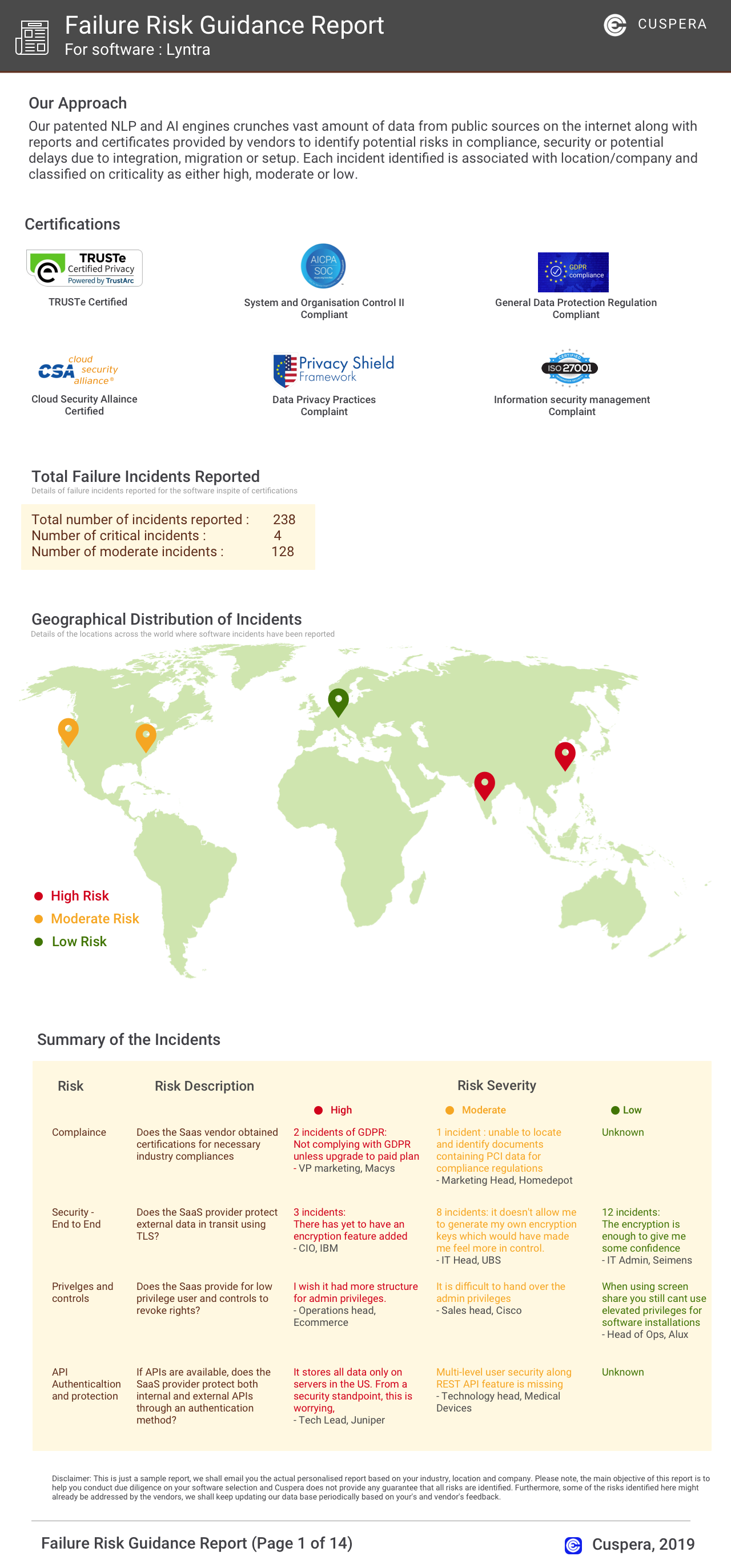
Software Failure Risk Guidance
?for AlertOps
Overall Risk Meter
Top Failure Risks for AlertOps
AlertOps News
AlertOps vs. Opsgenie: Choosing the Right Incident Management Platform
AlertOps offers a comprehensive incident management platform with features like live-call routing, on-call scheduling, and seamless integrations for MSPs, enhancing alert management and response automation.
Migrate Opsgenie to Alertops : TheSmarter Move for Incident Management
AlertOps offers a platform for incident management, integrating with tools like ServiceNow and providing features for MSPs, including live-call routing and SLA management. It supports industries like healthcare and retail, with pricing starting at $0 per month for basic features.
Opsgenie vs JSM vs AlertOps: Do you need a full-stacked ITSM platform or just alerting?
AlertOps offers incident management solutions with features like live-call routing, on-call scheduling, and integrations with monitoring tools. It is customizable for MSPs and various industries, providing automated incident response and alert optimization.
Video: The End Of Alert Fatigue With AlertOps - Channel Insider
AlertOps aims to end alert fatigue by optimizing notification systems to improve efficiency and reduce noise for IT teams.
AlertOps Profile
Company Name
AlertOps
Company Website
https://alertops.com/HQ Location
125 Fairfield Way, Suite # 330, Bloomingdale, IL 60108, US
Employees
11-50
Social


Financials
PRIVATE